Everyday wear
The cottons and light weaves women wear to work, to market and at home.
The everyday saree is mostly cotton, handloom or mill-made, light enough for the heat and easy to wash. Many millions of women across India wear one to work, to market and at home, and the regional cottons are among the most beautiful cloths in the country.
What daily wear is
A daily saree has to be comfortable, breathable and affordable, and above all easy to care for. Cotton is the most common fibre, in handloom or mill-made form, followed by blends and, for those who can afford them, light silks. In many homes a woman will own a handful of everyday sarees and rotate them, with a few better ones kept for visits and occasions. The drape is usually a simple one, tucked in at the waist, with the pallu pinned at the shoulder, or tied back for work in the field or kitchen.
Cottons by region
Bengal is known for the tant, a crisp, light cotton with a woven border, and for the Dhaniakhali and Begampuri varieties. Odisha weaves the Sambalpuri and Kotpad cottons. Tamil Nadu's Kornad and Chettinad cottons, with their bold checks and wide borders, are worn daily in many homes, as is the Kerala cotton. Andhra and Telangana have the Gadwal, Uppada and Narayanpet cottons, and Karnataka has the Ilkal and the Guledgudda khana. Madhya Pradesh offers Maheshwari and Chanderi, while Maharashtra and Gujarat have their own mill and handloom cottons.
Handloom, mill and powerloom
A handloom saree is woven by hand on a loom, and its small irregularities are part of its character. A mill or powerloom saree is machine-made, often cheaper and more uniform. Both are worn daily, and many women choose by price, feel and how the cloth holds up through repeated washing. Handloom cottons tend to soften with age and are valued for that. If you want to support weavers directly, look for the Handloom Mark and ask the seller where the cloth was woven. A cotton saree that is described as handloom should have visible variation along the border and pallu.
Wearing and caring for daily sarees
Cotton sarees are often starched, especially in Bengal, Tamil Nadu and Andhra, to give a crisp fall, and women either do this at home with rice or kanji water or send the cloth to a dhobi or ironer. The first wash of a new handloom saree should be done separately, as the dyes may bleed. Line dry in shade, iron on the reverse and fold along the pleats. Mend small tears early with a fine thread, as many daily sarees are worn for years and a few even become soft blankets or cloth for the next generation.
Worth knowing
- Tant saree: The crisp Bengal cotton with a woven border.
- Kornad cotton: A Tamil Nadu cotton with bold checks and wide borders.
- Gadwal saree: A Telangana weave that joins a cotton body to a silk border.
- Maheshwari saree: A light cotton and silk weave from Madhya Pradesh.
- Ilkal saree: A Karnataka saree with a distinctive joined pallu.
- Handloom Mark: An Indian label that identifies genuine handloom products.
Good to know
- Wash new cotton separately the first few times, in cold water.
- Dry in shade and iron on the reverse while slightly damp.
- Starch lightly if you like a crisp fall, and rinse well.
Sources and further reading
Original text by the EveryPallu desk, written with AI assistance and checked against the sources above. If we have something wrong, tell us.
Everyday wear on EveryPallu
The sarees written up so far, newest and best known first.
 🇮🇳 India and 4 moreSariसाड़ी
A single unstitched length of cloth, tucked at the waist and slung over one shoulderSilk · Brocade · Ikat
🇮🇳 India and 4 moreSariसाड़ी
A single unstitched length of cloth, tucked at the waist and slung over one shoulderSilk · Brocade · Ikat
 🇮🇳 India and 1 moreMundumuṇṭŭ
A cotton cloth wrapped at the waist, edged with the thicker woven line called the karaCotton · Embroidery
🇮🇳 India and 1 morePathin
A striped wrap skirt of the Hajong people, worn from bust to calf in Northeast IndiaSilk · Checks and stripes
🇮🇳 India and 1 moreMundumuṇṭŭ
A cotton cloth wrapped at the waist, edged with the thicker woven line called the karaCotton · Embroidery
🇮🇳 India and 1 morePathin
A striped wrap skirt of the Hajong people, worn from bust to calf in Northeast IndiaSilk · Checks and stripes
 🇮🇩 Indonesia and 5 moreSarongꦱꦫꦸꦁ
A wrapped tube of cloth worn at the waist, from the Malay world to Kerala and SomaliaCotton · Batik · Ikat
🇮🇩 Indonesia and 5 moreSarongꦱꦫꦸꦁ
A wrapped tube of cloth worn at the waist, from the Malay world to Kerala and SomaliaCotton · Batik · Ikat
 🇱🇰 Sri LankaOsariyaඔසරිය
A cotton sari with a frilled waist and full blouse, the national dress of Sri LankaCotton
🇱🇰 Sri LankaOsariyaඔසරිය
A cotton sari with a frilled waist and full blouse, the national dress of Sri LankaCotton
 🇮🇳 India and 2 moreMadras
A light handwoven cotton cloth of bright checks, named after the city of ChennaiCotton · Checks and stripes · Embroidery
🇮🇳 India and 2 moreMadras
A light handwoven cotton cloth of bright checks, named after the city of ChennaiCotton · Checks and stripes · Embroidery
 🇵🇰 PakistanSindhi embroideryسنڌي ٿرت
Needlework and mirror embroidery crafted across the desert communities of SindhEmbroidery · Mirror work
🇵🇰 PakistanSindhi embroideryسنڌي ٿرت
Needlework and mirror embroidery crafted across the desert communities of SindhEmbroidery · Mirror work
 🇮🇳 India and 1 moreHandloom sari
Saris woven by hand on pit looms in India and BangladeshSilk · Zari work · Jamdani
🇮🇳 India and 1 moreHandloom sari
Saris woven by hand on pit looms in India and BangladeshSilk · Zari work · Jamdani
 🇮🇩 Indonesia and 5 moreIkat
Yarns are tied and dyed before weaving, giving the cloth a softly blurred patternSilk · Ikat
🇮🇩 Indonesia and 5 moreIkat
Yarns are tied and dyed before weaving, giving the cloth a softly blurred patternSilk · Ikat
 🇮🇳 India and 1 moreTant sari
A light, near-transparent cotton sari woven in Bengal, suited to hot, humid weatherCotton · Jamdani · Embroidery
🇧🇩 BangladeshGrameen checkগ্রামীণ চেক
Bright checked cotton from Bangladesh, woven by village weavers in traditional waysCotton · Checks and stripes
🇮🇳 India and 1 moreTant sari
A light, near-transparent cotton sari woven in Bengal, suited to hot, humid weatherCotton · Jamdani · Embroidery
🇧🇩 BangladeshGrameen checkগ্রামীণ চেক
Bright checked cotton from Bangladesh, woven by village weavers in traditional waysCotton · Checks and stripes
 🇮🇳 IndiaMundum neriyathumമുണ്ട് നേരിയത്
A two-piece white cotton cloth of Kerala, worn with a golden border called kasavuCotton · Zari work
🇮🇳 IndiaMundum neriyathumമുണ്ട് നേരിയത്
A two-piece white cotton cloth of Kerala, worn with a golden border called kasavuCotton · Zari work
 🇮🇳 India and 3 moreDupattaदुपट्टा, دوپٹہ
A versatile long scarf and veil draped with traditional ensembles across South AsiaSilk · Brocade · Tie-dye
🇮🇳 India and 3 moreDupattaदुपट्टा, دوپٹہ
A versatile long scarf and veil draped with traditional ensembles across South AsiaSilk · Brocade · Tie-dye
 🇮🇩 Indonesia and 5 moreBatikꦧꦛꦶꦏ꧀
A wax-resist way of dyeing cloth, most developed on the island of JavaSilk · Tie-dye · Block print
🇮🇩 Indonesia and 5 moreBatikꦧꦛꦶꦏ꧀
A wax-resist way of dyeing cloth, most developed on the island of JavaSilk · Tie-dye · Block print
 🇱🇦 Laos and 1 moreSinhສິ້ນ
A handwoven tube skirt of Laos and northern Thailand, its hem telling where it was madeSilk
🇱🇦 Laos and 1 moreSinhສິ້ນ
A handwoven tube skirt of Laos and northern Thailand, its hem telling where it was madeSilk
 🇮🇩 IndonesiaBatik Parang꧋ꦧꦠꦶꦏ꧀ꦥꦫꦁ
A diagonal wave batik pattern from Java, steeped in royal philosophyCotton · Batik
🇮🇩 IndonesiaBatik Parang꧋ꦧꦠꦶꦏ꧀ꦥꦫꦁ
A diagonal wave batik pattern from Java, steeped in royal philosophyCotton · Batik
 🇮🇳 IndiaGamosaগামুছা
A white cotton cloth with a red border from Assam, woven for Bihu, prayer and daily useCotton
🇮🇳 IndiaGamosaগামুছা
A white cotton cloth with a red border from Assam, woven for Bihu, prayer and daily useCotton
 🇧🇩 Bangladesh and 1 moreTangail saree
A Bengal handloom saree in cotton or silk, known for stepped extra-weft patterns.Cotton · Jamdani
🇧🇩 Bangladesh and 1 moreTangail saree
A Bengal handloom saree in cotton or silk, known for stepped extra-weft patterns.Cotton · Jamdani
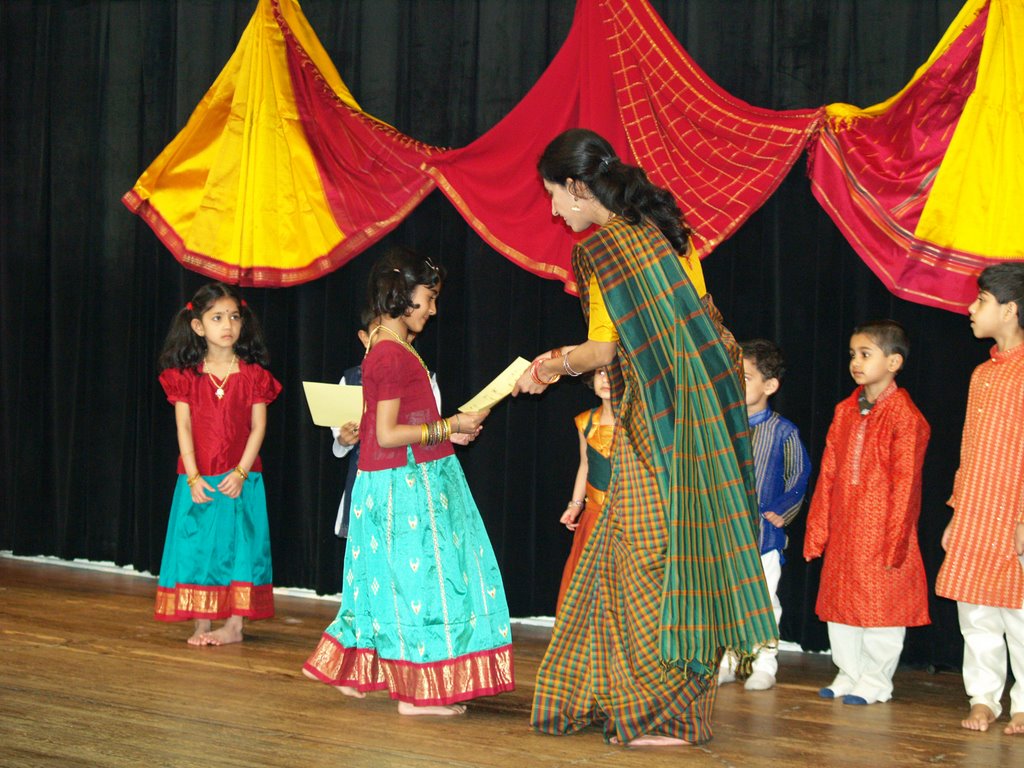 🇮🇳 IndiaLanga voniలంగా వోణి
A two-piece half sari worn by girls in South India, a skirt with a short diagonal drapeSilk · Embroidery · Zari work
🇮🇳 IndiaLanga voniలంగా వోణి
A two-piece half sari worn by girls in South India, a skirt with a short diagonal drapeSilk · Embroidery · Zari work
 🇮🇳 IndiaKashta sariनऊवारी साड़ी
A traditional nine-yard Maharashtrian drape tucked at the back like a dhotiCotton
🇮🇳 IndiaKashta sariनऊवारी साड़ी
A traditional nine-yard Maharashtrian drape tucked at the back like a dhotiCotton
 🇧🇩 Bangladesh and 1 moreNakshi kanthaনকশি কাঁথা
An embroidered quilt from Bengal, stitched from old sarees with a simple running stitch.Cotton · Kantha · Embroidery
🇧🇩 Bangladesh and 1 moreNakshi kanthaনকশি কাঁথা
An embroidered quilt from Bengal, stitched from old sarees with a simple running stitch.Cotton · Kantha · Embroidery
 🇮🇳 IndiaKachchh shawldhabla
A dense wool shawl handwoven in Kutch, Gujarat, once traded for fleece and grain.Wool · Embroidery · Tie-dye
🇮🇳 IndiaKachchh shawldhabla
A dense wool shawl handwoven in Kutch, Gujarat, once traded for fleece and grain.Wool · Embroidery · Tie-dye
 🇮🇳 India and 1 moreMashru
A heavy hand-woven satin with a silk face over cotton, woven in Punjab and SindhSilk
🇮🇳 India and 1 moreMashru
A heavy hand-woven satin with a silk face over cotton, woven in Punjab and SindhSilk
 🇮🇳 India and 1 moreKhes
A thick hand-woven cotton blanket cloth from Punjab, checked and worn as a winter wrap.Cotton · Checks and stripes · Zari work
🇮🇳 India and 1 moreKhes
A thick hand-woven cotton blanket cloth from Punjab, checked and worn as a winter wrap.Cotton · Checks and stripes · Zari work
 🇮🇳 IndiaBomkai sari
An Odisha handloom saree with extra-weft threadwork, woven in cotton and silkCotton · Zari work
🇮🇳 IndiaBomkai sari
An Odisha handloom saree with extra-weft threadwork, woven in cotton and silkCotton · Zari work
 🇮🇳 India and 2 moreKhadi
Hand-spun and hand-woven cloth from the subcontinent, tied to the swadeshi movementCotton
🇮🇳 IndiaTangaliya shawl
A Gujarat shawl woven on pit looms, its dots raised by knots of contrast threadCotton
🇮🇳 India and 2 moreKhadi
Hand-spun and hand-woven cloth from the subcontinent, tied to the swadeshi movementCotton
🇮🇳 IndiaTangaliya shawl
A Gujarat shawl woven on pit looms, its dots raised by knots of contrast threadCotton
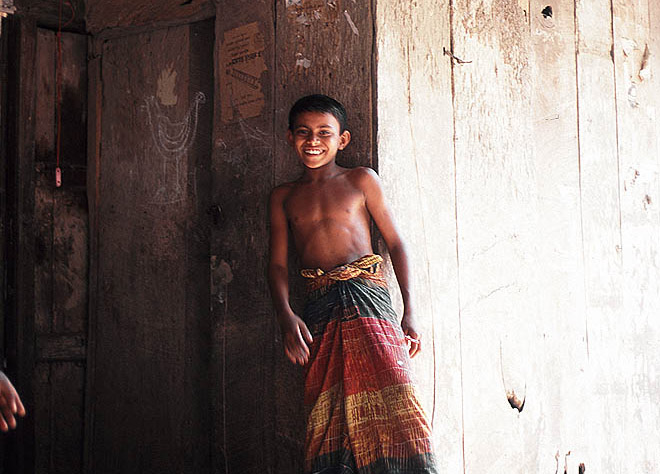 🇮🇳 India and 5 moreLungiলুঙ্গি
A cloth tube or sheet tied at the waist, worn across South and Southeast AsiaCotton · Batik · Checks and stripes
🇮🇳 IndiaKorial sariকোরিয়াল শাড়ি
A red-bordered mulberry silk saree woven on hand looms in West BengalSilk · Jamdani · Zari work
🇮🇳 IndiaKasaragod saree
A hard-wearing handloom cotton saree from Kasaragod district in KeralaCotton · Checks and stripes
🇮🇳 India and 5 moreLungiলুঙ্গি
A cloth tube or sheet tied at the waist, worn across South and Southeast AsiaCotton · Batik · Checks and stripes
🇮🇳 IndiaKorial sariকোরিয়াল শাড়ি
A red-bordered mulberry silk saree woven on hand looms in West BengalSilk · Jamdani · Zari work
🇮🇳 IndiaKasaragod saree
A hard-wearing handloom cotton saree from Kasaragod district in KeralaCotton · Checks and stripes
 🇮🇳 IndiaBagh print
Hand block printing with natural red and black dyes from a village on the Bagh riverCotton · Block print
🇮🇳 India and 1 moreGazzi cloth
A coarse handloom cotton from Punjab, once sent in bulk to Afghan markets.Cotton
🇮🇳 IndiaBafta
A plain-woven cotton calico from Gujarat, woven at Bharuch and traded far and wideCotton
🇮🇳 IndiaBagh print
Hand block printing with natural red and black dyes from a village on the Bagh riverCotton · Block print
🇮🇳 India and 1 moreGazzi cloth
A coarse handloom cotton from Punjab, once sent in bulk to Afghan markets.Cotton
🇮🇳 IndiaBafta
A plain-woven cotton calico from Gujarat, woven at Bharuch and traded far and wideCotton
 🇮🇳 IndiaTripuri dress
A woven cotton wrap from Tripura, with its own pattern for each Tripuri clan.Cotton
🇮🇳 IndiaTripuri dress
A woven cotton wrap from Tripura, with its own pattern for each Tripuri clan.Cotton
 🇮🇳 India and 2 moreChintzछींट
A painted or woodblock-printed floral cotton cloth originating in GolcondaCotton · Block print · Hand painting
🇮🇳 India and 2 moreChintzछींट
A painted or woodblock-printed floral cotton cloth originating in GolcondaCotton · Block print · Hand painting
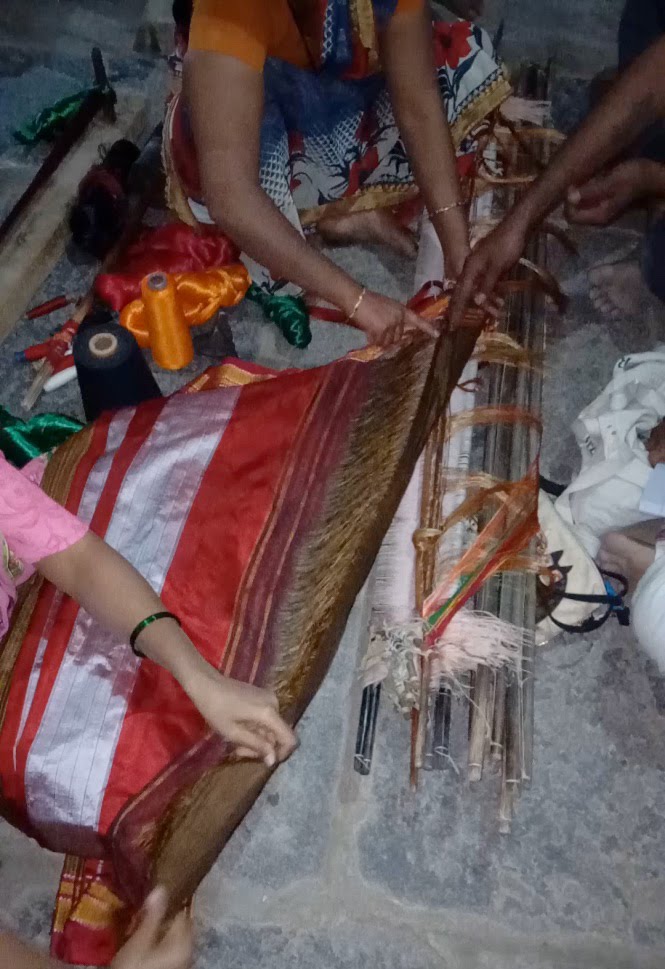 🇮🇳 IndiaIlkal sari
A cotton saree with a loop-joined silk pallu and broad red border, from Ilkal, KarnatakaCotton · Zari work · Embroidery
🇮🇳 IndiaIlkal sari
A cotton saree with a loop-joined silk pallu and broad red border, from Ilkal, KarnatakaCotton · Zari work · Embroidery
 🇹🇭 ThailandKhitผ้าขิด
A handwoven cloth from Isan, Thailand, with geometric patterns that seem to float.Brocade
🇹🇭 ThailandKhitผ้าขิด
A handwoven cloth from Isan, Thailand, with geometric patterns that seem to float.Brocade
 🇮🇳 IndiaDokhonaदख'ना
A wrap-around cloth worn by Boro women of Assam, usually yellow, with woven Agor designsCotton
🇮🇳 IndiaDokhonaदख'ना
A wrap-around cloth worn by Boro women of Assam, usually yellow, with woven Agor designsCotton
 🇮🇳 IndiaPhanekꯐꯅꯦꯛ
A traditional Meitei wraparound skirt woven with striped borders in ManipurMuga · Embroidery · Checks and stripes
🇮🇳 IndiaToda embroiderypukhoor
Red and black thread embroidery on white cotton, worked by Toda women in the NilgirisCotton · Embroidery
🇮🇳 IndiaPhanekꯐꯅꯦꯛ
A traditional Meitei wraparound skirt woven with striped borders in ManipurMuga · Embroidery · Checks and stripes
🇮🇳 IndiaToda embroiderypukhoor
Red and black thread embroidery on white cotton, worked by Toda women in the NilgirisCotton · Embroidery
 🇮🇳 India and 1 moreDhoti
An unstitched cloth tied at the waist and worn to the ankle, the men's answer to the sariCotton
🇮🇳 India and 1 moreDhoti
An unstitched cloth tied at the waist and worn to the ankle, the men's answer to the sariCotton
 🇮🇩 IndonesiaBalinese textiles
The woven cloths of Bali, from sacred double ikat to gold-dusted ceremony wearCotton · Ikat · Brocade
🇮🇩 IndonesiaBalinese textiles
The woven cloths of Bali, from sacred double ikat to gold-dusted ceremony wearCotton · Ikat · Brocade
 🇮🇳 IndiaUttariyaउत्तरीय
An unstitched upper-body cloth from ancient India, wrapped over the shoulder or armsCotton
🇮🇳 IndiaUttariyaउत्तरीय
An unstitched upper-body cloth from ancient India, wrapped over the shoulder or armsCotton
 🇲🇲 Myanmar and 1 moreLongyiလုံချည်
A cloth tube worn at the waist in Myanmar, about two metres longCotton · Checks and stripes · Embroidery
🇲🇲 Myanmar and 1 moreLongyiလုံချည်
A cloth tube worn at the waist in Myanmar, about two metres longCotton · Checks and stripes · Embroidery
 🇮🇩 Indonesia and 4 moreKebayaꦏꦼꦧꦪ
A front-opening blouse worn across Southeast Asia with a sarong or kainCotton · Embroidery · Batik
🇧🇩 Bangladesh and 1 moreTangail saree
A Bengal handloom saree with stepped extra-weft patterns, woven in cotton and silkCotton · Jamdani · Brocade
🇮🇩 Indonesia and 4 moreKebayaꦏꦼꦧꦪ
A front-opening blouse worn across Southeast Asia with a sarong or kainCotton · Embroidery · Batik
🇧🇩 Bangladesh and 1 moreTangail saree
A Bengal handloom saree with stepped extra-weft patterns, woven in cotton and silkCotton · Jamdani · Brocade
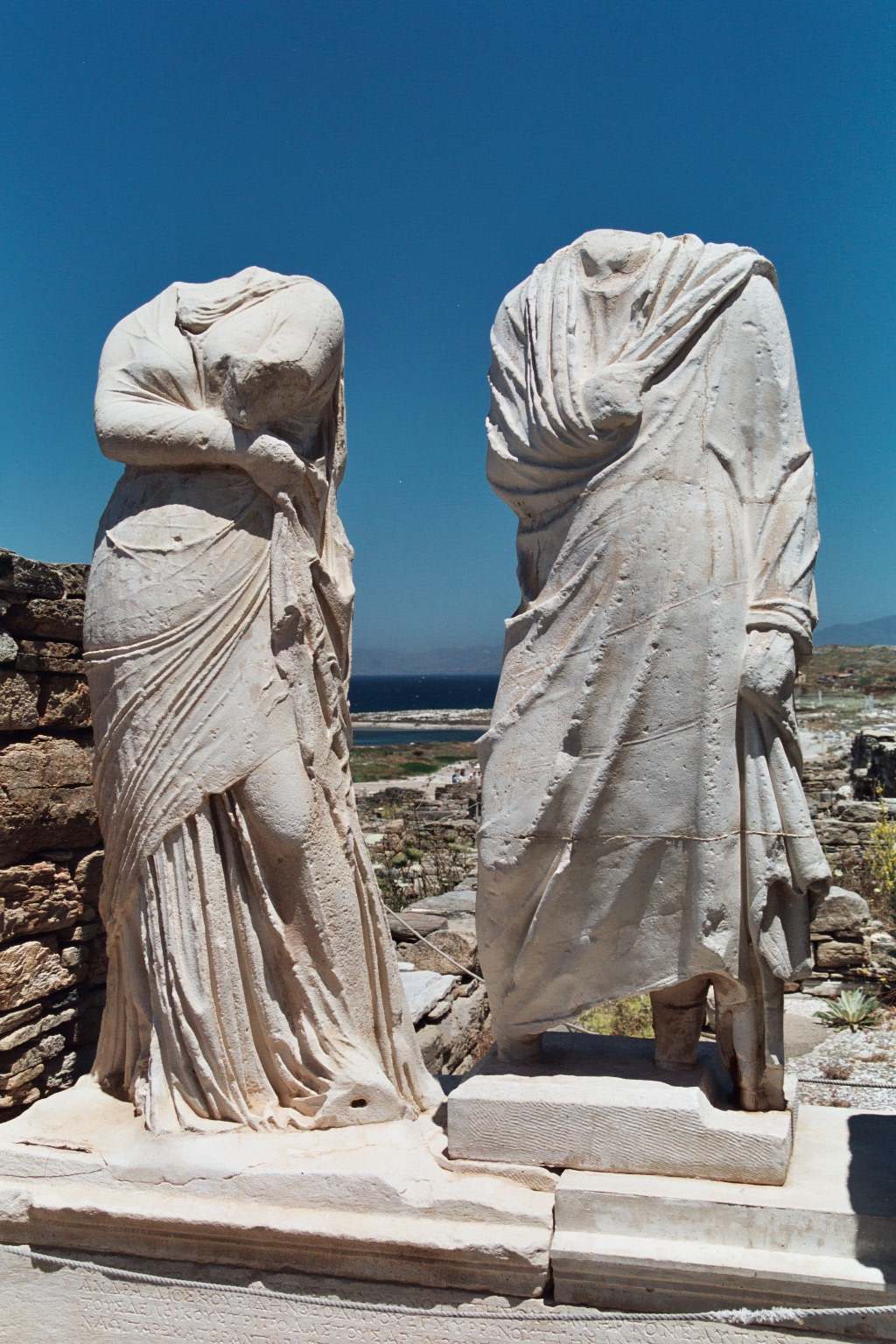 🇬🇷 GreeceHimationἱμάτιον
An ancient Greek draped mantle of woven wool or linen, worn without pinsWool · Embroidery · Hand painting
🇬🇷 GreeceHimationἱμάτιον
An ancient Greek draped mantle of woven wool or linen, worn without pinsWool · Embroidery · Hand painting
 🇹🇿 Tanzania and 4 moreKanga
A light cotton wrap from East Africa framed with printed borders and Swahili proverbsCotton · Block print · Hand painting
🇹🇿 Tanzania and 4 moreKanga
A light cotton wrap from East Africa framed with printed borders and Swahili proverbsCotton · Block print · Hand painting
Photo credits on this page
The small pictures above come from Wikimedia Commons under free licences. Some are cropped to fit.
- Mundum neriyathum: L. Anantha Krishna Iyer (Diwan Bahadur), Public domain, source
- Mundu: Raja Ravi Varma, Public domain, source
- Sarong: Unknown author, CC BY-SA 3.0, source
- Kanga: Petr Berka ( Petrberka ), Public domain, source
- Osariya: Mr Anuradha Ratnaweera (අනුරාධ රත්නවීර මහතා), CC BY-SA 2.0, source
- Madras: Shweta Venkateswaran, CC0, source
- Sindhi embroidery: Nasreen wafai, CC BY-SA 4.0, source
- Handloom sari: P.K.Niyogi, Public domain, source
- Ikat: Midori, CC BY 3.0, source
- Tant sari: Billjones94, CC BY-SA 4.0, source
- Sari: Suyash.dwivedi, CC BY-SA 4.0, source
- Khadi: Unknown author, Public domain, source
- Lungi: Laportechicago at English Wikipedia (Paul La Porte)., CC BY 2.5, source
- Bagh print: Mrqd9, CC BY-SA 4.0, source
- Tripuri dress: Bijayan tripura, CC0, source
- Chintz: Karun Thakar Collection photo. Work by unknown Coromandel artisans. Ph, Public domain, source
- Ilkal sari: T B Dinesh, CC0, source
- Tangail saree: P.K.Niyogi, Public domain, source
- Khit: Pawyilee, Public domain, source
- Dokhona: Bodoland Territorial Council, CC0, source
- Phanek: অজয় দাস, CC BY-SA 4.0, source
- Himation: Unknown author, CC BY-SA 3.0, source
- Dhoti: Redaloes at English Wikipedia, Public domain, source
- Balinese textiles: Chris Hazzard, CC BY-SA 3.0, source
- Uttariya: Biswarup Ganguly, CC BY 3.0, source
- Longyi: Unknown author, Public domain, source
- Kebaya: Simon_sees, CC BY 2.0, source
- Dupatta: Kinshuk Sunil, CC BY 2.0, source
- Batik: Fpangestuphotographer, CC BY-SA 4.0, source
- Batik Parang: Q100422095, Public domain, source
- Sinh: YashiWong, CC BY-SA 3.0, source
- Gamosa: Priyankoo at en.wikipedia, Public domain, source
- Langa voni: Kannadiga, CC BY-SA 3.0, source
- Kashta sari: Dakutaa at en.wikipedia, CC BY-SA 3.0, source
- Nakshi kantha: A junaid alam khan ( talk ), Public domain, source
- Kachchh shawl: Ekabhishek, CC BY-SA 3.0, source
- Mashru: Edwin Lord Weeks, Public domain, source
- Khes: RAJIVVASUDEV, CC BY-SA 4.0, source
- Bomkai sari: Nayansatya, CC BY 3.0, source