
Nakshi kantha
In its own language: নকশি কাঁথা
An embroidered quilt from Bengal, stitched from old sarees with a simple running stitch.
Nakshi kantha is Bengal's embroidered quilt, built from layers of worn cloth and covered in patterns worked with a plain running stitch. Women once made such coverlets at home from old sarees; the revived craft now sells commercially and also decorates sarees, shawls and housewares.
- Each quilt once needed three to six old sarees, stitched layer on layer.
- 'Naksha' is Bengali for artistic pattern; 'kantha' likely traces to Sanskrit 'kontha', meaning rags.
- Sujni kantha belongs to Rajshahi alone; lohori takes its name from the Persian word for wave.
- The lotus, drawn from Hindu imagery, is the most common central motif.
- India lists nakshi kantha among its Geographical Indications.
What is Nakshi kantha?
Nakshi kantha is the Bengali craft of sewing layered, worn cloth into patterned quilts. Two or more old sarees are stacked and held with broad running stitches, then covered edge to edge in needlework, mostly the plain running stitch that locals call the kantha stitch. 'Nakshi' points to deliberate design: it comes from the Bengali naksha, an artistic pattern. For generations this was household work done by rural women in spare hours and through the rains, so one quilt could take months. Pieces were made for the family, wrapping sleepers and carrying a household's hand. Today the same stitching also covers sarees, shawls, bedspreads, bags and wall pieces, and India protects the name with a Geographical Indication.
Where does Nakshi kantha come from?
The craft grew from Bengal village life, where thrift met needle skill. The earliest kanthas were probably plain patchwork, and the decorative appliqué styles developed out of that. Writing enters the story with Krishnadasa Kaviraja's Chaitanya Charitamrita, a Bengali text of the late sixteenth century that carries the first mention of kantha. In 1940, Rabindranath Tagore, with his daughter-in-law Pratima Devi, had Santali women in Birbhum district trained by Kalabhaban artists, and the quality of the work rose. What had been a purely domestic craft then found its way back into the market, and the twentieth-century revival put nakshi kantha into commercial production.
How is Nakshi kantha made?
The raw material is yesterday's clothing. A standard quilt once took three to six old sarees, joined to size, spread flat and weighted at the edges so no crease hides between the layers. The four sides are sewn, then broad running stitches in a few straight rows anchor the cloth; after that the work can be folded and stitched wherever there is a quiet moment. Nothing is drawn on first. The needle outlines the design, sets the main figure, then fills around it, starting at the centre when one motif rules. In carpet, lik and sujni work, wooden blocks once printed the outline; today tracing-paper patterns do that job. Thread, too, was once unpicked from old sarees, though new cotton is usual now.
Nakshi kantha, drawn
Colours, motifs and borders
Early quilts kept a white ground with red, blue and black figures; yellow, green and pink joined the palette later. Most pieces build to a focal point, usually a lotus viewed from overhead in older work, ringed by vines, flowers or a shari border pattern. The lotus carries Hindu meanings of water, sun and womanhood; the crescent moon with a star suits Muslim homes, and mosques, calligraphy and Jamdani-derived patterns serve prayer pieces. Wheels, swastikas and the tree of life carry older meanings, while the kalka, the curling paisley that arrived with Mughal taste, offers many variations. Fish, boats, combs and kitchen things drift in from daily life. No two quilts match: each stitcher bends the motifs her own way.
How Nakshi kantha is worn
A kantha is made for wrapping, sitting and covering, not for draping. The everyday form, the lep, is a light quilt spread over sleepers; other formats wrap books and money, roll around a woman's mirror and kohl, or sheathe the Quran. Floor spreads serve meals and prayer. When the needlework moves onto clothing, it decorates sarees and shawls directly, the stitches lying on the cloth like fine quilting. One named style, lohori, takes its name from the Persian lehr, a wave, and its rows run in wave shapes.


When Nakshi kantha is worn
Inside the home, kanthas answered daily needs: bedding, seating cloths, wrappers for valuables, a spread laid for meals. Faith gave them work too. Muslim households keep jainamaz mats for prayer and envelope covers for the Quran; Hindu homes spread the ason mat for sitting during pujas. Nineteenth-century Hindu women also stitched narrative pieces showing deities and the creatures that carry them. Because a quilt claimed months of spare-time work, these were things a family made for itself rather than wares. With today's commercial production, kantha travels beyond the home as sarees, shawls, bags and cushion covers.
Styles of Nakshi kantha
Stitch style sorts the families of kantha. Plain running-stitch work divides into figured nakshi pieces and patterned par tola. Lohori, a favourite in Rajshahi, fills its ground in straight, triangle and diamond arrangements, the triangle nicknamed after a pigeon coop. Lik or anarasi, a pineapple-textured type from Malda, Chapainawabganj and Jessore, comes in variants such as lik tan and lik tile. Cross-stitch or carpet kantha arrived with the English during colonial rule, and sujni, with flowing floral vines, belongs to Rajshahi alone. The oldest pieces were patchwork, some appliquéd; current pieces answer new markets, turning the same needle into bedspreads, wall hangings, purses, placemats and sarees.
What Nakshi kantha means
Women carried this craft: nearly every rural household once had an expert, and the needlework filled odd hours and rainy months rather than counting as a trade. Its imagery follows belief and daily surroundings, so Hindu and Muslim homes drew different figures on the same white ground; in the makers' eyes the cloth was the artist and the hand merely its tool. The poet Jasimuddin's Nakshi Kanthar Math fixed the quilt in Bengali letters, and a 1940 training in Birbhum paired Santali women with Kalabhaban artists to lift the standard of work. The revival that followed made it a commercial craft again, and India now protects the name as a Geographical Indication.
Questions people ask about Nakshi kantha
Where does nakshi kantha come from?
Nakshi kantha belongs to the Bengal region. It is made across Bangladesh, with Mymensingh, Jamalpur, Bogra, Rajshahi, Faridpur, Jessore and Chittagong among the main centres, and in India in West Bengal, Tripura and parts of Assam.
How is a nakshi kantha made?
Old sarees, three to six for one standard quilt, are joined to size, spread flat and weighted so the layers sit smooth. After the edges are sewn, broad running stitches anchor the cloth, and the whole surface is then embroidered by hand, centre first.
Why is it called nakshi kantha?
'Naksha' is the Bengali word for an artistic pattern, so nakshi kantha means patterned kantha. The scholar Niaz Zaman traces 'kantha' itself to the Sanskrit 'kontha', meaning rags, which suits a quilt sewn from worn-out cloth.
What stitches and motifs will I see?
The running stitch does most of the work, joined by darning, bending, Holbein, cross-stitch and, in newer pieces, Kashmiri and arrowhead stitches. Expect a lotus centre, often with vines, flowers or a shari border, plus suns, moons, wheels and kalka paisleys.
Is nakshi kantha used on sarees?
Yes. Quilts remain the classic form, but the revival brought the stitch to sarees, shawls, bedspreads, wall hangings, purses and cushion covers, so the embroidery now appears in wearable form alongside the traditional household pieces.
Good reading and sources
- Nakshi kantha on WikipediaEncyclopedia
- More photos on Wikimedia CommonsPhotos and video
- Wikidata recordOpen data
The facts on this page come from the Wikipedia article "Nakshi kantha", written by its contributors and used under the CC BY-SA 4.0 licence, and from its Wikidata record (CC0). EveryPallu rewrote the text in its own words, with AI assistance, and compares every page with the article to make sure no passage is copied. It may be reused under the same CC BY-SA 4.0 licence with a link back.
It may contain mistakes. Traditions, weaves and prices differ from one weaver, town or shop to the next, and it is not buying advice. If something is wrong, tell us. Last refreshed 2026-10-03.
More from Bangladesh
All the sarees of Bangladesh 🇮🇳 India and 4 moreSariसाड़ी
A single unstitched length of cloth, tucked at the waist and slung over one shoulderSilk · Brocade · Ikat
🇮🇳 India and 4 moreSariसाड़ी
A single unstitched length of cloth, tucked at the waist and slung over one shoulderSilk · Brocade · Ikat
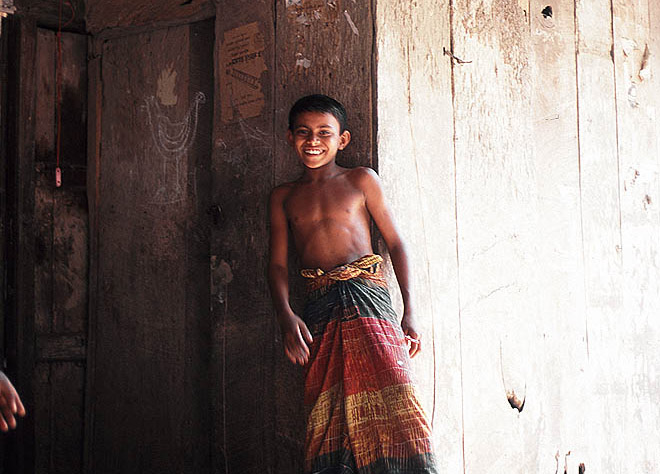 🇮🇳 India and 5 moreLungiলুঙ্গি
A cloth tube or sheet tied at the waist, worn across South and Southeast AsiaCotton · Batik · Checks and stripes
🇮🇳 India and 5 moreLungiলুঙ্গি
A cloth tube or sheet tied at the waist, worn across South and Southeast AsiaCotton · Batik · Checks and stripes
 🇮🇳 India and 2 moreKhadi
Hand-spun and hand-woven cloth from the subcontinent, tied to the swadeshi movementCotton
🇮🇳 India and 2 moreKhadi
Hand-spun and hand-woven cloth from the subcontinent, tied to the swadeshi movementCotton
 🇮🇳 India and 1 moreDhoti
An unstitched cloth tied at the waist and worn to the ankle, the men's answer to the sariCotton
🇮🇳 India and 1 moreDhoti
An unstitched cloth tied at the waist and worn to the ankle, the men's answer to the sariCotton
Its cousins elsewhere
All cotton sarees 🇮🇳 IndiaGota patti
Rajasthani applique embroidery that stitches down ribbons of gold and silverGeorgette · Appliqué · Embroidery
🇮🇳 IndiaPhool Patti ka Kaam
Flowers and leaves cut from cloth and hemmed on, an appliqué craft of Aligarh and RampurCotton · Appliqué · Embroidery
🇮🇳 IndiaGota patti
Rajasthani applique embroidery that stitches down ribbons of gold and silverGeorgette · Appliqué · Embroidery
🇮🇳 IndiaPhool Patti ka Kaam
Flowers and leaves cut from cloth and hemmed on, an appliqué craft of Aligarh and RampurCotton · Appliqué · Embroidery
 🇮🇳 IndiaLambada embroidery
Mirror-and-cowrie hand embroidery by Banjara women of Karnataka and TelanganaEmbroidery · Appliqué
🇮🇳 IndiaLambada embroidery
Mirror-and-cowrie hand embroidery by Banjara women of Karnataka and TelanganaEmbroidery · Appliqué
 🇮🇩 IndonesiaBalinese textiles
The woven cloths of Bali, from sacred double ikat to gold-dusted ceremony wearCotton · Ikat · Brocade
🇮🇩 IndonesiaBalinese textiles
The woven cloths of Bali, from sacred double ikat to gold-dusted ceremony wearCotton · Ikat · Brocade