
Handloom sari
Saris woven by hand on pit looms in India and Bangladesh
A handloom sari is woven by hand, usually on a shuttle-pit loom built from timber, poles and rope, by weaver families in India and Bangladesh. One sari takes two to three days of work, and each region keeps its own habits of cloth and pattern, from tant in Bengal to Kanchipuram, Banarasi and Narayanpet.
- One handloom sari usually takes two to three days of work
- A master weaver needs 20 to 25 days for a Baluchari sari
- The handloom sector makes about 22 per cent of India's cloth
- Narayanpet saris of Telangana received a GI tag in 2015
- Bengal tant looms throve in Dhaka and Sonargaon under the Mughals
What is Handloom sari?
Handloom saris are made on looms worked by hand, most often a shuttle-pit loom built from wooden beams, poles and rope, where the weaver throws the shuttle from one side to the other. Some weavers use a fly-shuttle loom instead, which allows other kinds of pattern. The yarn is silk or cotton, and the finished cloth differs widely in size and quality. Weaving is largely a family trade in villages of India and Bangladesh, and counts among India's cottage industries. Silk versions can carry a good deal of lustre, while tussar is soft and breathable. Tant is the cloth Bengali women wear most.
Where does Handloom sari come from?
Handloom weaving belongs to the textile traditions of India and Bangladesh, and regional styles grew up in different areas. Tant, in Bengal, is counted among the earliest sari weaving methods; it prospered in Dhaka and Sonargaon under Mughal patronage, alongside muslin and jamdani. Tangail weaving is described as one of the oldest cottage industries of Bangladesh. In the Deccan, the Narayanpet tradition is believed to have taken shape during a period of Maratha influence, when artisans moving into the region brought ideas that mixed with local practice. The sources do not say who first wove a handloom sari. Weaving remains a village occupation, and each area keeps its own choices of motif and colour.
How is Handloom sari made?
The yarn is silk or cotton. Setting up the warp, sizing it, winding the weft and the dyeing, which could happen at the yarn, cloth or garment stage, were once each handled by weavers or by specialists living near the weaving villages; today much of that work is given out to others. The loom itself is often put together by hand from timber, poles and rope. A single sari usually takes two to three days. A Baluchari is slower: a master weaver may need 20 to 25 days for one piece. Some weavers use a fly-shuttle loom, which can make different kinds of pattern.
Handloom sari, drawn
Colours, motifs and borders
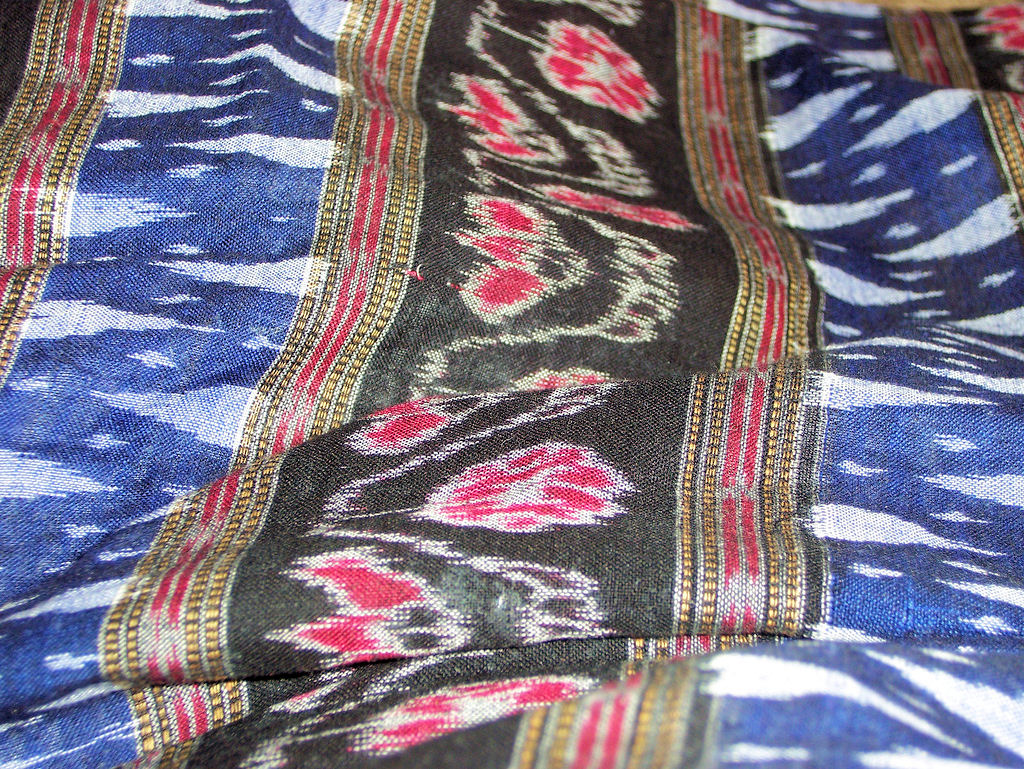
Design follows the region. Baluchari borders and pallus are the showpiece, carrying flowers, animals and scenes of royal courts, some drawn from the Ramayana and the Mahabharata, echoing carvings in the temples of Bishnupur and Bankura. Its usual colours are green, red, white and yellow. Narayanpet saris have a body worked in checks, a border built in the stepped temple shape and a pallu in a shade of its own. Munga saris are named alongside Narayanpet as sharing those traits. Tant and Tangail favour fine counts and intricate work.
How Handloom sari is worn
The sources do not set out one drape for handloom saris as a group. How a sari is worn depends on the region and the wearer. Tant is described as the cloth Bengali women use most, which points to everyday dressing. Banarasi saris are heavy, and Kanchipuram saris are known for their gold and silver zari. Length, blouse and petticoat arrangements are not given in the sources, so nothing is claimed about them here.


When Handloom sari is worn
Banarasi saris, woven in Uttar Pradesh, are kept for festivals and weddings and have long been prized by brides. Bengali women wear tant as their ordinary cloth. Beyond that, the sources say little about who wears a handloom sari and when, and the choice seems to follow region, weave and occasion rather than any fixed rule.
Styles of Handloom sari
The well-known Indian handloom saris named in the sources run through Kanchipuram, Maheshwari, Bagh print, Chanderi, tussar, Banarasi, Baluchuri, Sambalpuri, Kantha stitch, Bandhani and Munga, while tant and Tangail belong to Bangladesh. Tussar is woven in Chhattisgarh, Jharkhand and Bhagalpur. Each area follows its own habits of motif, colour and design. The sources do not contrast handloom cloth with powerloom cloth, so no such comparison is drawn here.
What Handloom sari means
The handloom sector carries weight in India's economy, producing about 22 per cent of the country's cloth and standing next to farming as a source of work. The Handloom Census of 2009 to 2010 counted close to 30 lakh weavers, 4.33 million people in all, and a count in 2010 put 4.4 million families in hand weaving. Primary Handloom Weavers Cooperatives give members production work, fair wages and welfare support, with Andhra Pradesh said to hold 359,212 weaver families in such societies. Narayanpet saris have held a GI tag since 2015.
Questions people ask about Handloom sari
Where does a handloom sari come from?
Handloom weaving is a tradition of both India and Bangladesh. Bengal's tant cloth, the Tangail industry, and muslin and jamdani belong to the weaving history of Bangladesh, while Kanchipuram, Banarasi, Chanderi and Narayanpet are Indian weaving centres, each with its own regional habits of design.
How is a handloom sari made?
The weaver works a hand loom, usually a shuttle-pit loom of timber, poles and rope, throwing the shuttle across the width. Silk or cotton yarn is used. Dyeing, warping, sizing, attaching the warp and winding the weft were once done by local weavers and specialists, though much of that work is now given out.
How long does one sari take to weave?
Two to three days is the usual figure for a single handloom sari. A Baluchari takes far longer: a master weaver may need 20 to 25 days to finish one.
What is a tant sari?
Tant is the Bengali word for handloom, and tant saris are woven in Bangladesh, with the Tangail weaving industry as a well-known example. Tant is among the oldest sari weaving methods and the cloth Bengali women wear most; Bengal's tant looms flourished in Dhaka and Sonargaon under Mughal patronage.
Are any handloom saris GI-tagged?
Narayanpet saris of Telangana received a GI tag in 2015 for their regional weaving practice. Muslin and jamdani of Bengal, tied to the tant tradition, are listed as GI products of Bangladesh.
Good reading and sources
The facts on this page come from the Wikipedia article "Handloom sari", written by its contributors and used under the CC BY-SA 4.0 licence, and from its Wikidata record (CC0). EveryPallu rewrote the text in its own words, with AI assistance, and compares every page with the article to make sure no passage is copied. It may be reused under the same CC BY-SA 4.0 licence with a link back.
It may contain mistakes. Traditions, weaves and prices differ from one weaver, town or shop to the next, and it is not buying advice. If something is wrong, tell us. Last refreshed 2026-10-08.
More from India
All the sarees of India 🇮🇳 India and 4 moreSariसाड़ी
A single unstitched length of cloth, tucked at the waist and slung over one shoulderSilk · Brocade · Ikat
🇮🇳 India and 4 moreSariसाड़ी
A single unstitched length of cloth, tucked at the waist and slung over one shoulderSilk · Brocade · Ikat
Its cousins elsewhere
All silk sarees 🇮🇳 IndiaArani silk saree
A handloom silk saree from Arani, Tamil Nadu, known for its zari workSilk · Zari work · Block print
🇮🇳 India and 1 moreUppada Jamdani sari
A light handwoven silk sari from Uppada, Andhra Pradesh, patterned in the jamdani waySilk · Jamdani · Zari work
🇮🇳 IndiaArani silk saree
A handloom silk saree from Arani, Tamil Nadu, known for its zari workSilk · Zari work · Block print
🇮🇳 India and 1 moreUppada Jamdani sari
A light handwoven silk sari from Uppada, Andhra Pradesh, patterned in the jamdani waySilk · Jamdani · Zari work
 🇮🇩 Indonesia and 5 moreBatikꦧꦛꦶꦏ꧀
A wax-resist way of dyeing cloth, most developed on the island of JavaSilk · Tie-dye · Block print
🇮🇩 Indonesia and 5 moreBatikꦧꦛꦶꦏ꧀
A wax-resist way of dyeing cloth, most developed on the island of JavaSilk · Tie-dye · Block print