
Sarong
In its own language: ꦱꦫꦸꦁ
A wrapped tube of cloth worn at the waist, from the Malay world to Kerala and Somalia
A sarong is a wide length of cloth worn wrapped around the lower body, stitched into a tube or left open and knotted. Men and women wear it from Indonesia and Malaysia to Kerala, Sri Lanka, Yemen and Somalia, in checks, batik or ikat.
- The kepala, a contrast panel, is woven or dyed across the middle of a Malay-style sarong
- The name comes from Malay, meaning to cover or sheath, and entered English in 1834
- Checkered sarongs are the choice of Muslim men for the salah prayer
- Indonesia asked its people to wear a sarong in public once a month in 2019
- In Bali the sarong is not sewn into a tube but wrapped and knotted
What is Sarong?
A sarong is a wide length of cloth worn wrapped around the lower body, by men and women alike. In Indonesia and Malaysia it is usually sewn into a tube: you step in, pull it up, and fold the top hem over to hold it. A contrast band across the width, called the kepala or head, sits at the back of the waist. Elsewhere the cloth stays open and is knotted or tucked. Patterns may be woven as checks, or dyed in by batik, which uses wax to block colour, or ikat, where the yarns are tied and dyed before weaving. Local names abound: lungi and mundu in south India, izaar in Yemen, macawiis in Somalia.
Where does Sarong come from?
The word sarong comes from Malay, where it means to cover or sheath, and English writers took it up in 1834 for the wrap skirt worn by Malays. The cloth itself is older and travels wider than the name. Unstitched izaar wraps have been worn on the Arabian peninsula since before Islam, in garments like the shendyt, Somali men have wrapped plain white skirts for centuries, and cousin garments stretch across the Indian subcontinent and the Philippine islands. In Sri Lanka the sarong slipped from public view as it gathered a class stigma, though a style nicknamed the national is now worn by leaders who want to appear close to ordinary people. In 2019 Indonesia's government asked everyone to put on a sarong in public once a month, to honour the craftsmen who make them.
How is Sarong made?
Most sarong cloth starts as a panel of cotton, silk or polyester, roughly a metre wide and a little over two metres long. Weavers can build the pattern into the cloth itself, as checks, stripes or songket, a weave that adds extra pattern threads; dyers use batik and ikat to set the design before sewing. The kepala, the contrast panel at the middle of the width, belongs to the cloth from the start, dyed or woven in, never added afterwards. Two narrow ends are then joined into a tube, though Bali leaves the cloth open to wrap and knot, and some Yemeni tribal groups also wear their izaar unstitched, finished with tassels and fringe. Somali macawiis are mostly sold ready-sewn as a circle.
Sarong, drawn
Colours, motifs and borders
Pattern sets the genders and the places apart. Malay men's sarongs are woven in checks, the design Muslim men favour for prayer, while women's batik cloths carry flowers in brighter shades. Modern printed sarongs show animals and plants. Somali macawiis lean loud: checked squares, plaid, watermarked diamonds, plain geometry, with black a rarity. On the Arabian peninsula, designs run to checks, stripes, flowers and arabesque work, and Indonesian double-plaid izaars are popular imports. Yemeni tribal cloths carry their own patterns, sometimes finished with tassels and fringe.
How Sarong is worn
The tube version is stepped into and folded: the top edge sits above the navel, the hem falls at the ankle, and the spare cloth is rolled down over itself to grip. Women across Indonesia and Malaysia pair the wrap with a fitted kebaya blouse for formal dress. Men wear it at home through much of South and Southeast Asia, and Malay men wear it out for Friday prayers. In Kerala the plain white mundu marks ceremony, though women there more often choose the sari. In Sri Lanka it is men's wear; the women's wrap is the redda. In Europe and the Americas a light sarong serves as a beach cover.


When Sarong is worn
Batik sarongs appear at Javanese weddings and other formal events, worn by both women and men. The checkered cloth is the choice for the Muslim salah prayer, and Friday prayers bring Malay men out in sarong. Day to day it is house wear for men of every faith across Brunei, Indonesia, Malaysia, Singapore, the Philippines, Cambodia and Sri Lanka, and much of the subcontinent. In Sri Lanka some politicians wear the national style to show they stand with ordinary people. Since 2017 Malaysia has held sarong events around Malaysia Day, including trains where riders dress in kain. Among the Maranao of Mindanao, the malong stars in a dance that shows its many uses.
Styles of Sarong
Names multiply faster than the cloth itself. India has the lungi, the white ceremonial mundu of Kerala, and in Manipur and Assam the phanek and mekhela, close cousins of Southeast Asian dress. Indonesia calls the wrap kain sarung, or kamben in Bali, where it stays unsewn. Malaysia speaks of kain pelikat with its stripe and box pattern, kain batik, woven kain tenun, and the men's sampin; Sarawak says sabok and tapeh. The Philippines keeps tapis, patadyong and the tube-like malong, some worn as shawls or blankets. Oman's white wizar sits under the thawb, a cousin of Kerala's mundu. Western beach wraps run thinner, often rayon, with ties or fringe, made for the shore.
What Sarong means
The sarong carries social weight both ways. In Sri Lanka it has been read as the dress of the less schooled, which pushed it out of public view, yet the same cloth is now worn with national pride on special days. Indonesia's president framed wearing one as respect for the craftsmen who make them, and the state now promotes a monthly sarong day. In Yemen tribal patterns are thought to carry the memory of the pre-Islamic izaar. In the Philippines a cloth's colours can tell you which ethnic group wove it. The word itself, from a Malay root meaning to cover, entered English in 1834.
Questions people ask about Sarong
Where does the sarong come from?
The name is Malay, first recorded in English in 1834, but the wrapped cloth is worn far beyond the Malay world: in Kerala and Tamil Nadu, Manipur and Assam, Sri Lanka, Yemen, Somalia and the Philippine islands, each place with its own name and style.
How is a sarong made?
From a panel of cotton, silk or polyester about a metre wide and just over two metres long. Checks, stripes, batik or ikat patterns are woven or dyed in, and the narrow ends are sewn into a tube, though in Bali the cloth stays open and is knotted.
Who wears the sarong?
Men and women both. Women often wear batik sarongs with a kebaya blouse, and men wear checkered ones, especially for prayer. It is common home wear across South and Southeast Asia; in Sri Lanka it is worn by men, while in Kerala the white mundu marks ceremony.
How is it held up?
The sewn tube holds itself once the top hem is rolled down over the fold at the front; unsewn cloth is knotted or tucked at the waist. The hem is meant to fall level with the ankles.
Is a lungi the same thing?
The lungi of the Indian subcontinent is one kind of sarong, as are the Kerala mundu and the Yemeni izaar. A sarong in the unisex style usually runs longer than a lungi cut for men.
Good reading and sources
- Sarong on WikipediaEncyclopedia
- More photos on Wikimedia CommonsPhotos and video
- Wikidata recordOpen data
The facts on this page come from the Wikipedia article "Sarong", written by its contributors and used under the CC BY-SA 4.0 licence, and from its Wikidata record (CC0). EveryPallu rewrote the text in its own words, with AI assistance, and compares every page with the article to make sure no passage is copied. It may be reused under the same CC BY-SA 4.0 licence with a link back.
It may contain mistakes. Traditions, weaves and prices differ from one weaver, town or shop to the next, and it is not buying advice. If something is wrong, tell us. Last refreshed 2026-10-03.
More from Indonesia
All the sarees of Indonesia 🇮🇩 Indonesia and 2 moreSongketᬲᭀᬂᬓᬾᬢ᭄
A hand-woven brocade cloth from Sumatra and the Malay world, with gold or silver threadSilk · Brocade · Zari work
🇮🇩 Indonesia and 2 moreSongketᬲᭀᬂᬓᬾᬢ᭄
A hand-woven brocade cloth from Sumatra and the Malay world, with gold or silver threadSilk · Brocade · Zari work
 🇮🇩 Indonesia and 4 moreKebayaꦏꦼꦧꦪ
A front-opening blouse worn across Southeast Asia with a sarong or kainCotton · Embroidery · Batik
🇮🇩 Indonesia and 4 moreKebayaꦏꦼꦧꦪ
A front-opening blouse worn across Southeast Asia with a sarong or kainCotton · Embroidery · Batik
 🇮🇩 Indonesia and 5 moreBatikꦧꦛꦶꦏ꧀
A wax-resist way of dyeing cloth, most developed on the island of JavaSilk · Tie-dye · Block print
🇮🇩 Indonesia and 5 moreBatikꦧꦛꦶꦏ꧀
A wax-resist way of dyeing cloth, most developed on the island of JavaSilk · Tie-dye · Block print
 🇮🇩 IndonesiaGeringsingᬕ᭄ᬭᬶᬂᬲᬶᬂ (gringsing)
A sacred double ikat cloth woven only in Tenganan, a Bali Aga village in BaliCotton · Ikat
🇮🇩 IndonesiaGeringsingᬕ᭄ᬭᬶᬂᬲᬶᬂ (gringsing)
A sacred double ikat cloth woven only in Tenganan, a Bali Aga village in BaliCotton · Ikat
Its cousins elsewhere
All cotton sarees 🇲🇲 Myanmar and 1 moreLongyiလုံချည်
A cloth tube worn at the waist in Myanmar, about two metres longCotton · Checks and stripes · Embroidery
🇲🇲 Myanmar and 1 moreLongyiလုံချည်
A cloth tube worn at the waist in Myanmar, about two metres longCotton · Checks and stripes · Embroidery
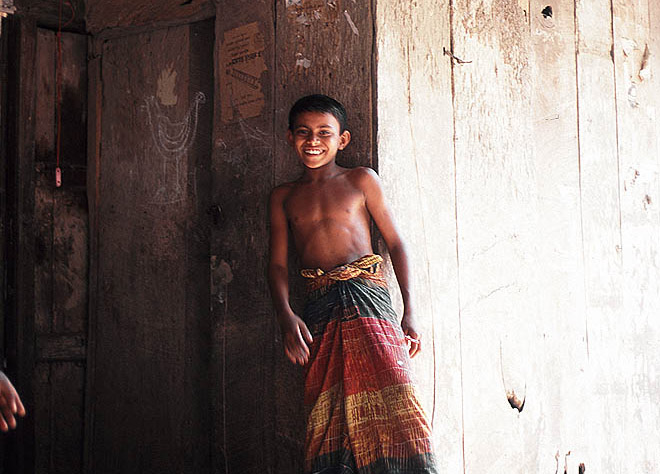 🇮🇳 India and 5 moreLungiলুঙ্গি
A cloth tube or sheet tied at the waist, worn across South and Southeast AsiaCotton · Batik · Checks and stripes
🇮🇳 India and 5 moreLungiলুঙ্গি
A cloth tube or sheet tied at the waist, worn across South and Southeast AsiaCotton · Batik · Checks and stripes
 🇮🇳 IndiaPasapali sari
A handloom ikat saree from Odisha with chess-board checks in contrasting colours.Ikat · Checks and stripes
🇮🇳 IndiaPasapali sari
A handloom ikat saree from Odisha with chess-board checks in contrasting colours.Ikat · Checks and stripes
 🇮🇳 India and 4 moreSariसाड़ी
A single unstitched length of cloth, tucked at the waist and slung over one shoulderSilk · Brocade · Ikat
🇮🇳 India and 4 moreSariसाड़ी
A single unstitched length of cloth, tucked at the waist and slung over one shoulderSilk · Brocade · Ikat