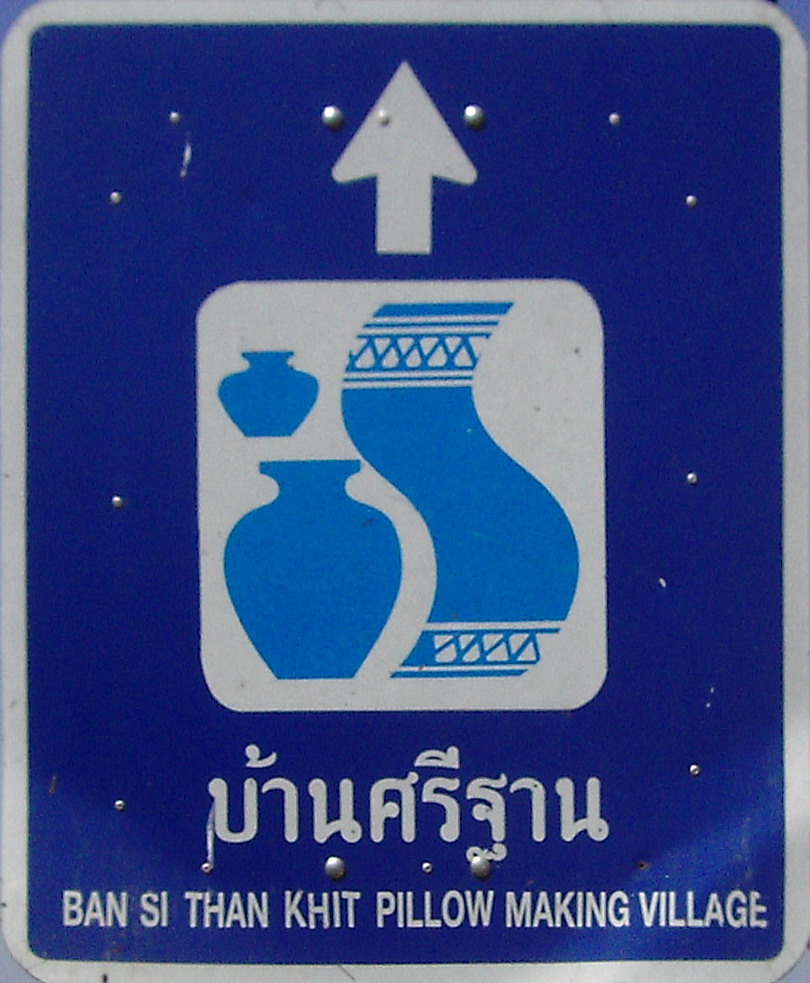
Khit
In its own language: ผ้าขิด
A handwoven cloth from Isan, Thailand, with geometric patterns that seem to float.
Khit is a handwoven cloth from Isan, northeastern Thailand, made on traditional looms with geometric patterns that appear to float over a lighter ground. Once part of everyday household dress, it is now kept alive by village weavers and worn mostly for ceremonies and folk performances.
- About 72 traditional patterns, nearly all geometric, each with its own name
- Patterns are woven in a darker shade so they seem to float over a light ground
- Isan girls once learned to weave khit before marrying
- A royal training project at Chitralada Palace revived silk weaving from 1977
- The khit pillow is one of the main crafts now sold to visitors
What is Khit?
Khit is a handwoven cloth from Isan, the northeast of Thailand. Weavers work on traditional looms, building up small geometric patterns in a darker shade against a paler ground, so the design seems to hover above the cloth. Red, purple and dark green are the favoured colours, though others appear as well. There are some 72 named patterns, most of them geometric, a few shaped like fish, elephants or turtles. In the past the cloth served the household itself: shoulder cloths, pillows, bed sheets and everyday dress. Today it is worn mainly for ceremonies, formal occasions and folk performances, and its patterns live on in cushions made for visitors.
Where does Khit come from?
Khit belongs to Isan, Thailand's northeastern region, and is counted among the country's old cloths. It sits alongside other Thai weaving traditions: chok cloth in the centre, mudmee and yok elsewhere. Weaving was once part of growing up there. An ancestral custom asked Isan girls to learn khit before marriage and make fine pieces for the home they would keep. As local dress fell away, the craft narrowed to performance and ceremony. Its survival owes much to Queen Sirikit, who pressed villagers to keep the tradition and sell their work, and to a training project she opened at Chitralada Palace in June 1977 that brought silk weaving back to rural areas.
How is Khit made?
Khit is woven by hand on traditional looms. The weaver works the pattern into the cloth as it grows on the loom, so the motifs sit slightly raised and appear to float over the ground colour. Around 72 patterns are known, nearly all geometric, and each carries its own traditional name. In the revival years, a royal programme at Chitralada Palace taught the full silk chain: growing mulberry trees, raising silkworms, reeling the thread, dyeing it and weaving. Among the cloths that came back was praewa, which mixes khit patterns with chok.
Khit, drawn
Colours, motifs and borders
The palette leans on red, purple and dark green, with other colours alongside. Patterns are woven in a darker tone over a paler ground, which makes them look as if they float free of the cloth. Most designs are geometric; a few take the shape of fish, elephants or turtles. Every pattern has a traditional name. There is also praewa, a cloth that combines khit patterning with chok patterns from Central Thailand.
How Khit is worn
In the past, khit cloth dressed the household: people wore it as local dress and as a shoulder cloth, a length of fabric draped across one shoulder, and it served as pillow covers and bed sheets too. Local-style dress has since fallen out of daily use. Today khit is seen mostly in folkloric performances and in formal or ceremonial wear for men and women.
When Khit is worn
Khit's place has shifted over a lifetime. Girls once wove it as part of preparing for marriage, filling their future households with fine cloth. Ordinary wear has given way to special moments: the cloth now marks ceremonies and formal occasions for men and women, and it is central to folkloric performance in Isan. Visitors most often meet it as the khit pillow, a cushion that shows off the traditional patterns.
Styles of Khit
Thailand's handwoven cloths form a family, and khit is the Isan member. Chok cloth belongs to Central Thailand; mudmee (also called matmi) and yok are other main types. The revival after 1977 brought back several at once: yokdok, a brocade; chok; praewa, which blends khit and chok patterns; hang krarok, known as squirrel-tail; and plain silk. Weaving survives across a band of northeastern provinces, strongest in Chaiyaphum, Udon Thani and Yasothon, and also in Amnat Charoen, Kalasin, Mukdahan, Sisaket and Ubon Ratchathani.
What Khit means
Khit's survival is a story of patronage and livelihood. Queen Sirikit encouraged villagers to keep weaving and to sell their cloth through handicraft organisations aimed at tourists, and a training programme she began at Chitralada Palace in 1977 brought silk weaving back to rural Isan. The trade now centres on craft for visitors, above all the khit pillow. For weavers, the 72 named patterns hold knowledge that once marked a girl as ready for marriage.
Questions people ask about Khit
Where does khit cloth come from?
It is an ancient woven cloth of Isan, the northeastern region of Thailand. The weaving industry survives especially in Chaiyaphum, Udon Thani and Yasothon provinces, and also in Amnat Charoen, Kalasin, Mukdahan, Sisaket and Ubon Ratchathani.
How is khit cloth made?
Weavers work by hand on traditional looms, weaving the pattern into the cloth so it appears to float above a lighter background. There are roughly 72 patterns, mostly geometric, and each one carries a specific traditional name.
What is khit used for now?
Everyday local dress has largely disappeared. Khit appears today in folkloric performance and in dress for ceremonies and formal events, for men and women alike. Its patterns also cover the khit pillow, one of the main items sold to visitors.
What does khit look like?
It favours red, purple and dark green, with other colours used as well. Designs are mostly geometric, woven in a darker tone over a light background, and some take recognisable shapes such as fish, elephants and turtles.
Why is khit still woven?
Queen Sirikit backed the weavers, encouraging them to sell through handicraft organisations aimed at tourists. Her training project at Chitralada Palace, begun in June 1977, revived silk weaving in rural areas, from mulberry growing through to weaving.
Good reading and sources
The facts on this page come from the Wikipedia article "Khit", written by its contributors and used under the CC BY-SA 4.0 licence, and from its Wikidata record (CC0). EveryPallu rewrote the text in its own words, with AI assistance, and compares every page with the article to make sure no passage is copied. It may be reused under the same CC BY-SA 4.0 licence with a link back.
It may contain mistakes. Traditions, weaves and prices differ from one weaver, town or shop to the next, and it is not buying advice. If something is wrong, tell us. Last refreshed 2026-10-04.
More from Thailand
All the sarees of Thailand 🇱🇦 Laos and 1 moreSinhສິ້ນ
A handwoven tube skirt of Laos and northern Thailand, its hem telling where it was madeSilk
🇱🇦 Laos and 1 moreSinhສິ້ນ
A handwoven tube skirt of Laos and northern Thailand, its hem telling where it was madeSilk
 🇮🇩 Indonesia and 4 moreKebayaꦏꦼꦧꦪ
A front-opening blouse worn across Southeast Asia with a sarong or kainCotton · Embroidery · Batik
🇮🇩 Indonesia and 4 moreKebayaꦏꦼꦧꦪ
A front-opening blouse worn across Southeast Asia with a sarong or kainCotton · Embroidery · Batik
 🇹🇭 ThailandPanungผ้านุ่ง
A cotton strip wrapped at the waist and falling below the knees, worn in ThailandCotton · Checks and stripes
🇹🇭 ThailandPanungผ้านุ่ง
A cotton strip wrapped at the waist and falling below the knees, worn in ThailandCotton · Checks and stripes
 🇹🇭 ThailandThai silkผ้าไหมไทย
Hand-woven Thai silk with a two-tone sheen, from glossy mulberry and matte eri cocoonsSilk · Brocade
🇹🇭 ThailandThai silkผ้าไหมไทย
Hand-woven Thai silk with a two-tone sheen, from glossy mulberry and matte eri cocoonsSilk · Brocade
Its cousins elsewhere
 🇮🇳 India and 4 moreSariसाड़ी
A single unstitched length of cloth, tucked at the waist and slung over one shoulderSilk · Brocade · Ikat
🇮🇳 IndiaKimkhwab
A heavy silk brocade woven with gold and silver yarns, famed in Mughal IndiaSilk · Brocade · Zari work
🇮🇳 IndiaJamawar
A brocaded shawl cloth from Kashmir, once sold by the yard and woven in pashminaWool · Brocade
🇮🇳 India and 4 moreSariसाड़ी
A single unstitched length of cloth, tucked at the waist and slung over one shoulderSilk · Brocade · Ikat
🇮🇳 IndiaKimkhwab
A heavy silk brocade woven with gold and silver yarns, famed in Mughal IndiaSilk · Brocade · Zari work
🇮🇳 IndiaJamawar
A brocaded shawl cloth from Kashmir, once sold by the yard and woven in pashminaWool · Brocade
 🇮🇳 IndiaChanderi sari
A silk sari woven in Chanderi, Madhya Pradesh, with gold and silver zariSilk · Brocade · Zari work
🇮🇳 IndiaChanderi sari
A silk sari woven in Chanderi, Madhya Pradesh, with gold and silver zariSilk · Brocade · Zari work