
Balinese textiles
The woven cloths of Bali, from sacred double ikat to gold-dusted ceremony wear
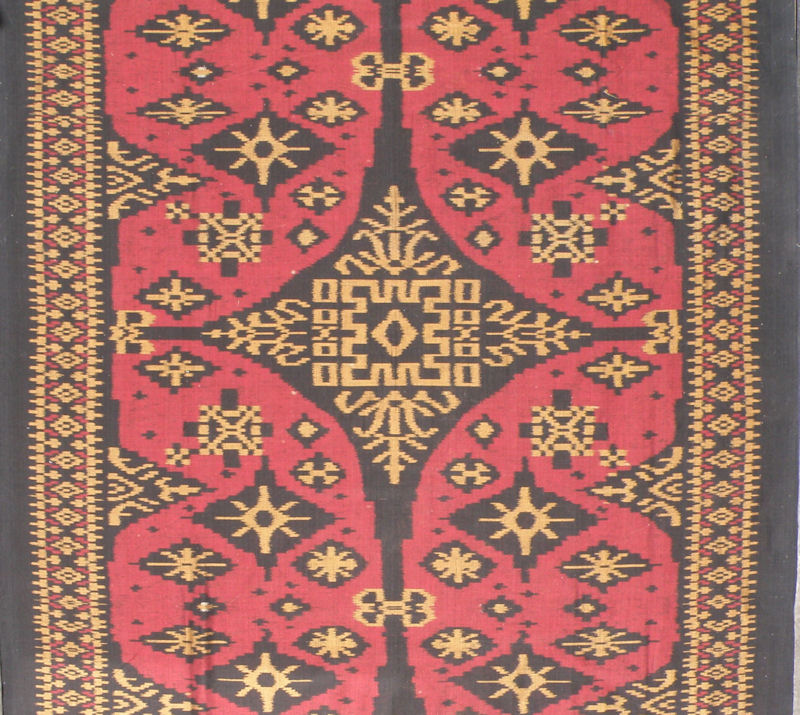
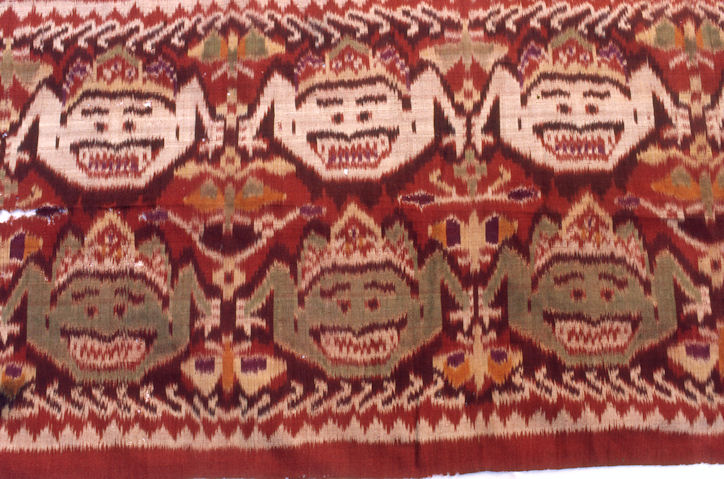
Cloths woven and decorated across Bali, Indonesia, by village weavers on back strap and other hand looms. They include sacred double ikat geringsing, weft ikat endek and cepuk, gold-thread songket and checked poleng, worn at temples, weddings and daily offerings.
- Geringsing, a sacred double ikat, is woven in the village of Tenganan Pegringsinga
- Poleng's black and white checks wrap sacred trees, rocks and shrines across Bali
- Early endek from the kingdom of Buleleng, late 19th century, were red with songket ends
- At Balinese weddings the bride and groom dress in a matched pair of songket
- Prada gilds cloth with gold dust or leaf, once popular in Majapahit's aristocratic circles
What is Balinese textiles?
In Bali, cloth does more than clothe the body. It is a medium for recognising the divine order of the universe, and it sits at the centre of nearly every Hindu rite on the island. Village weavers work on back strap and other unmechanized looms, making checkered poleng, weft ikat endek, striped keling, gauzy sacred bebali, gold-thread songket and the double ikat geringsing. Cloth is worn wrapped at the waist as a kain or sarong, finished with a sash, by men and women alike, at temples, weddings and working days. Old cloth is not prized for its age; in the damp tropics it decays quickly, and replacing it is itself a good deed.
Where does Balinese textiles come from?
Bali's cloth traditions reach back to court ties with Java from before the 10th century. When the Majapahit kingdom fell, much of the Javanese aristocracy moved to Bali and carried the traditions on, so the island preserves arts of pre-Islamic Java as well as its own. The old poem Rangga Lawe tells of Raden Wijaya, the first Majapahit king, arming his warriors with geringsing sashes against harm in battle; old Javanese sources place prada gilding in Majapahit's aristocratic circles. Written record comes late: the oldest surviving endek, from the north Balinese kingdom of Buleleng, date to the late 19th century. W.O.J. Nieuwenkamp, the first European writer on geringsing, worked out where the cloth came from and journeyed to Tenganan.
How is Balinese textiles made?
Most of these cloths are woven by hand. Endek and cepuk are weft ikat: weft threads are tied and dyed so the pattern surfaces as weaving proceeds. Geringsing goes further; warp and weft are both dyed to carry the pattern together, the dyeing itself complex and ritualized, and the weaver adjusts each pass of the weft with a pick so the design lines up exactly. Songket adds a supplementary weft, once all silk with real gold thread, today often cotton with gimp golden and silver yarns. Keling uses hand spun cotton coloured with dyes from sunti roots and kunti fruit. Prada cloth is glued with fish bone or buffalo hide paste, then covered in gold dust or leaf, though printed gold paint and plastic foil have largely replaced the real thing.
Balinese textiles, drawn
Colours, motifs and borders
Patterns speak plainly here. Poleng is the black and white checkerboard wrapped around trees, rocks and shrines. Geringsing keeps to red, neutral and black, in about twenty known patterns, from cloths 20 cm wide to lengths beyond two metres. Early endek from Buleleng were red and geometric with songket-woven ends; yellow and green arrived later. Keling is striped in red, yellow, deep blue and black. Each sacred bebali cloth has a name of its own: cenana kawi, striped green, yellow and red on white; bias membah, grey and white; enkakan taluh, bold red-and-white checks. Lamak banners carry a cili figure, linked to the fertility goddess Dewi Sri, above a row of tumpal.
How Balinese textiles is worn
Clothing is built from wrapped lengths, not cut garments. A woman making the daily household offerings wears at least a sash at her waist. Village men of the banjar, the communal work group, tie sarong and sash when they gather at the temple. In Nusa Penida in the 1930s, Claire Holt saw women in striped keling underskirts beneath a dark blue kain, a wrapped hip cloth, with only a small part showing. For life's biggest moments, bride and groom dress in a matched pair of songket wraps, and the metatah teeth filing calls for songket too. The grander the occasion, the more layered the dress.


When Balinese textiles is worn
Every rite calls for cloth. Keling wraps appear at the otonin ceremony when a child reaches six months, and cenana kawi cloth is laid out at the three month ritual and set in the central shrine of ancestral temples. At weddings, bride and groom dress in matching songket; the metatah teeth filing calls for it as well. Lamak banners hang from penjor at Galungan and before temples at other major festivals. Cepuk, once ceremonial dress, now more often decorates temples. Prada turns up at almost every ceremonial function, on umbrellas, penjor and dancers' costumes, and geringsing is sought for healing, exorcism included.
Styles of Balinese textiles
The tradition is alive, so it shifts, district by district. Endek was once the preserve of high caste families, woven piece by piece on back strap looms; today workshops around Gianyar, Denpasar and Tabanan run unmechanized ATBM looms and turn it out by the yard. Poleng names the checkered pattern, not the material: most is printed and comes from Java, though some Balinese weavers still hand weave it for special uses. Songket, once confined to the very top of society, now belongs to anyone who can afford it. Real gold prada is rarely seen, replaced by gold paint and plastic foil, while new bebali, made with natural dyes and machine-made cotton, matches pieces collected in the 1920s.
Care and buying
Cloth in the tropics decays quickly, and Balinese practice accepts this. Apart from the especially sacred pieces, old cloth is not treasured for its age; replacing worn cloth is itself a virtuous act. When judging quality, note that bebali weavers today aim for a finish close to textiles collected in the 1920s.
What Balinese textiles means
In Bali a cloth is a symbol before it is a garment. From the yarn onward, textile expresses how people read the divine order of the universe, and it stands at the centre of the island's Hindu spiritual life. Some cloths carry stories: keling may take its name from the Balinese word for an Indian merchant, or from the legend of Keling, wife of the primal king Kaung of Tenganan. The seamless gedogan and wangsul cloths are woven deliberately lopsided, one side longer, to stand for purusa and predana, male and female. Because Javanese nobles settled here after Majapahit fell, Bali keeps arts of pre-Islamic Java as well as its own.
Questions people ask about Balinese textiles
Where do Balinese textiles come from?
From the island of Bali in Indonesia, with cloth arts tied to Java's old courts from before the 10th century. After Majapahit fell, Javanese nobles settled in Bali and carried the traditions on. Weaving continues in villages like Tenganan Pegringsinga and in workshops around Gianyar, Denpasar and Tabanan.
How is geringsing made?
It is a double ikat: both warp and weft threads are dyed before weaving so the pattern comes from both directions. The dyeing is complex and ritualized. The cloth is woven loosely and evenly, and the weaver adjusts each weft pass with a pick so the design stays in exact alignment.
What is poleng cloth?
It is the black and white checkered cloth seen across Bali. The name refers to the pattern only, not to the material or whether it is woven or printed. Most printed poleng comes from Java, though Bali still has weavers who make it by hand, and it wraps sacred trees, rocks and shrines.
What do Balinese couples wear at a wedding?
A pair of matching songket wraps, cloth patterned with a supplementary weft that was once pure silk with real gold thread. Songket was once reserved for the highest castes; now anyone who can afford it wears it, and it also appears at the metatah teeth filing ceremony.
Are these textiles still made by hand?
Many are. Endek runs on unmechanized ATBM looms in Balinese workshops, and geringsing demands slow, precise hand weaving. Yet much printed poleng comes from Java, and real gold prada has largely given way to printed gold paint and plastic foil. New bebali is made with natural dyes and manufactured cottons.
Good reading and sources
The facts on this page come from the Wikipedia article "Balinese textiles", written by its contributors and used under the CC BY-SA 4.0 licence, and from its Wikidata record (CC0). EveryPallu rewrote the text in its own words, with AI assistance, and compares every page with the article to make sure no passage is copied. It may be reused under the same CC BY-SA 4.0 licence with a link back.
It may contain mistakes. Traditions, weaves and prices differ from one weaver, town or shop to the next, and it is not buying advice. If something is wrong, tell us. Last refreshed 2026-10-04.
More from Indonesia
All the sarees of Indonesia 🇮🇩 Indonesia and 5 moreBatikꦧꦛꦶꦏ꧀
A wax-resist way of dyeing cloth, most developed on the island of JavaSilk · Tie-dye · Block print
🇮🇩 Indonesia and 5 moreBatikꦧꦛꦶꦏ꧀
A wax-resist way of dyeing cloth, most developed on the island of JavaSilk · Tie-dye · Block print
 🇮🇩 Indonesia and 5 moreSarongꦱꦫꦸꦁ
A wrapped tube of cloth worn at the waist, from the Malay world to Kerala and SomaliaCotton · Batik · Ikat
🇮🇩 Indonesia and 5 moreSarongꦱꦫꦸꦁ
A wrapped tube of cloth worn at the waist, from the Malay world to Kerala and SomaliaCotton · Batik · Ikat
 🇮🇩 IndonesiaGeringsingᬕ᭄ᬭᬶᬂᬲᬶᬂ (gringsing)
A sacred double ikat cloth woven only in Tenganan, a Bali Aga village in BaliCotton · Ikat
🇮🇩 IndonesiaGeringsingᬕ᭄ᬭᬶᬂᬲᬶᬂ (gringsing)
A sacred double ikat cloth woven only in Tenganan, a Bali Aga village in BaliCotton · Ikat
 🇮🇩 Indonesia and 4 moreKebayaꦏꦼꦧꦪ
A front-opening blouse worn across Southeast Asia with a sarong or kainCotton · Embroidery · Batik
🇮🇩 Indonesia and 4 moreKebayaꦏꦼꦧꦪ
A front-opening blouse worn across Southeast Asia with a sarong or kainCotton · Embroidery · Batik
Its cousins elsewhere
All cotton sarees 🇮🇳 India and 4 moreSariसाड़ी
A single unstitched length of cloth, tucked at the waist and slung over one shoulderSilk · Brocade · Ikat
🇮🇳 India and 4 moreSariसाड़ी
A single unstitched length of cloth, tucked at the waist and slung over one shoulderSilk · Brocade · Ikat
 🇵🇰 PakistanSindhi embroideryسنڌي ٿرت
Needlework and mirror embroidery crafted across the desert communities of SindhEmbroidery · Mirror work
🇵🇰 PakistanSindhi embroideryسنڌي ٿرت
Needlework and mirror embroidery crafted across the desert communities of SindhEmbroidery · Mirror work
 🇮🇳 IndiaChanderi sari
A silk sari woven in Chanderi, Madhya Pradesh, with gold and silver zariSilk · Brocade · Zari work
🇮🇳 IndiaChanderi sari
A silk sari woven in Chanderi, Madhya Pradesh, with gold and silver zariSilk · Brocade · Zari work
 🇮🇳 IndiaGota patti
Rajasthani applique embroidery that stitches down ribbons of gold and silverGeorgette · Appliqué · Embroidery
🇮🇳 IndiaGota patti
Rajasthani applique embroidery that stitches down ribbons of gold and silverGeorgette · Appliqué · Embroidery