
Tangail saree
A Bengal handloom saree in cotton or silk, known for stepped extra-weft patterns.
Tangail saree is a traditional handwoven Bengal cloth originating in Bangladesh and also produced in West Bengal. Crafted from fine cotton, silk, or tasar yarns, it features stepped motifs and textured borders woven on pit looms for everyday wear.
- UNESCO recognized the Tangail saree weaving tradition as Intangible Cultural Heritage in 2025.
- Originated in Tangail district from traditional muslin weaving lineages.
- Woven on fly shuttle pit looms using fine cotton, silk, and tasar yarns.
- Features stepped, graphic-like extra-weft motifs derived from jamdani techniques.
What is Tangail saree?
Tangail saree is a traditional handwoven garment that originated in the Bengal region. First developed in the Tangail district of modern Bangladesh, it is also widely woven across West Bengal in India. The saree is made from cotton, silk, or wild tasar threads, sometimes blended with synthetic filaments. It is known for its crisp handle, clean surface free of reed marks, and delicate supplementary weft patterns. Historically woven by the Hindu Basak community, it is now crafted by both Hindu and Muslim artisans. Wearers value the textile for its light texture and practical comfort during regular daytime routines.
Where does Tangail saree come from?
The craft emerged in the late nineteenth century. Weavers tracing their lineage to historic muslin artisans initially moved from Dhamrai and Chauhatta in Dhaka to settle in Tangail. They began by weaving plain, unornamented cloth. In the twentieth century, shifting political boundaries altered the weaving landscape. Following the 1947 partition, the 1965 tensions, and the 1971 liberation war, many Hindu Basak families fled East Pakistan to settle in West Bengal. Working out of refugee camps in places like Shantipur, Kalna, and Samudragarh, they brought their looms and integrated their methods with local Shantipuri traditions to re-establish the craft.
How is Tangail saree made?
Weavers produce the cloth on fly shuttle pit looms using two or more shuttles. The yarn selection includes fine 100s count cotton, mulberry silk strands, tasar, and synthetic filaments. Artisans insert extra weft threads alongside the base weave to form decorative motifs, following a precise one-to-two ratio against the ground weft. The finished fabric receives a specialized physical treatment that eliminates reed marks, known locally as jorebhanga. This process gives the saree its characteristic firm and smooth feel. Traditionally, families worked together without hiring outside workers to preserve their specialized skills, and finished pieces are folded using the guti bhanj method.
Tangail saree, drawn
Colours, motifs and borders
The design features stepped, geometric outlines that resemble graphic pixelation. Motifs known as booties decorate the body through additional warp or weft threads, created with or without jacquard mechanisms. The saree edges vary from plain selvages to elaborate extra-warp jacquard bands. At the pallu, called the anchal, weavers incorporate traditional horizontal stripes or colorful cross borders filled with supplementary weft patterning. The base cloth can remain entirely unadorned or carry scattered small motifs across the field.
How Tangail saree is worn
The cloth is worn as a standard wrapped saree across the Bengal region. Its firm texture and lack of reed marks allow it to drape smoothly around the body. Finished pieces are folded into the regional guti bhanj style for transport and storage. The lightweight cotton and silk yarns make it comfortable for prolonged daily use without feeling heavy or cumbersome.


When Tangail saree is worn
Tangail sarees serve primarily as everyday attire. The fine cotton and silk weaves offer comfort and breathability for day-to-day work, home tasks, and casual social visits. Because they range from simple plain bodies to decorated jacquard borders, wearers select lighter, unadorned versions for ordinary daytime use and patterned varieties for social gatherings.
Styles of Tangail saree
Two primary branches of the saree exist today. The original Bangladeshi form relies on traditional handloom techniques developed in Tangail. The West Bengal variation represents a hybrid style created when migrant Basak weavers merged their Dhaka-Tangail methods with Shantipuri loom practices. This Indian version uses pit looms with jacquard attachments to produce a simplified adaptation of classic Jamdani supplementary weft patterning.
What Tangail saree means
Tangail weaving carries deep cultural recognition in South Asia. In 2025, UNESCO inscribed the traditional weaving art of Tangail saree from Bangladesh as Intangible Cultural Heritage. In India, the office in Chennai granted Geographical Indication status to Bengal's Tangail saree in 2024, recognizing the distinct fusion style developed by migrant communities in Nadia and Purba Bardhaman. The GI status sparked public debate in Bangladesh over heritage rights, highlighting the saree's enduring importance to cultural identity on both sides of the border.
Questions people ask about Tangail saree
Where does the Tangail saree originate?
The saree originated in the Tangail district of Bangladesh during the late nineteenth century. Weavers originally from Dhamrai and Chauhatta in Dhaka settled in Tangail to produce the cloth, which later spread to West Bengal through migrating artisan families.
How is a Tangail saree made?
Artisans weave it on fly shuttle pit looms using cotton, silk, or tasar yarns with two or more shuttles. Supplementary weft threads are laid into the ground weave at a one-to-two ratio to create stepped graphic motifs, finished without reed marks.
Who traditionally weaves Tangail sarees?
Hindu weavers of the Basak community originally developed the craft, keeping techniques within families. Following migrations in 1947 and 1971, the craft expanded across West Bengal, and today both Hindu and Muslim artisans weave these sarees in Bangladesh.
What distinguishes the West Bengal version of the Tangail saree?
The West Bengal variety blends Dhaka-Tangail weaving with Shantipuri loom traditions. It uses pit looms with extra-warp jacquard attachments and supplementary weft insertions, resulting in a structured cloth with stepped designs and a stiff finish free of reed marks.
Good reading and sources
- 'টাঙ্গাইল শাড়ির' উৎপত্তি ভারতে দাবি করায় বাংলাদেশে বিস্ময় ও বিতর্কBBC, Article
- Traditional Saree weaving art of TangailUNESCO, Heritage listing
- Tangail saree on WikipediaEncyclopedia
- More photos on Wikimedia CommonsPhotos and video
- Wikidata recordOpen data
The facts on this page come from the Wikipedia article "Tangail saree", written by its contributors and used under the CC BY-SA 4.0 licence, and from its Wikidata record (CC0). EveryPallu rewrote the text in its own words, with AI assistance, and compares every page with the article to make sure no passage is copied. It may be reused under the same CC BY-SA 4.0 licence with a link back.
It may contain mistakes. Traditions, weaves and prices differ from one weaver, town or shop to the next, and it is not buying advice. If something is wrong, tell us. Last refreshed 2026-10-06.
More from Bangladesh
All the sarees of Bangladesh 🇮🇳 India and 4 moreSariसाड़ी
A single unstitched length of cloth, tucked at the waist and slung over one shoulderSilk · Brocade · Ikat
🇮🇳 India and 4 moreSariसाड़ी
A single unstitched length of cloth, tucked at the waist and slung over one shoulderSilk · Brocade · Ikat
 🇮🇳 India and 2 moreKhadi
Hand-spun and hand-woven cloth from the subcontinent, tied to the swadeshi movementCotton
🇮🇳 India and 2 moreKhadi
Hand-spun and hand-woven cloth from the subcontinent, tied to the swadeshi movementCotton
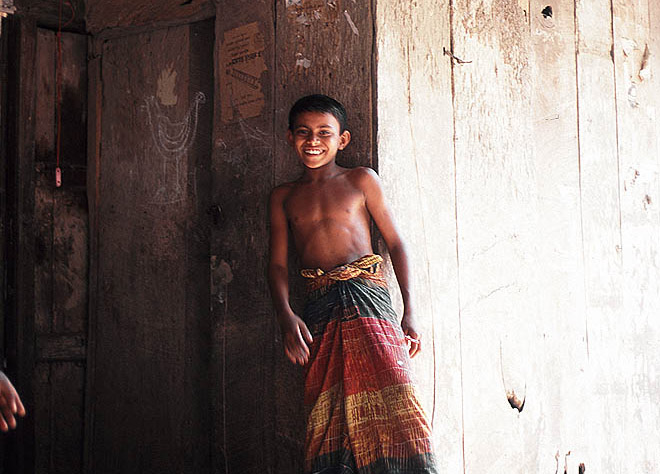 🇮🇳 India and 5 moreLungiলুঙ্গি
A cloth tube or sheet tied at the waist, worn across South and Southeast AsiaCotton · Batik · Checks and stripes
🇮🇳 India and 5 moreLungiলুঙ্গি
A cloth tube or sheet tied at the waist, worn across South and Southeast AsiaCotton · Batik · Checks and stripes
 🇮🇳 India and 1 moreDhoti
An unstitched cloth tied at the waist and worn to the ankle, the men's answer to the sariCotton
🇮🇳 India and 1 moreDhoti
An unstitched cloth tied at the waist and worn to the ankle, the men's answer to the sariCotton
Its cousins elsewhere
All cotton sarees 🇮🇳 India and 1 moreTant sari
A light, near-transparent cotton sari woven in Bengal, suited to hot, humid weatherCotton · Jamdani · Embroidery
🇮🇳 IndiaKorial sariকোরিয়াল শাড়ি
A red-bordered mulberry silk saree woven on hand looms in West BengalSilk · Jamdani · Zari work
🇮🇳 India and 1 moreUppada Jamdani sari
A light handwoven silk sari from Uppada, Andhra Pradesh, patterned in the jamdani waySilk · Jamdani · Zari work
🇮🇳 IndiaKotpad handloom fabric
Cotton and tussar sarees dyed with aul-root dye, handwoven in Koraput, OdishaCotton · Jamdani
🇮🇳 India and 1 moreTant sari
A light, near-transparent cotton sari woven in Bengal, suited to hot, humid weatherCotton · Jamdani · Embroidery
🇮🇳 IndiaKorial sariকোরিয়াল শাড়ি
A red-bordered mulberry silk saree woven on hand looms in West BengalSilk · Jamdani · Zari work
🇮🇳 India and 1 moreUppada Jamdani sari
A light handwoven silk sari from Uppada, Andhra Pradesh, patterned in the jamdani waySilk · Jamdani · Zari work
🇮🇳 IndiaKotpad handloom fabric
Cotton and tussar sarees dyed with aul-root dye, handwoven in Koraput, OdishaCotton · Jamdani