
Batik Parang
In its own language: ꧋ꦧꦠꦶꦏ꧀ꦥꦫꦁ
A diagonal wave batik pattern from Java, steeped in royal philosophy
Batik Parang is a historic Indonesian wax-resist textile pattern that originated in the royal courts of Central Java. Skilled artisans craft its flowing diagonal wave motifs on cotton, cambric, or silk, creating an unbroken design traditionally worn by Javanese royalty and nobles.
- One of the oldest batik motifs developed in the royal courts of Central Java.
- Inspired by rolling ocean tides observed along the southern coast of Java.
- Characterized by unbroken diagonal bands of interlocking S-shaped curves.
- Historically reserved for Javanese monarchs, knights, and royal princesses.
What is Batik Parang?
Batik Parang is an ancient Indonesian wax-resist textile pattern known for its continuous slanted lines. It features interlocking curved shapes that form repeated letter S figures. The design takes its name from pereng, the Javanese word for a slope. Fabric makers apply hot liquid wax using a handheld canting tool or copper stamp onto woven cotton, cambric, or silk cloth before dyeing. Historically, this cloth was reserved for Javanese monarchs and court nobles. Each slanted band conveys endurance, personal discipline, and unbroken family relationships.
Where does Batik Parang come from?
The pattern emerged during the Mataram sultanate and Kartasura court eras in Central Java. Historical lore credits Sultan Agung of Mataram with creating the motif after observing crashing ocean tides at Parangtritis on the southern coast of Java. An early variant, Parang Rusak, is linked to Panembahan Senapati, who devised it while meditating along the same shoreline as waves struck coastal reefs. Over successive generations, Javanese rulers gifted these textiles to their children to pass on ideals of leadership and fortitude.
How is Batik Parang made?
Artisans make the textile using established Indonesian wax-resist methods. Craftswomen draw detailed lines by hand with a spouted pen called a canting, keeping wax hot in a small heated pan. They also use patterned metal stamps for stamped batik, known as batik cap, alongside freehand written batik, or batik tulis. Base materials include fine cambric fabric, cotton, or silk. Once wax application is complete, the fabric undergoes dyeing and boiling steps to fix the pattern.
Batik Parang, drawn
Colours, motifs and borders
The layout is built around steep diagonal bands filled with unbroken, interlocking S-shaped curves. These rolling forms mimic continuous ocean tides. Running between the S shapes, vertical lines add visual structure and symbolize loyalty. Motifs range in proportion from bold, oversized formats that signify majesty to miniature, delicate arrangements with a gentle appearance.
How Batik Parang is worn
In royal Javanese courts, monarchs and knights wore parang textiles as regular garments to signify their daily commitment to moral self-restraint. Royal princesses wore smaller, refined patterns reflecting gentleness and wisdom. Specific ceremonial cloths were also worn by leaders during formal investiture rituals.


When Batik Parang is worn
Parang textiles served both daily and ceremonial roles in historical court life. Rulers and warriors wore them during routine palace duties as a reminder of internal discipline. Select varieties, such as Parang Slobog, are specifically reserved for inauguration ceremonies to encourage patience and wise governance in newly appointed leaders.
Styles of Batik Parang
Several distinct styles exist within this tradition. Parang Barong features large motifs conceived by Sultan Agung to symbolize self-control and prudence. Parang Rusak presents smaller, reef-inspired curves representing the mastery of inner passions. Parang Klitik uses delicate, fine detailing traditionally worn by palace princesses. Parang Slobog displays a specialized arrangement used for ceremonial inaugurations.
What Batik Parang means
Beyond decorative appeal, Parang carries moral significance across Java. Its name connects to the word perang, which symbolizes an ongoing internal battle against personal vices rather than violence against others. In 2009, UNESCO inscribed Indonesian batik on the Representative List of Intangible Cultural Heritage. The motif remains a cultural symbol of resilience, wise leadership, and unbroken ancestry.
Questions people ask about Batik Parang
Where does Batik Parang come from?
Batik Parang originated in Central Java, Indonesia, during the Mataram sultanate era. Tradition credits Sultan Agung with creating the pattern after observing ocean waves along the southern coastline at Parangtritis.
How is Batik Parang made?
Artisans apply hot liquid wax to cotton, cambric, or silk using a small spouted tool called a canting for hand-drawn designs, or a metal stamp for stamped work, prior to dyeing.
What does the Parang pattern symbolize?
The rolling S-curves represent unstoppable ocean waves. The pattern signifies continuous effort, family succession, patience, and the inner discipline required to master personal desires.
Who traditionally wore Batik Parang?
In historic Java, parang textiles were restricted to royal families, knights, and monarchs. Specific motif sizes were assigned to kings, while finer versions were worn by court princesses.
Good reading and sources
The facts on this page come from the Wikipedia article "Parang (batik)", written by its contributors and used under the CC BY-SA 4.0 licence, and from its Wikidata record (CC0). EveryPallu rewrote the text in its own words, with AI assistance, and compares every page with the article to make sure no passage is copied. It may be reused under the same CC BY-SA 4.0 licence with a link back.
It may contain mistakes. Traditions, weaves and prices differ from one weaver, town or shop to the next, and it is not buying advice. If something is wrong, tell us. Last refreshed 2026-10-04.
More from Indonesia
All the sarees of Indonesia 🇮🇩 Indonesia and 2 moreSongketᬲᭀᬂᬓᬾᬢ᭄
A hand-woven brocade cloth from Sumatra and the Malay world, with gold or silver threadSilk · Brocade · Zari work
🇮🇩 Indonesia and 2 moreSongketᬲᭀᬂᬓᬾᬢ᭄
A hand-woven brocade cloth from Sumatra and the Malay world, with gold or silver threadSilk · Brocade · Zari work
 🇮🇩 Indonesia and 4 moreKebayaꦏꦼꦧꦪ
A front-opening blouse worn across Southeast Asia with a sarong or kainCotton · Embroidery · Batik
🇮🇩 Indonesia and 4 moreKebayaꦏꦼꦧꦪ
A front-opening blouse worn across Southeast Asia with a sarong or kainCotton · Embroidery · Batik
 🇮🇩 Indonesia and 5 moreBatikꦧꦛꦶꦏ꧀
A wax-resist way of dyeing cloth, most developed on the island of JavaSilk · Tie-dye · Block print
🇮🇩 Indonesia and 5 moreBatikꦧꦛꦶꦏ꧀
A wax-resist way of dyeing cloth, most developed on the island of JavaSilk · Tie-dye · Block print
 🇮🇩 Indonesia and 5 moreSarongꦱꦫꦸꦁ
A wrapped tube of cloth worn at the waist, from the Malay world to Kerala and SomaliaCotton · Batik · Ikat
🇮🇩 Indonesia and 5 moreSarongꦱꦫꦸꦁ
A wrapped tube of cloth worn at the waist, from the Malay world to Kerala and SomaliaCotton · Batik · Ikat
Its cousins elsewhere
All cotton sarees 🇲🇲 Myanmar and 1 moreLongyiလုံချည်
A cloth tube worn at the waist in Myanmar, about two metres longCotton · Checks and stripes · Embroidery
🇲🇲 Myanmar and 1 moreLongyiလုံချည်
A cloth tube worn at the waist in Myanmar, about two metres longCotton · Checks and stripes · Embroidery
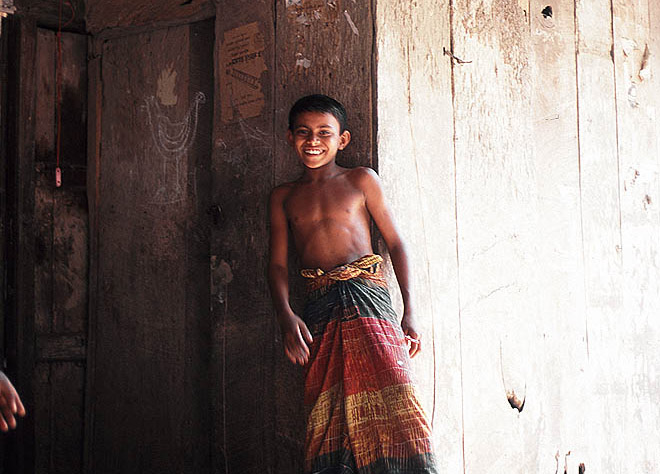 🇮🇳 India and 5 moreLungiলুঙ্গি
A cloth tube or sheet tied at the waist, worn across South and Southeast AsiaCotton · Batik · Checks and stripes
🇮🇳 India and 5 moreLungiলুঙ্গি
A cloth tube or sheet tied at the waist, worn across South and Southeast AsiaCotton · Batik · Checks and stripes
 🇮🇳 IndiaShantiniketan batik
Hand-painted batik from Shantiniketan in Bengal, its colours mixed from leaf and barkBatik · Hand painting
🇮🇳 IndiaShantiniketan batik
Hand-painted batik from Shantiniketan in Bengal, its colours mixed from leaf and barkBatik · Hand painting
 🇮🇳 India and 4 moreSariसाड़ी
A single unstitched length of cloth, tucked at the waist and slung over one shoulderSilk · Brocade · Ikat
🇮🇳 India and 4 moreSariसाड़ी
A single unstitched length of cloth, tucked at the waist and slung over one shoulderSilk · Brocade · Ikat