Cotton sarees
Handspun and mill cotton, crisp or soft: the saree of the working day and of the hot months.
Cotton is a soft plant fibre from the seed pod of the cotton plant, and it is the saree fibre of daily life and hot weather. India has woven it since ancient times, and its handspun and handloom cottons remain among the finest in the world.
What it is and where it comes from
Cotton grows as a fluffy boll around the seeds of the Gossypium plant, and the fibres are short, so they must be spun into yarn before weaving. The Indian subcontinent was one of the earliest places where cotton was spun and woven, and its cloth travelled far across the old trade routes. Today India grows cotton mainly in Gujarat, Maharashtra, Telangana and Rajasthan, among other states. Some sarees use hand-spun khadi yarn, others use mill yarn in many counts, and the count decides how fine, sheer or sturdy the finished cloth will be.
How the cloth is made
Cotton is ginned to remove the seeds, carded to straighten the fibres, and spun into yarn on a spindle, charkha or in a mill. The yarn is sized with starch so that it can bear the strain of the loom, then dyed or bleached. Handloom weavers stretch the warp, work the shuttle through the weft, and add borders with extra threads or with dobby and jacquard attachments. Fine counts, such as those used for muslin and jamdani, need very skilled hands and a humid room so the yarn does not snap. Finishing may include washing, calendering, or a light starch for the crisp look many people love.
How it feels and falls
Cotton is absorbent and breathable, so it feels comfortable on hot, humid days and does not trap heat. A soft mulmul or voile falls loosely and almost drifts, while a crisp, starched handloom stands up in fan-shaped pleats and holds them well through a long day. Cotton takes colour readily, which is why Indian cottons are known for bright prints and deep indigo, madder and turmeric shades. It creases easily and shrinks a little on the first wash, but it also gets softer with each wash. It is a good fibre for people with sensitive skin and for students, teachers, doctors and anyone else who wears a saree all day.
Where in India and South Asia it is woven
Cotton sarees come from nearly every state. Well-known names are Chanderi and Maheshwari in Madhya Pradesh, Kota Doria in Rajasthan, Venkatagiri and Uppada in Andhra Pradesh, Gadwal and Narayanpet in Telangana, Kanchi cotton and Kovai cotton in Tamil Nadu, Dharwad and Ilkal in Karnataka, the Kerala set mundu and kasavu in Balaramapuram and Chendamangalam, and Phulia and Shantipur in West Bengal. Bangladesh is famed for its jamdani from Dhaka and Narayanganj, and Sri Lanka and Pakistan also have strong handloom cotton traditions.
How to tell the real thing
Hold the cloth up to the light and look at the yarn. Handloom cotton shows slight variations in thickness and weave, while powerloom cloth looks very even. Check the border from the back: a woven border has threads carried on the reverse, while a printed border is flat. A handloom mark or a weaver cooperative tag is a useful sign. Rub a corner between your fingers, and real cotton feels soft and slightly dry, while a polycotton blend feels smoother and a little slippery. If a very fine, expensive jamdani is offered at a low price, ask where and by whom it was woven.
Famous sarees and centres
- Chanderi: Sheer cotton and silk-cotton from Madhya Pradesh with a light, glassy feel.
- Maheshwari: Cotton and silk-cotton from the banks of the Narmada, with reversible borders.
- Kota Doria: Square-checked, airy cotton and silk from Kaithoon near Kota in Rajasthan.
- Dhakai Jamdani: Fine cotton muslin with woven motifs, from Dhaka in Bangladesh.
- Venkatagiri: Light cotton from Andhra Pradesh with fine zari borders.
- Kasavu: Off-white Kerala cotton with a gold border, worn at Onam and Vishu.
- Gadwal: Cotton body with a silk border, from Telangana, with an interlocked join.
- Bengal tant: Light, crisp cotton from Bengal, woven for Bengal's heat.
Care
- Wash new cotton separately, as deeply dyed cloth can bleed in the first washes.
- Use mild soap and avoid wringing very fine cloth.
- Dry in the shade to keep colours from fading.
- Iron while still slightly damp, and starch lightly if you like a crisp pleat.
Sources and further reading
Original text by the EveryPallu desk, written with AI assistance and checked against the sources above. If we have something wrong, tell us.
Cotton on EveryPallu
The sarees written up so far, newest and best known first.
 🇧🇩 BangladeshDhakai
A cotton saree woven in Dhaka, Bangladesh, its patterns drawn from nature and alpanaCotton · Jamdani
🇧🇩 BangladeshDhakai
A cotton saree woven in Dhaka, Bangladesh, its patterns drawn from nature and alpanaCotton · Jamdani
 🇮🇩 IndonesiaGeringsingᬕ᭄ᬭᬶᬂᬲᬶᬂ (gringsing)
A sacred double ikat cloth woven only in Tenganan, a Bali Aga village in BaliCotton · Ikat
🇮🇩 IndonesiaGeringsingᬕ᭄ᬭᬶᬂᬲᬶᬂ (gringsing)
A sacred double ikat cloth woven only in Tenganan, a Bali Aga village in BaliCotton · Ikat
 🇮🇳 India and 4 moreWoodblock printing on textiles
Patterns pressed onto cloth with hand-carved wooden blocks, the chhapa of South Asia.Linen · Block print
🇮🇳 India and 4 moreWoodblock printing on textiles
Patterns pressed onto cloth with hand-carved wooden blocks, the chhapa of South Asia.Linen · Block print
 🇮🇳 IndiaTripuri dress
A woven cotton wrap from Tripura, with its own pattern for each Tripuri clan.Cotton
🇮🇳 IndiaTripuri dress
A woven cotton wrap from Tripura, with its own pattern for each Tripuri clan.Cotton
 🇮🇳 India and 2 moreChintzछींट
A painted or woodblock-printed floral cotton cloth originating in GolcondaCotton · Block print · Hand painting
🇮🇳 IndiaShaphee Lanphee
A heavy black and red embroidered textile woven by Meitei craftswomen in ManipurCotton · Embroidery
🇮🇳 India and 2 moreChintzछींट
A painted or woodblock-printed floral cotton cloth originating in GolcondaCotton · Block print · Hand painting
🇮🇳 IndiaShaphee Lanphee
A heavy black and red embroidered textile woven by Meitei craftswomen in ManipurCotton · Embroidery
 🇧🇩 Bangladesh and 2 moreMuslin
A gossamer plain-weave cotton fabric historically spun and woven across BengalCotton · Jamdani
🇧🇩 Bangladesh and 2 moreMuslin
A gossamer plain-weave cotton fabric historically spun and woven across BengalCotton · Jamdani
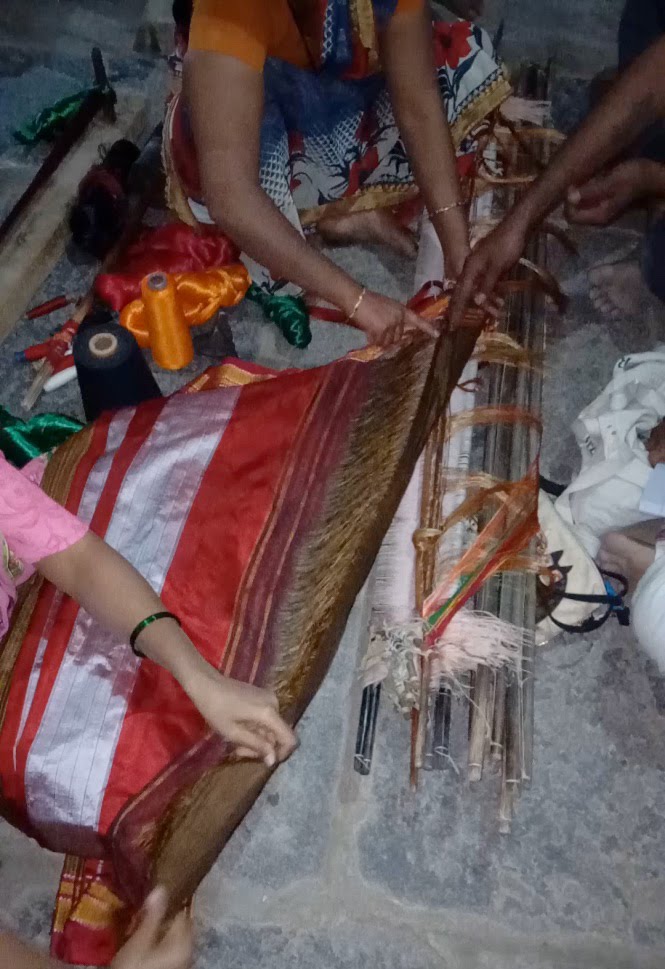 🇮🇳 IndiaIlkal sari
A cotton saree with a loop-joined silk pallu and broad red border, from Ilkal, KarnatakaCotton · Zari work · Embroidery
🇮🇳 IndiaLeirum Pheeꯂꯩꯔꯨꯝ ꯐꯤ
A coarse cotton shawl from Manipur, black and red on white, given to Meitei bridesCotton
🇮🇳 IndiaIlkal sari
A cotton saree with a loop-joined silk pallu and broad red border, from Ilkal, KarnatakaCotton · Zari work · Embroidery
🇮🇳 IndiaLeirum Pheeꯂꯩꯔꯨꯝ ꯐꯤ
A coarse cotton shawl from Manipur, black and red on white, given to Meitei bridesCotton
 🇮🇳 IndiaDokhonaदख'ना
A wrap-around cloth worn by Boro women of Assam, usually yellow, with woven Agor designsCotton
🇮🇳 IndiaPhool Patti ka Kaam
Flowers and leaves cut from cloth and hemmed on, an appliqué craft of Aligarh and RampurCotton · Appliqué · Embroidery
🇮🇳 IndiaToda embroiderypukhoor
Red and black thread embroidery on white cotton, worked by Toda women in the NilgirisCotton · Embroidery
🇮🇳 IndiaDokhonaदख'ना
A wrap-around cloth worn by Boro women of Assam, usually yellow, with woven Agor designsCotton
🇮🇳 IndiaPhool Patti ka Kaam
Flowers and leaves cut from cloth and hemmed on, an appliqué craft of Aligarh and RampurCotton · Appliqué · Embroidery
🇮🇳 IndiaToda embroiderypukhoor
Red and black thread embroidery on white cotton, worked by Toda women in the NilgirisCotton · Embroidery
 🇮🇳 India and 1 moreDhoti
An unstitched cloth tied at the waist and worn to the ankle, the men's answer to the sariCotton
🇮🇳 India and 1 moreDhoti
An unstitched cloth tied at the waist and worn to the ankle, the men's answer to the sariCotton
 🇮🇳 IndiaAntariya
Ancient India's long strip of cloth for the lower body, pleated in frontCotton
🇮🇳 IndiaAntariya
Ancient India's long strip of cloth for the lower body, pleated in frontCotton
 🇮🇳 IndiaKasuti
Counted-thread folk embroidery from Karnataka, stitched on Ilkal and Mysore silk sareesCotton · Embroidery
🇮🇳 IndiaMadisarமடிசார்
A nine-yard Tamil drape tied close to a dhoti, worn by Brahmin women for ritesSilk
🇮🇳 IndiaGadwal sari
A handwoven sari from Telangana with a cotton body, silk border and zari palluSilk · Zari work
🇮🇳 IndiaKasuti
Counted-thread folk embroidery from Karnataka, stitched on Ilkal and Mysore silk sareesCotton · Embroidery
🇮🇳 IndiaMadisarமடிசார்
A nine-yard Tamil drape tied close to a dhoti, worn by Brahmin women for ritesSilk
🇮🇳 IndiaGadwal sari
A handwoven sari from Telangana with a cotton body, silk border and zari palluSilk · Zari work
 🇮🇩 IndonesiaBalinese textiles
The woven cloths of Bali, from sacred double ikat to gold-dusted ceremony wearCotton · Ikat · Brocade
🇮🇩 IndonesiaBalinese textiles
The woven cloths of Bali, from sacred double ikat to gold-dusted ceremony wearCotton · Ikat · Brocade
 🇮🇳 IndiaUttariyaउत्तरीय
An unstitched upper-body cloth from ancient India, wrapped over the shoulder or armsCotton
🇮🇳 IndiaUttariyaउत्तरीय
An unstitched upper-body cloth from ancient India, wrapped over the shoulder or armsCotton
 🇮🇳 IndiaMekhela chador
Assam's two-piece dress: a pleated tube skirt, the mekhela, and a draped sadorSilk
🇮🇳 IndiaMekhela chador
Assam's two-piece dress: a pleated tube skirt, the mekhela, and a draped sadorSilk
 🇲🇲 MyanmarLongyiလုံချည်
A wrap of cloth worn in Myanmar, sewn into a tube and folded at the waistCotton · Checks and stripes · Batik
🇲🇲 MyanmarLongyiလုံချည်
A wrap of cloth worn in Myanmar, sewn into a tube and folded at the waistCotton · Checks and stripes · Batik
 🇮🇳 IndiaSurat zari
Metal-wrapped thread made in Surat and woven into silk sarees across IndiaSilk · Zari work · Brocade
🇮🇳 IndiaSurat zari
Metal-wrapped thread made in Surat and woven into silk sarees across IndiaSilk · Zari work · Brocade
 🇮🇩 Indonesia and 4 moreKebayaꦏꦼꦧꦪ
A front-opening blouse worn across Southeast Asia with a sarong or kainCotton · Embroidery · Batik
🇮🇩 Indonesia and 4 moreKebayaꦏꦼꦧꦪ
A front-opening blouse worn across Southeast Asia with a sarong or kainCotton · Embroidery · Batik
 🇮🇳 IndiaLeheriya
A Rajasthani tie-dye whose slanting stripes echo wind ripples on desert sandCotton · Tie-dye
🇧🇩 BangladeshGrameen checkগ্রামীণ চেক
Bright checked cotton from Bangladesh, woven by village weavers in traditional waysCotton · Checks and stripes
🇮🇳 IndiaKotpad handloom fabric
Cotton and tussar sarees dyed with aul-root dye, handwoven in Koraput, OdishaCotton · Jamdani
🇮🇳 IndiaWangkhei Phee
A see-through white cotton fabric from Manipur, woven by women with hand-woven motifsCotton · Jamdani
🇮🇳 IndiaLeheriya
A Rajasthani tie-dye whose slanting stripes echo wind ripples on desert sandCotton · Tie-dye
🇧🇩 BangladeshGrameen checkগ্রামীণ চেক
Bright checked cotton from Bangladesh, woven by village weavers in traditional waysCotton · Checks and stripes
🇮🇳 IndiaKotpad handloom fabric
Cotton and tussar sarees dyed with aul-root dye, handwoven in Koraput, OdishaCotton · Jamdani
🇮🇳 IndiaWangkhei Phee
A see-through white cotton fabric from Manipur, woven by women with hand-woven motifsCotton · Jamdani
 🇧🇩 Bangladesh and 1 moreJamdaniজামদানি
A sheer cotton muslin saree decorated with hand-woven supplementary weft motifsCotton · Jamdani · Brocade
🇧🇩 Bangladesh and 1 moreJamdaniজামদানি
A sheer cotton muslin saree decorated with hand-woven supplementary weft motifsCotton · Jamdani · Brocade
 🇮🇳 IndiaKalamkariVraata Pani
Cloth art from Andhra Pradesh, drawn with a pen or blocks and dyed with plant coloursCotton · Kalamkari · Hand painting
🇮🇳 IndiaKalamkariVraata Pani
Cloth art from Andhra Pradesh, drawn with a pen or blocks and dyed with plant coloursCotton · Kalamkari · Hand painting
 🇮🇩 Indonesia and 5 moreBatikꦧꦛꦶꦏ꧀
A wax-resist way of dyeing cloth, most developed on the island of JavaSilk · Tie-dye · Block print
🇮🇳 IndiaPipili appliqué workଚାନ୍ଦୁଆ
A stitched-cloth craft from Pipili, Odisha, born to dress the chariots of JagannathCotton · Appliqué · Embroidery
🇮🇳 IndiaKasavu
Kerala's off-white cotton cloth with a fine gold or silver border woven into itCotton · Zari work
🇮🇩 Indonesia and 5 moreBatikꦧꦛꦶꦏ꧀
A wax-resist way of dyeing cloth, most developed on the island of JavaSilk · Tie-dye · Block print
🇮🇳 IndiaPipili appliqué workଚାନ୍ଦୁଆ
A stitched-cloth craft from Pipili, Odisha, born to dress the chariots of JagannathCotton · Appliqué · Embroidery
🇮🇳 IndiaKasavu
Kerala's off-white cotton cloth with a fine gold or silver border woven into itCotton · Zari work
 🇱🇦 Laos and 1 moreSinhສິ້ນ
A handwoven tube skirt of Laos and northern Thailand, its hem telling where it was madeSilk
🇱🇦 Laos and 1 moreSinhສິ້ນ
A handwoven tube skirt of Laos and northern Thailand, its hem telling where it was madeSilk
 🇮🇩 IndonesiaBatik Parang꧋ꦧꦠꦶꦏ꧀ꦥꦫꦁ
A diagonal wave batik pattern from Java, steeped in royal philosophyCotton · Batik
🇮🇳 IndiaHabaspuri sari
A cotton handloom saree from Kalahandi, Odisha, worked with tie-dye and tribal motifsCotton · Tie-dye
🇮🇩 IndonesiaBatik Parang꧋ꦧꦠꦶꦏ꧀ꦥꦫꦁ
A diagonal wave batik pattern from Java, steeped in royal philosophyCotton · Batik
🇮🇳 IndiaHabaspuri sari
A cotton handloom saree from Kalahandi, Odisha, worked with tie-dye and tribal motifsCotton · Tie-dye
 🇮🇳 IndiaSambalpuri saree
An Odisha tie-dyed ikat saree with symmetrical patterns mirrored on both sidesCotton · Ikat · Tie-dye
🇮🇳 IndiaSambalpuri saree
An Odisha tie-dyed ikat saree with symmetrical patterns mirrored on both sidesCotton · Ikat · Tie-dye
 🇮🇳 IndiaGamosaগামুছা
A white cotton cloth with a red border from Assam, woven for Bihu, prayer and daily useCotton
🇮🇳 IndiaGamosaগামুছা
A white cotton cloth with a red border from Assam, woven for Bihu, prayer and daily useCotton
 🇧🇩 Bangladesh and 1 moreTangail saree
A Bengal handloom saree in cotton or silk, known for stepped extra-weft patterns.Cotton · Jamdani
🇧🇩 Bangladesh and 1 moreTangail saree
A Bengal handloom saree in cotton or silk, known for stepped extra-weft patterns.Cotton · Jamdani
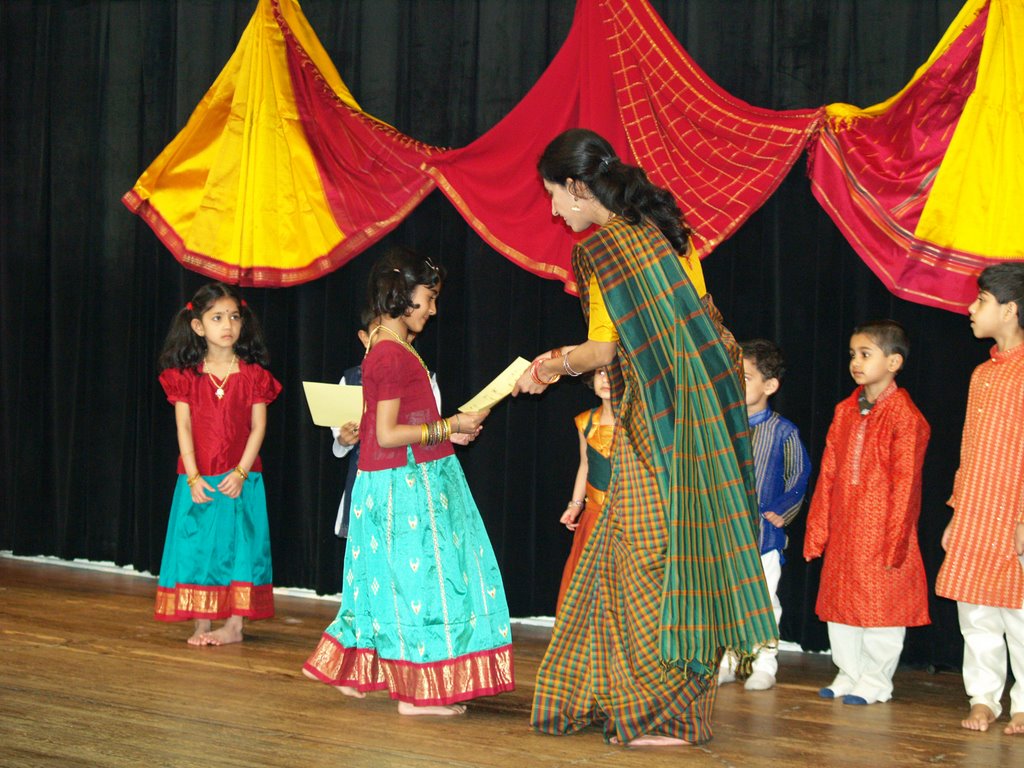 🇮🇳 IndiaLanga voniలంగా వోణి
A two-piece half sari worn by girls in South India, a skirt with a short diagonal drapeSilk · Embroidery · Zari work
🇧🇩 Bangladesh and 1 moreTangail saree
A Bengal handloom saree with stepped extra-weft patterns, woven in cotton and silkCotton · Jamdani · Brocade
🇮🇳 IndiaLanga voniలంగా వోణి
A two-piece half sari worn by girls in South India, a skirt with a short diagonal drapeSilk · Embroidery · Zari work
🇧🇩 Bangladesh and 1 moreTangail saree
A Bengal handloom saree with stepped extra-weft patterns, woven in cotton and silkCotton · Jamdani · Brocade
 🇹🇿 Tanzania and 4 moreKanga
A light cotton wrap from East Africa framed with printed borders and Swahili proverbsCotton · Block print · Hand painting
🇹🇿 Tanzania and 4 moreKanga
A light cotton wrap from East Africa framed with printed borders and Swahili proverbsCotton · Block print · Hand painting
 🇮🇩 IndonesiaUlosᯥᯞᯘᯬ᯲
A traditional hand-woven Batak textile draped and gifted across North SumatraCotton
🇲🇷 Mauritania and 5 moreMelhfa
A cotton rectangle wound from head to toe against desert sun, sand and coldCotton · Embroidery
🇧🇹 BhutanDumdyam
An ankle-length draped dress of smooth cotton or silk worn by Lepcha womenCotton
🇮🇳 IndiaGaji
A coarse, durable handwoven cotton or silk fabric draped as a sari in winterCotton
🇮🇩 IndonesiaUlosᯥᯞᯘᯬ᯲
A traditional hand-woven Batak textile draped and gifted across North SumatraCotton
🇲🇷 Mauritania and 5 moreMelhfa
A cotton rectangle wound from head to toe against desert sun, sand and coldCotton · Embroidery
🇧🇹 BhutanDumdyam
An ankle-length draped dress of smooth cotton or silk worn by Lepcha womenCotton
🇮🇳 IndiaGaji
A coarse, durable handwoven cotton or silk fabric draped as a sari in winterCotton
Photo credits on this page
The small pictures above come from Wikimedia Commons under free licences. Some are cropped to fit.
- Kanga: Petr Berka ( Petrberka ), Public domain, source
- Dhakai: Amit Sen, CC BY-SA 4.0, source
- Geringsing: Unknown author, Public domain, source
- Woodblock printing on textiles: William Morris, Public domain, source
- Tripuri dress: Bijayan tripura, CC0, source
- Chintz: Karun Thakar Collection photo. Work by unknown Coromandel artisans. Ph, Public domain, source
- Muslin: Unknown author, Public domain, source
- Ilkal sari: T B Dinesh, CC0, source
- Tangail saree: P.K.Niyogi, Public domain, source
- Ulos: Boy Lawson, CC BY-SA 3.0, source
- Dokhona: Bodoland Territorial Council, CC0, source
- Dhoti: Redaloes at English Wikipedia, Public domain, source
- Antariya: Raja Ravi Varma, Public domain, source
- Kasuti: Kannadiga, CC BY-SA 4.0, source
- Balinese textiles: Chris Hazzard, CC BY-SA 3.0, source
- Uttariya: Biswarup Ganguly, CC BY 3.0, source
- Mekhela chador: Deepraj, CC BY 2.5, source
- Longyi: Unknown author, Public domain, source
- Surat zari: Hiart, CC0, source
- Kebaya: Simon_sees, CC BY 2.0, source
- Leheriya: Daderot, CC0, source
- Jamdani: Salim_Khandoker, CC0, source
- Kalamkari: Anilbhardwajnoida, CC BY-SA 3.0, source
- Batik: Fpangestuphotographer, CC BY-SA 4.0, source
- Batik Parang: Q100422095, Public domain, source
- Sinh: YashiWong, CC BY-SA 3.0, source
- Gamosa: Priyankoo at en.wikipedia, Public domain, source
- Sambalpuri saree: Rahul191313, CC BY-SA 4.0, source
- Langa voni: Kannadiga, CC BY-SA 3.0, source