
Muslin
A gossamer plain-weave cotton fabric historically spun and woven across Bengal
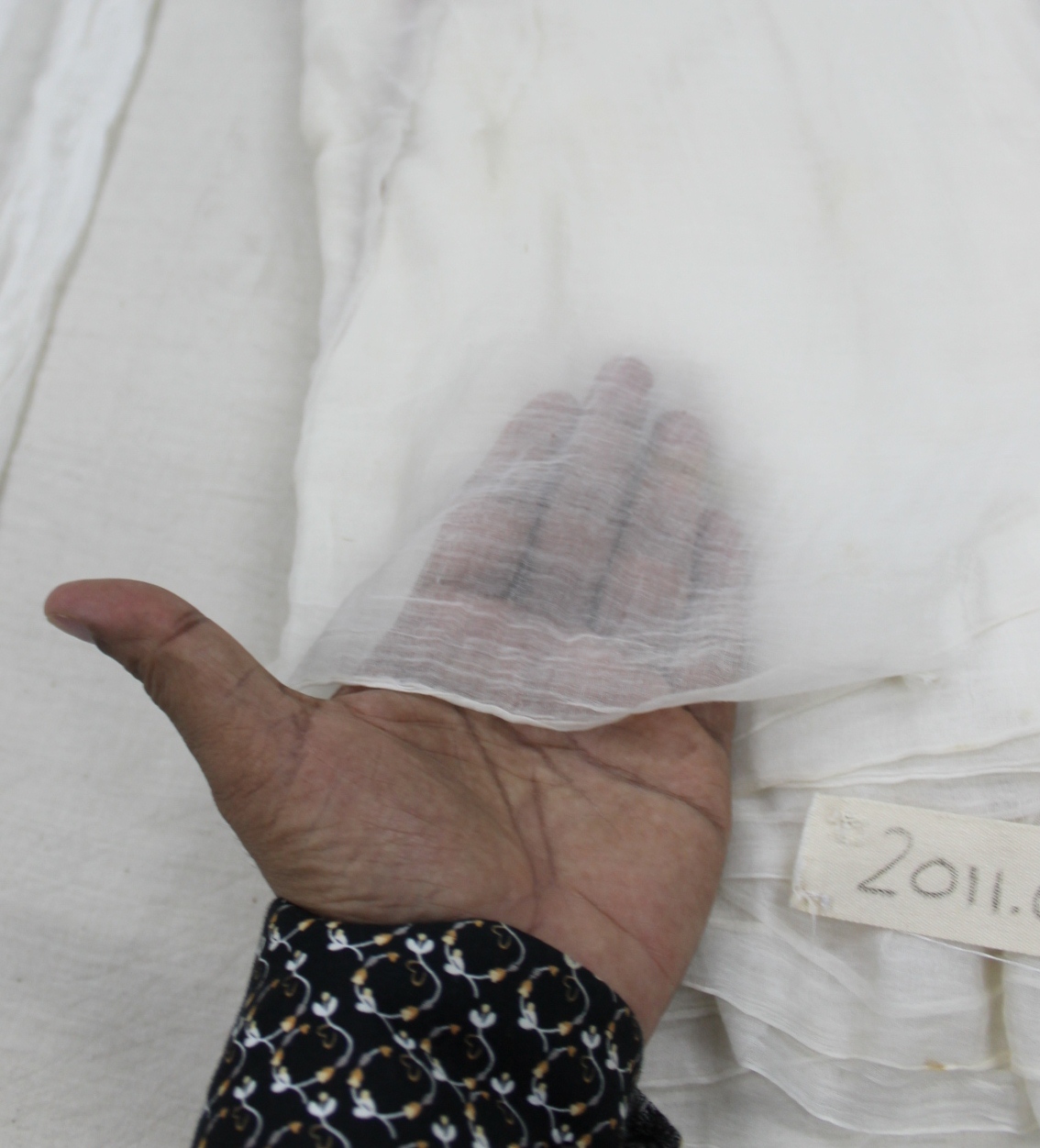
Muslin is an exceptionally fine plain-weave cotton textile historically woven in Bengal, famously around Dhaka and Sonargaon. Handcrafted by local spinners and weavers from fine cotton yarns into delicate fabrics and sarees, it is celebrated for its sheer, lightweight feel and intricate craftsmanship.
- Historically spun so fine that an entire cloth could easily pass through a finger ring.
- Woven during the rainy season because high humidity prevented brittle fine threads from snapping.
- Historically recognized across twenty-eight varieties, including the patterned weave known as jamdani.
- Protected by Geographical Indication tags in both Bangladesh and the Indian state of West Bengal.
What is Muslin?
Muslin is a plain-weave cotton cloth made in a spectrum of weights, from thick sheeting to translucent sheer fabric. Historically centered in the Bengal region, the finest grades were spun so thin that an entire length could pass through a small finger ring. Crafted from delicate cotton yarns, traditional muslins can reach thread counts between 300 and 700, yielding a surface as clear as glass. Weavers use this breathable textile to fashion lightweight sarees, dhotis, and everyday garments, as well as fine kerchiefs and household coverings.
Where does Muslin come from?
Accounts of ultra-fine Bengal cotton date back to the ninth-century writings of Arab traveler Sulaiman al-Tajir. European visitors, including Marco Polo and Ralph Fitch, praised cloths from Mosul and Sonargaon. Muslin trade reached its zenith under Mughal rule, when Dhaka became the hub of a massive global export network. The name itself is linked either to the Iraqi city of Mosul or the historic port of Masulipatnam in southern India. Production suffered severe decline during British East India Company rule as machine imports surged. Revival programs in Bangladesh and West Bengal during the twentieth and twenty-first centuries successfully reconstructed the forgotten spinning wheels, tools, and specialized cotton crops.
How is Muslin made?
Creating traditional muslin is an entirely manual craft requiring humid air, often woven during the monsoon to keep delicate threads supple and prevent breakage. Spinning ultra-fine yarn requires dedicated tools; historically, artisans used the jawbone of a catfish to comb and align the cotton fibers. Modern revivalists employ modified multi-spindle spinning wheels to spin counts up to 500 and 700. Weaving a single length by hand was so slow that it frequently spanned more than five months. In Bangladesh, researchers revived specialized cotton varieties related to historic plants to produce ultra-high-count threads for contemporary handloom weaving.
Muslin, drawn
Colours, motifs and borders
Muslin is defined by its simple, unadorned plain weave, where warp and weft interlace evenly. Its visual character relies on extreme transparency and thread density rather than heavy surface embellishment. Historically, artisans developed around twenty-eight distinct styles. Among these structural variations, jamdani stands out as a decorated form where supplementary weft motifs are worked directly into the sheer cotton ground during the weaving process.
How Muslin is worn
Muslin is fashioned into unstitched garments like sarees and dhotis, as well as tailored apparel. Because the weave is exceptionally light and can be nearly transparent at high thread counts, wearers often layer it over underslips or petticoats. The fabric drapes softly around the body, staying cool and allowing air to pass through in warm, humid weather.



Styles of Muslin
Historical records document roughly twenty-eight distinct varieties of muslin, ranging from sheer transparent webs to heavier, everyday sheeting. Jamdani remains the most prominent surviving figured variation. Modern production spans different thread densities, commonly measured from 200 count up to rare 700 count fabrics. In West Bengal, weavers craft muslin into items such as sarees, dhotis, handkerchiefs, and bed linens, while Bangladeshi centers focus on re-establishing heritage-grade fine yarns for draped garments.
What Muslin means
Muslin holds a crucial place in South Asian textile history and identity. In 2013, UNESCO recognized the traditional craft of Jamdani weaving from Bangladesh as Intangible Cultural Heritage. The fabric has also secured legal geographical protections: Bangladesh registered Dhakai Muslin as a Geographical Indication in 2020, while India awarded Geographical Indication status to Banglar Muslin for West Bengal in 2024. Government initiatives across both nations actively train weavers and support local spinning clusters.
Questions people ask about Muslin
Where does muslin come from?
Muslin originated in South Asia, with the Bengal region serving as its primary historical manufacturing center. Cities like Dhaka and Sonargaon became world-renowned for the finest grades, while Mosul in Iraq and Masulipatnam in India also share historical connections to its trade name.
How is muslin made?
Muslin is handwoven using plain weave from very fine cotton yarn. Raw fibers were cleaned and combed with catfish jawbones, spun on specialized wheels, and woven during humid monsoon conditions to prevent delicate threads from breaking over months of slow work.
What gives Dhaka muslin its sheer quality?
Dhaka muslin gained its glass-like transparency from ultra-fine cotton yarns with counts of 300 and higher. Spun from localized cotton varieties, the thin threads allowed weavers to produce an exceptionally lightweight, see-through textile.
How was muslin revived in modern times?
Revival projects in Bangladesh and West Bengal reconstructed historical tools, trained spinners on advanced charkha wheels, and cultivated related cotton plants to recreate high-count handspun yarns reaching up to 700 count.
Good reading and sources
- Encyclopaedia BritannicaArticle
- Legendary fabricDeccan Herald, Article
- The ancient fabric that no one knows how to makeBBC, Article
- Muslin on WikipediaEncyclopedia
- More photos on Wikimedia CommonsPhotos and video
- Wikidata recordOpen data
The facts on this page come from the Wikipedia article "Muslin", written by its contributors and used under the CC BY-SA 4.0 licence, and from its Wikidata record (CC0). EveryPallu rewrote the text in its own words, with AI assistance, and compares every page with the article to make sure no passage is copied. It may be reused under the same CC BY-SA 4.0 licence with a link back.
It may contain mistakes. Traditions, weaves and prices differ from one weaver, town or shop to the next, and it is not buying advice. If something is wrong, tell us. Last refreshed 2026-10-04.
More from Bangladesh
All the sarees of Bangladesh 🇮🇳 India and 4 moreSariसाड़ी
A single unstitched length of cloth, tucked at the waist and slung over one shoulderSilk · Brocade · Ikat
🇮🇳 India and 4 moreSariसाड़ी
A single unstitched length of cloth, tucked at the waist and slung over one shoulderSilk · Brocade · Ikat
 🇮🇳 India and 2 moreKhadi
Hand-spun and hand-woven cloth from the subcontinent, tied to the swadeshi movementCotton
🇮🇳 India and 2 moreKhadi
Hand-spun and hand-woven cloth from the subcontinent, tied to the swadeshi movementCotton
 🇮🇳 India and 5 moreLungiলুঙ্গি
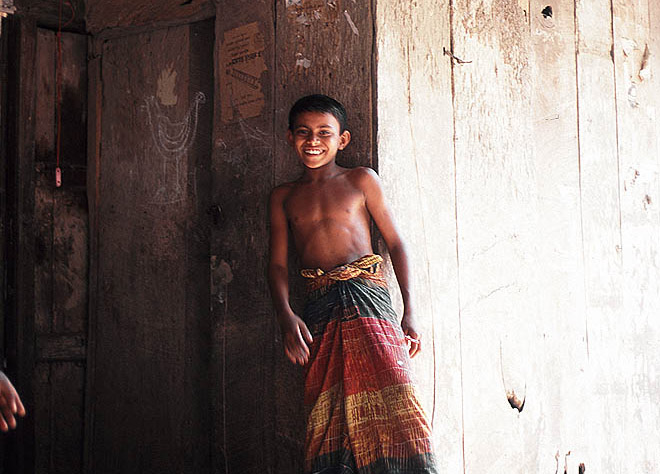
A cloth tube or sheet tied at the waist, worn across South and Southeast AsiaCotton · Batik · Checks and stripes
🇮🇳 India and 5 moreLungiলুঙ্গি
A cloth tube or sheet tied at the waist, worn across South and Southeast AsiaCotton · Batik · Checks and stripes
 🇮🇳 India and 1 moreDhoti
An unstitched cloth tied at the waist and worn to the ankle, the men's answer to the sariCotton
🇮🇳 India and 1 moreDhoti
An unstitched cloth tied at the waist and worn to the ankle, the men's answer to the sariCotton
Its cousins elsewhere
All cotton sarees 🇮🇳 India and 1 moreTant sari
A light, near-transparent cotton sari woven in Bengal, suited to hot, humid weatherCotton · Jamdani · Embroidery
🇮🇳 IndiaKorial sariকোরিয়াল শাড়ি
A red-bordered mulberry silk saree woven on hand looms in West BengalSilk · Jamdani · Zari work
🇮🇳 India and 1 moreUppada Jamdani sari
A light handwoven silk sari from Uppada, Andhra Pradesh, patterned in the jamdani waySilk · Jamdani · Zari work
🇮🇳 IndiaKotpad handloom fabric
Cotton and tussar sarees dyed with aul-root dye, handwoven in Koraput, OdishaCotton · Jamdani
🇮🇳 India and 1 moreTant sari
A light, near-transparent cotton sari woven in Bengal, suited to hot, humid weatherCotton · Jamdani · Embroidery
🇮🇳 IndiaKorial sariকোরিয়াল শাড়ি
A red-bordered mulberry silk saree woven on hand looms in West BengalSilk · Jamdani · Zari work
🇮🇳 India and 1 moreUppada Jamdani sari
A light handwoven silk sari from Uppada, Andhra Pradesh, patterned in the jamdani waySilk · Jamdani · Zari work
🇮🇳 IndiaKotpad handloom fabric
Cotton and tussar sarees dyed with aul-root dye, handwoven in Koraput, OdishaCotton · Jamdani