
Jamdani
In its own language: জামদানি
A sheer cotton muslin saree decorated with hand-woven supplementary weft motifs
Jamdani is a sheer cotton muslin saree originating from the Bengal region, historically centered near Dhaka. Master weavers create intricate floral and geometric patterns by hand using supplementary weft threads on traditional handlooms.
- Inscribed as a UNESCO Intangible Cultural Heritage of Humanity in 2013.
- Registered in 2016 as the first Geographical Indication (GI) product of Bangladesh.
- Woven on handlooms using supplementary weft threads guided by bamboo sticks and paper graphs.
- Flourished under Mughal imperial patronage, earning the Persian name Jamdani.
What is Jamdani?
Jamdani is a sheer cotton muslin fabric woven by hand in Bengal. Master artisans, known as ostads or taantis, produce the cloth along the Shitalakshya River in Bangladesh. The textile features pattern threads worked directly into a fine, translucent base, making motifs appear to float across the surface. While historically worn by nobility and royal courts as a luxury, jamdani is crafted into sarees, scarves, and handkerchiefs. The cloth feels light and airy, decorated with geometric, plant, and floral figures in shades of grey, white, black, gold, or silver.
Where does Jamdani come from?
Early travel accounts from Arab, Chinese, and Italian traders document the historic muslin craft of Bengal. Under the patronage of Mughal rulers like Akbar and Jahangir, the flowered muslin received its Persian name, Jamdani, becoming renowned around Dhaka and Sonargaon. During British rule, the craft faced a severe decline when cheap imported yarn and cloth from Britain flooded the market and imperial patronage ended. Centers such as Jangalbari and Madhurapur gradually faded. Recent efforts by design institutes, cultural councils, and government bodies have helped revive Jamdani production in Bangladesh.
How is Jamdani made?
Jamdani weaving relies on a supplementary weft method executed entirely by hand. On the loom, two sets of weft yarn are used: standard thread to weave the sheer cotton ground, and thicker yarn to build the motifs. The weaver does not sketch designs onto the cloth, but places a paper pattern under the warp threads as a guide. Each individual design thread is interlaced by hand using small bamboo sticks and separate spools. This labor-intensive craft takes immense time, occasionally combining fine cotton yarn with gold or silver threads.
Jamdani, drawn
Colours, motifs and borders
The ornamentation on Jamdani cloth consists of plant, floral, and geometric layouts. Classic textiles showcase subtle combinations of grey and white, while other versions incorporate black, gold, and silver threads. Because artisans insert supplementary threads by hand between standard rows of weaving, the motifs rise distinctly against the shimmering, transparent cotton base. The designs spread across the fabric without needing drawn outlines.
How Jamdani is worn
Jamdani fabric is made primarily into sarees, though it is also fashioned into scarves and handkerchiefs. When worn as a saree, the light, breathable cotton muslin wraps around the body, showing off the floating floral and geometric figures across its sheer base.


When Jamdani is worn
Historically, the immense labor required made Jamdani an exclusive luxury for royal courts and aristocrats. Today, the textile remains a symbol of refined taste. People choose these hand-woven sarees for special gatherings, wearable art exhibitions, and formal wear, celebrating the craftsmanship of traditional weavers.
Styles of Jamdani
Originally called Dhakai or Daccai after Dhaka, the textile developed into various local styles. In Bangladesh, dedicated centers like Jamdani Palli continue traditional handloom production alongside design institutes. Contemporary fashion labels also collaborate with weavers in West Bengal and Odisha to create modern adaptations of the craft.
What Jamdani means
In 2013, UNESCO inscribed the traditional art of Jamdani weaving on the Representative List of the Intangible Cultural Heritage of Humanity. Bangladesh granted the Jamdani Sari its first Geographical Indication (GI) status in 2016. Master weavers, known as ostads, sustain the tradition, with prominent figures like Biren Kumar Basak receiving state honors such as India's Padma Shri. Despite low wages and competition from factory garments, cultural organizations actively support weaving communities.
Questions people ask about Jamdani
Where does Jamdani come from?
Jamdani originated in the Bengal region, historically centered around Dhaka and Sonargaon in Bangladesh. Production continues along the Shitalakshya River in Narayanganj district, as well as in weaving clusters in West Bengal and Odisha.
How is a Jamdani saree made?
Artisans weave Jamdani on handlooms using a supplementary weft technique. A sheer cotton base is woven while thicker decorative threads are placed by hand with bamboo sticks, following a graph paper design placed underneath the warp.
What motifs and colours are found in Jamdani?
Jamdani features geometric, plant, and floral designs that appear to float on the sheer cotton ground. Classic pieces rely on grey and white, while others feature black, gold, and silver threads.
What official recognition has Jamdani received?
UNESCO recognized Jamdani weaving as an Intangible Cultural Heritage of Humanity in 2013. In 2016, the Jamdani Sari became the first product in Bangladesh to receive Geographical Indication (GI) status.
Good reading and sources
- ::: Star Weekend Magazine :::The Daily Star, Article
- ‘Ache din for entire Jamdani community’, says weaver who gifted sari to PM Modi at Padma AwardsThe Indian Express, Article
- Jamdani on WikipediaEncyclopedia
- More photos on Wikimedia CommonsPhotos and video
- Wikidata recordOpen data
The facts on this page come from the Wikipedia article "Jamdani", written by its contributors and used under the CC BY-SA 4.0 licence, and from its Wikidata record (CC0). EveryPallu rewrote the text in its own words, with AI assistance, and compares every page with the article to make sure no passage is copied. It may be reused under the same CC BY-SA 4.0 licence with a link back.
It may contain mistakes. Traditions, weaves and prices differ from one weaver, town or shop to the next, and it is not buying advice. If something is wrong, tell us. Last refreshed 2026-10-04.
More from Bangladesh
All the sarees of Bangladesh 🇮🇳 India and 4 moreSariसाड़ी
A single unstitched length of cloth, tucked at the waist and slung over one shoulderSilk · Brocade · Ikat
🇮🇳 India and 4 moreSariसाड़ी
A single unstitched length of cloth, tucked at the waist and slung over one shoulderSilk · Brocade · Ikat
 🇮🇳 India and 2 moreKhadi
Hand-spun and hand-woven cloth from the subcontinent, tied to the swadeshi movementCotton
🇮🇳 India and 2 moreKhadi
Hand-spun and hand-woven cloth from the subcontinent, tied to the swadeshi movementCotton
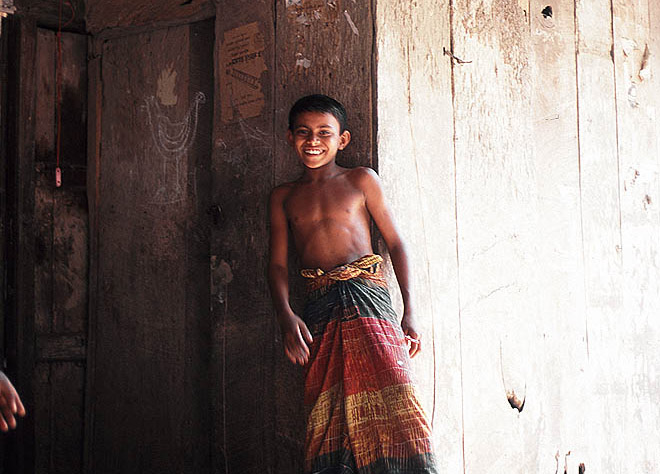 🇮🇳 India and 5 moreLungiলুঙ্গি
A cloth tube or sheet tied at the waist, worn across South and Southeast AsiaCotton · Batik · Checks and stripes
🇮🇳 India and 5 moreLungiলুঙ্গি
A cloth tube or sheet tied at the waist, worn across South and Southeast AsiaCotton · Batik · Checks and stripes
 🇮🇳 India and 1 moreDhoti
An unstitched cloth tied at the waist and worn to the ankle, the men's answer to the sariCotton
🇮🇳 India and 1 moreDhoti
An unstitched cloth tied at the waist and worn to the ankle, the men's answer to the sariCotton
Its cousins elsewhere
All cotton sarees 🇮🇳 IndiaGarad sariগরদ শাড়ি
A fine silk sari woven on pit looms in Murshidabad and Birbhum, worn at Durga PujaSilk · Zari work · Brocade
🇮🇳 IndiaKimkhwab
A heavy silk brocade woven with gold and silver yarns, famed in Mughal IndiaSilk · Brocade · Zari work
🇮🇳 IndiaGarad sariগরদ শাড়ি
A fine silk sari woven on pit looms in Murshidabad and Birbhum, worn at Durga PujaSilk · Zari work · Brocade
🇮🇳 IndiaKimkhwab
A heavy silk brocade woven with gold and silver yarns, famed in Mughal IndiaSilk · Brocade · Zari work
 🇮🇳 IndiaChanderi sari
A silk sari woven in Chanderi, Madhya Pradesh, with gold and silver zariSilk · Brocade · Zari work
🇮🇳 IndiaChanderi sari
A silk sari woven in Chanderi, Madhya Pradesh, with gold and silver zariSilk · Brocade · Zari work
 🇮🇳 IndiaKanchipuram sari
A silk sari from Kanchipuram with a separate contrast border locked onto the bodySilk · Zari work · Brocade
🇮🇳 IndiaKanchipuram sari
A silk sari from Kanchipuram with a separate contrast border locked onto the bodySilk · Zari work · Brocade