Embroidery
Stitched by hand: chikankari, kasuti, phulkari, zardozi and many more.
Embroidery decorates a finished or woven cloth with needle and thread. Indian sarees carry many regional styles: chikankari of Lucknow, kantha of Bengal, phulkari of Punjab, kasuti of Karnataka, and zardozi of Agra and Lucknow. The sarees are worked by hand, often by women in homes.
What it is
Embroidery is the decoration of cloth by stitching thread onto it with a needle. Unlike brocade or jamdani, where the pattern is woven in, embroidery is added after the cloth exists, so the same plain saree can be embroidered in many ways. Stitches range from tiny flat ones to raised knots and loops. On Indian sarees the thread may be cotton, silk, wool or metal wire, and the base fabric may be georgette, chiffon, cotton, silk or net. Regional styles are distinguished by their stitches, motifs and colour choices, and many are linked to particular communities, as with Lucknow chikankari, which developed among Muslim craft families.
How it is made, step by step
A pattern is first drawn or block printed on the cloth in a washable ink, and the cloth is stretched on a frame or held in the lap. Embroiderers then work the design with a needle, using stitches that vary by style: in chikankari, shadow work, the tepchi and the murri; in kasuti, the gavanti and the negi; in zardozi, couched metal thread. Different people may do different parts, one stitching the flowers and another the leaves. After finishing, the printed lines are washed away. Fine pieces take weeks. Cloth may be stretched on a wooden adda frame for metal work, while cotton stitches are worked in the lap.
The motifs and looks it is known for
Chikankari is white thread on pale cloth, with floral sprays and the murri, a small rice-grain stitch, and shadow work which shows from the reverse as a soft veil. Phulkari means flower work and fills the cloth with geometric designs in bright silk floss, though it is more often a shawl or dupatta than a saree. Kasuti of Karnataka uses counted stitches in tiny temple, palanquin and elephant motifs. Kantha uses running stitches on layered cloth. Zardozi is gold and silver thread work with sequins and stones. Embroidered sarees are common as party wear, where borders, pallus and scattered buttis carry the work.
Where it is made
Lucknow in Uttar Pradesh is the home of chikankari, with workers in the old city and villages nearby, mostly women. Zardozi is done in Lucknow, Agra, Bhopal and Delhi, and historically in Surat, with male artisans doing most of the frame work. Kasuti is worked in Dharwad and Hubli in Karnataka. Bengal has kantha, and Punjab has phulkari. Gujarat and Kutch have mirror and bead embroidery by pastoral communities. Kashmir has sozni and aari work, usually on shawls and sarees. Sindh and Pakistan have their own variants. Embroidery is a widespread home industry, and it often depends on contractors who supply cloth and collect finished pieces at piece rates.
History in brief
Embroidery appears in cultures across the world, and Indian needlework is old, with references in ancient texts to gold-thread work. Chikankari is often linked to the Mughal court, though accounts of its precise origin vary, and it was patronised in Awadh, the region around Lucknow. Zardozi flourished under Mughal emperors, and after the court patronage ended, the trade declined and later revived. Kasuti was linked to the Chalukyan period, according to local tradition. Lucknow chikankari holds a Geographical Indication registration. In recent decades, designers and cooperatives have helped bring embroidery to a wider market, but wages for hand embroiderers remain low.
Buying and caring for it
Look at the back of the cloth. Hand embroidery has knots and thread tails tucked in, and the stitches may vary a little in size. Machine embroidery has even, mechanical rows, and a lock-stitch pattern is visible on the back. Chikankari shadow work, if genuine, shows on the back as dense crossed stitches. Machine imitation shows plain cloth behind the pattern. Ask whether work is by hand and who made it. Wash hand embroidery gently in cool water with mild soap and dry flat in the shade, and dry clean zardozi. Store folded in cotton with a layer of paper between layers, and avoid hanging heavy pieces, which pulls the stitches.
Where to look
- Lucknow chikankari: White-on-pale shadow work and murri stitches from Lucknow, Uttar Pradesh.
- Kasuti: Counted stitch embroidery of Dharwad and Hubli in Karnataka.
- Zardozi: Heavy gold and silver thread work from Lucknow, Agra and Bhopal.
- Phulkari: Bright silk floss geometric embroidery of Punjab.
- Sozni: Fine needlework of Kashmir, often on shawls and sarees.
- Kutch embroidery: Mirror and bead work by communities of Kutch in Gujarat.
- Kantha: Running stitch embroidery of Bengal, covered as its own entry.
Care
- Wash hand embroidery gently in cool water and dry flat in shade.
- Dry clean zardozi and heavy pieces.
- Fold with paper between layers and avoid hanging heavy sarees.
Sources and further reading
Original text by the EveryPallu desk, written with AI assistance and checked against the sources above. If we have something wrong, tell us.
Embroidery on EveryPallu
The sarees written up so far, newest and best known first.
 🇮🇳 India and 4 moreSariसाड़ी
A single unstitched length of cloth, tucked at the waist and slung over one shoulderSilk · Brocade · Ikat
🇮🇳 India and 4 moreSariसाड़ी
A single unstitched length of cloth, tucked at the waist and slung over one shoulderSilk · Brocade · Ikat
 🇮🇳 India and 1 moreMundumuṇṭŭ
A cotton cloth wrapped at the waist, edged with the thicker woven line called the karaCotton · Embroidery
🇮🇳 India and 1 moreMundumuṇṭŭ
A cotton cloth wrapped at the waist, edged with the thicker woven line called the karaCotton · Embroidery
 🇮🇳 India and 2 moreMadras
A light handwoven cotton cloth of bright checks, named after the city of ChennaiCotton · Checks and stripes · Embroidery
🇮🇳 India and 2 moreMadras
A light handwoven cotton cloth of bright checks, named after the city of ChennaiCotton · Checks and stripes · Embroidery
 🇵🇰 PakistanSindhi embroideryسنڌي ٿرت
Needlework and mirror embroidery crafted across the desert communities of SindhEmbroidery · Mirror work
🇵🇰 PakistanSindhi embroideryسنڌي ٿرت
Needlework and mirror embroidery crafted across the desert communities of SindhEmbroidery · Mirror work
 🇮🇳 India and 1 moreTant sari
A light, near-transparent cotton sari woven in Bengal, suited to hot, humid weatherCotton · Jamdani · Embroidery
🇮🇳 India and 1 moreTant sari
A light, near-transparent cotton sari woven in Bengal, suited to hot, humid weatherCotton · Jamdani · Embroidery
 🇮🇳 IndiaChikankariचिकनकारी (Urdu: چکن کاری)
White thread hand embroidery from Lucknow, stitched on pale, sheer clothCotton · Embroidery · Block print
🇮🇳 IndiaChikankariचिकनकारी (Urdu: چکن کاری)
White thread hand embroidery from Lucknow, stitched on pale, sheer clothCotton · Embroidery · Block print
 🇮🇳 India and 1 moreSari-inspired dress
A dress that borrows the sari's drape, ornament and colourChiffon · Embroidery
🇮🇳 India and 1 moreSari-inspired dress
A dress that borrows the sari's drape, ornament and colourChiffon · Embroidery
 🇮🇳 IndiaChattayum mundumചട്ടയും മുണ്ടും
A two-piece white cotton dress of Kerala's Syrian Christian womenCotton · Embroidery · Zari work
🇮🇳 IndiaChattayum mundumചട്ടയും മുണ്ടും
A two-piece white cotton dress of Kerala's Syrian Christian womenCotton · Embroidery · Zari work
 🇮🇳 IndiaChanderi sari
A silk sari woven in Chanderi, Madhya Pradesh, with gold and silver zariSilk · Brocade · Zari work
🇮🇳 IndiaChanderi sari
A silk sari woven in Chanderi, Madhya Pradesh, with gold and silver zariSilk · Brocade · Zari work
 🇨🇳 China and 5 moreBrocade
A decorative shuttle-woven silk fabric patterned with raised supplementary-weft motifsSilk · Brocade · Zari work
🇨🇳 China and 5 moreBrocade
A decorative shuttle-woven silk fabric patterned with raised supplementary-weft motifsSilk · Brocade · Zari work
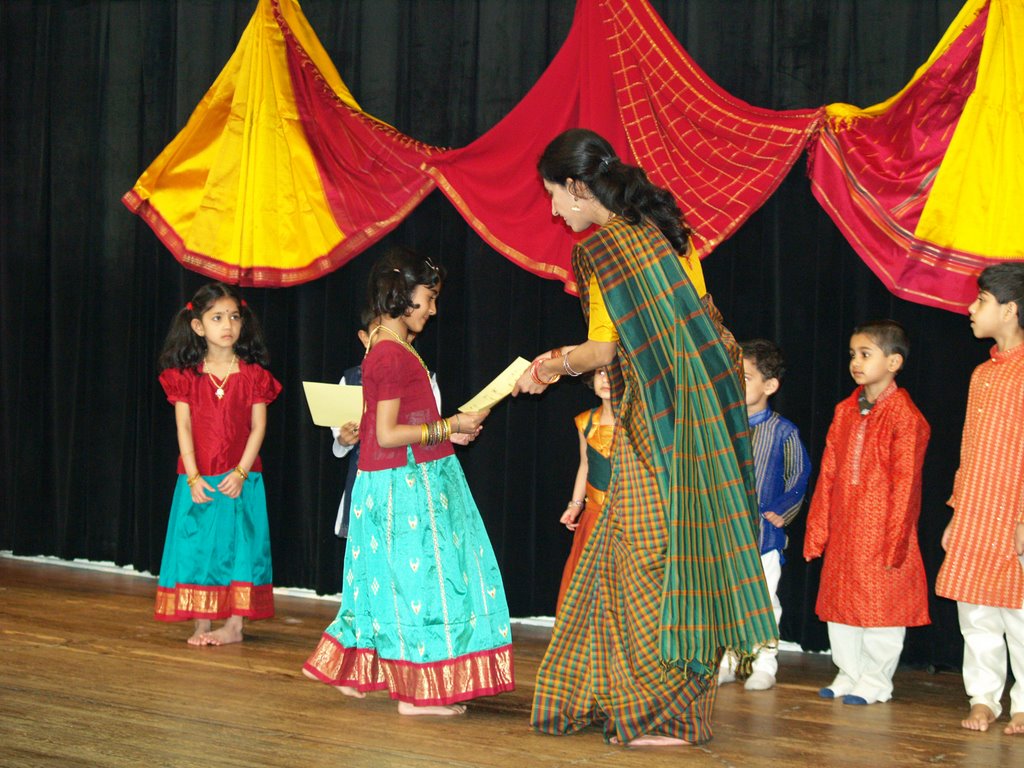 🇮🇳 IndiaLanga voniలంగా వోణి
A two-piece half sari worn by girls in South India, a skirt with a short diagonal drapeSilk · Embroidery · Zari work
🇮🇳 IndiaLanga voniలంగా వోణి
A two-piece half sari worn by girls in South India, a skirt with a short diagonal drapeSilk · Embroidery · Zari work
 🇧🇩 Bangladesh and 1 moreNakshi kanthaনকশি কাঁথা
An embroidered quilt from Bengal, stitched from old sarees with a simple running stitch.Cotton · Kantha · Embroidery
🇧🇩 Bangladesh and 1 moreNakshi kanthaনকশি কাঁথা
An embroidered quilt from Bengal, stitched from old sarees with a simple running stitch.Cotton · Kantha · Embroidery
 🇮🇳 IndiaKachchh shawldhabla
A dense wool shawl handwoven in Kutch, Gujarat, once traded for fleece and grain.Wool · Embroidery · Tie-dye
🇮🇳 IndiaKachchh shawldhabla
A dense wool shawl handwoven in Kutch, Gujarat, once traded for fleece and grain.Wool · Embroidery · Tie-dye
 🇮🇳 IndiaBanarasi sari
Fine silk sari of Varanasi, hand-woven at home with zari work for weddingsSilk · Brocade · Zari work
🇮🇳 IndiaBanarasi sari
Fine silk sari of Varanasi, hand-woven at home with zari work for weddingsSilk · Brocade · Zari work
 🇮🇳 IndiaLambada embroidery
Mirror-and-cowrie hand embroidery by Banjara women of Karnataka and TelanganaEmbroidery · Appliqué
🇮🇳 IndiaLambada embroidery
Mirror-and-cowrie hand embroidery by Banjara women of Karnataka and TelanganaEmbroidery · Appliqué
 🇮🇳 IndiaGota patti
Rajasthani applique embroidery that stitches down ribbons of gold and silverGeorgette · Appliqué · Embroidery
🇮🇳 IndiaSujini embroidery
A Bihar quilt craft where women stitch stories with a simple running stitchCotton · Embroidery
🇮🇳 IndiaGota patti
Rajasthani applique embroidery that stitches down ribbons of gold and silverGeorgette · Appliqué · Embroidery
🇮🇳 IndiaSujini embroidery
A Bihar quilt craft where women stitch stories with a simple running stitchCotton · Embroidery
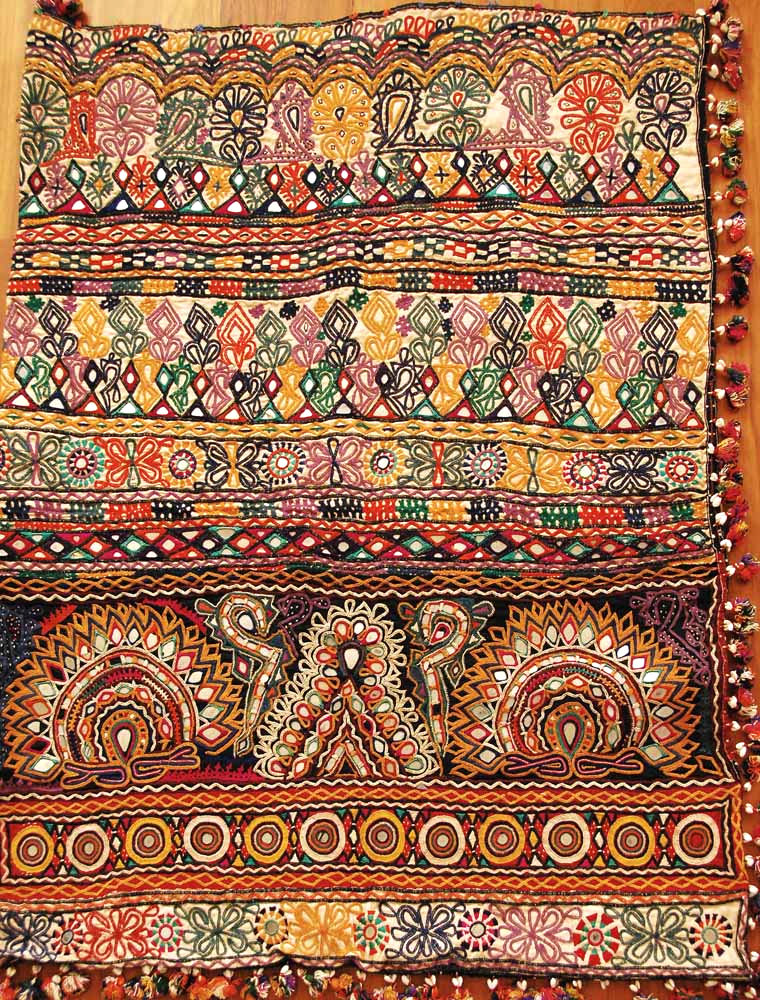 🇮🇳 IndiaKutch embroidery
Hand-stitched mirror work from Kutch, Gujarat, made by women of its tribal communitiesCotton · Embroidery · Mirror work
🇮🇳 IndiaKutch embroidery
Hand-stitched mirror work from Kutch, Gujarat, made by women of its tribal communitiesCotton · Embroidery · Mirror work
 🇮🇩 IndonesiaSumba textiles
Ikat cloths and tube skirts from a small island in eastern Indonesia, woven by womenIkat · Embroidery
🇮🇳 IndiaShaphee Lanphee
A heavy black and red embroidered textile woven by Meitei craftswomen in ManipurCotton · Embroidery
🇮🇩 IndonesiaSumba textiles
Ikat cloths and tube skirts from a small island in eastern Indonesia, woven by womenIkat · Embroidery
🇮🇳 IndiaShaphee Lanphee
A heavy black and red embroidered textile woven by Meitei craftswomen in ManipurCotton · Embroidery
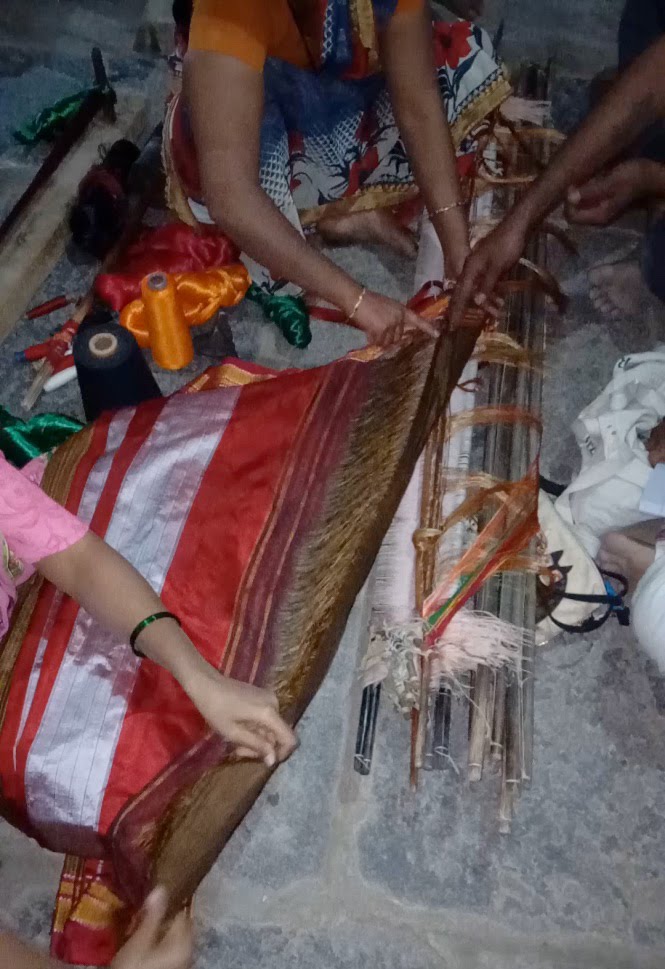 🇮🇳 IndiaIlkal sari
A cotton saree with a loop-joined silk pallu and broad red border, from Ilkal, KarnatakaCotton · Zari work · Embroidery
🇮🇳 IndiaIlkal sari
A cotton saree with a loop-joined silk pallu and broad red border, from Ilkal, KarnatakaCotton · Zari work · Embroidery
 🇮🇳 India and 4 moreZardoziज़रदोज़ी
Heavy gold and silver metal embroidery on silk, satin or velvet, from Iran to IndiaSilk · Embroidery · Zari work
🇮🇳 IndiaPhool Patti ka Kaam
Flowers and leaves cut from cloth and hemmed on, an appliqué craft of Aligarh and RampurCotton · Appliqué · Embroidery
🇮🇳 India and 4 moreZardoziज़रदोज़ी
Heavy gold and silver metal embroidery on silk, satin or velvet, from Iran to IndiaSilk · Embroidery · Zari work
🇮🇳 IndiaPhool Patti ka Kaam
Flowers and leaves cut from cloth and hemmed on, an appliqué craft of Aligarh and RampurCotton · Appliqué · Embroidery
 🇮🇳 IndiaPhanekꯐꯅꯦꯛ
A traditional Meitei wraparound skirt woven with striped borders in ManipurMuga · Embroidery · Checks and stripes
🇮🇳 IndiaToda embroiderypukhoor
Red and black thread embroidery on white cotton, worked by Toda women in the NilgirisCotton · Embroidery
🇮🇳 IndiaPhanekꯐꯅꯦꯛ
A traditional Meitei wraparound skirt woven with striped borders in ManipurMuga · Embroidery · Checks and stripes
🇮🇳 IndiaToda embroiderypukhoor
Red and black thread embroidery on white cotton, worked by Toda women in the NilgirisCotton · Embroidery
 🇮🇳 IndiaKasuti
Counted-thread folk embroidery from Karnataka, stitched on Ilkal and Mysore silk sareesCotton · Embroidery
🇮🇳 IndiaKasuti
Counted-thread folk embroidery from Karnataka, stitched on Ilkal and Mysore silk sareesCotton · Embroidery
 🇮🇩 IndonesiaBalinese textiles
The woven cloths of Bali, from sacred double ikat to gold-dusted ceremony wearCotton · Ikat · Brocade
🇮🇩 IndonesiaBalinese textiles
The woven cloths of Bali, from sacred double ikat to gold-dusted ceremony wearCotton · Ikat · Brocade
 🇲🇲 Myanmar and 1 moreLongyiလုံချည်
A cloth tube worn at the waist in Myanmar, about two metres longCotton · Checks and stripes · Embroidery
🇲🇲 Myanmar and 1 moreLongyiလုံချည်
A cloth tube worn at the waist in Myanmar, about two metres longCotton · Checks and stripes · Embroidery
 🇮🇳 IndiaSurat zari
Metal-wrapped thread made in Surat and woven into silk sarees across IndiaSilk · Zari work · Brocade
🇮🇳 IndiaSurat zari
Metal-wrapped thread made in Surat and woven into silk sarees across IndiaSilk · Zari work · Brocade
 🇮🇩 Indonesia and 4 moreKebayaꦏꦼꦧꦪ
A front-opening blouse worn across Southeast Asia with a sarong or kainCotton · Embroidery · Batik
🇮🇩 Indonesia and 4 moreKebayaꦏꦼꦧꦪ
A front-opening blouse worn across Southeast Asia with a sarong or kainCotton · Embroidery · Batik
 🇮🇳 India and 3 moreDupattaदुपट्टा, دوپٹہ
A versatile long scarf and veil draped with traditional ensembles across South AsiaSilk · Brocade · Tie-dye
🇮🇳 IndiaKhara Dupattaکھڑا دوپٹہ
A six-yard embroidered net veil draped over a wedding ensemble in HyderabadNet · Embroidery · Zari work
🇮🇳 IndiaPipili appliqué workଚାନ୍ଦୁଆ
A stitched-cloth craft from Pipili, Odisha, born to dress the chariots of JagannathCotton · Appliqué · Embroidery
🇮🇳 IndiaBanarasi sari
A heavy silk brocade saree woven with gold and silver zari in VaranasiSilk · Brocade · Zari work
🇮🇳 India and 3 moreDupattaदुपट्टा, دوپٹہ
A versatile long scarf and veil draped with traditional ensembles across South AsiaSilk · Brocade · Tie-dye
🇮🇳 IndiaKhara Dupattaکھڑا دوپٹہ
A six-yard embroidered net veil draped over a wedding ensemble in HyderabadNet · Embroidery · Zari work
🇮🇳 IndiaPipili appliqué workଚାନ୍ଦୁଆ
A stitched-cloth craft from Pipili, Odisha, born to dress the chariots of JagannathCotton · Appliqué · Embroidery
🇮🇳 IndiaBanarasi sari
A heavy silk brocade saree woven with gold and silver zari in VaranasiSilk · Brocade · Zari work
 🇮🇹 ItalyToga
A draped semicircular woollen cloth worn by citizens in ancient RomeWool · Embroidery
🇮🇹 ItalyToga
A draped semicircular woollen cloth worn by citizens in ancient RomeWool · Embroidery
 🇬🇷 GreeceHimationἱμάτιον
An ancient Greek draped mantle of woven wool or linen, worn without pinsWool · Embroidery · Hand painting
🇬🇷 GreeceHimationἱμάτιον
An ancient Greek draped mantle of woven wool or linen, worn without pinsWool · Embroidery · Hand painting
 🇬🇷 GreeceChlamysχλαμύς
An ancient Greek and Byzantine draped cloak made from a single rectangular clothWool · Embroidery
🇲🇷 Mauritania and 5 moreMelhfa
A cotton rectangle wound from head to toe against desert sun, sand and coldCotton · Embroidery
🇬🇷 GreeceChlamysχλαμύς
An ancient Greek and Byzantine draped cloak made from a single rectangular clothWool · Embroidery
🇲🇷 Mauritania and 5 moreMelhfa
A cotton rectangle wound from head to toe against desert sun, sand and coldCotton · Embroidery
 🇰🇭 Cambodia and 4 moreSbaiស្បៃ
A shawl-like breast cloth derived from the sari, worn over one shoulder in Southeast AsiaSilk · Embroidery · Brocade
🇰🇭 Cambodia and 4 moreSbaiស្បៃ
A shawl-like breast cloth derived from the sari, worn over one shoulder in Southeast AsiaSilk · Embroidery · Brocade
Photo credits on this page
The small pictures above come from Wikimedia Commons under free licences. Some are cropped to fit.
- Chanderi sari: India Untravelled, CC BY 2.0, source
- Mundu: Raja Ravi Varma, Public domain, source
- Madras: Shweta Venkateswaran, CC0, source
- Sindhi embroidery: Nasreen wafai, CC BY-SA 4.0, source
- Tant sari: Billjones94, CC BY-SA 4.0, source
- Chikankari: Joey Berzowska, CC BY 2.0, source
- Sari-inspired dress: Triangle films, Public domain, source
- Chattayum mundum: Alexander J. Mapleton, CC BY-SA 4.0, source
- Sari: Suyash.dwivedi, CC BY-SA 4.0, source
- Lambada embroidery: Daderot, CC0, source
- Gota patti: User:आशीष भटनागर, Public domain, source
- Kutch embroidery: Jainamishra, CC BY 3.0, source
- Sumba textiles: Chris Hazzard, CC BY-SA 3.0, source
- Ilkal sari: T B Dinesh, CC0, source
- Toga: Anonymous ( Category:Roman Empire ) Unknown author, Public domain, source
- Chlamys: Unknown author, Public domain, source
- Sbai: Stephowz, CC BY-SA 4.0, source
- Zardozi: Zarood, CC BY-SA 3.0, source
- Phanek: অজয় দাস, CC BY-SA 4.0, source
- Himation: Unknown author, CC BY-SA 3.0, source
- Kasuti: Kannadiga, CC BY-SA 4.0, source
- Balinese textiles: Chris Hazzard, CC BY-SA 3.0, source
- Longyi: Unknown author, Public domain, source
- Surat zari: Hiart, CC0, source
- Kebaya: Simon_sees, CC BY 2.0, source
- Dupatta: Kinshuk Sunil, CC BY 2.0, source
- Banarasi sari: Ekabhishek, CC BY-SA 3.0, source
- Brocade: After James Lehman (England, circa 1688-1745), Public domain, source
- Langa voni: Kannadiga, CC BY-SA 3.0, source
- Nakshi kantha: A junaid alam khan ( talk ), Public domain, source
- Kachchh shawl: Ekabhishek, CC BY-SA 3.0, source