
Chikankari
In its own language: चिकनकारी (Urdu: چکن کاری)
White thread hand embroidery from Lucknow, stitched on pale, sheer cloth
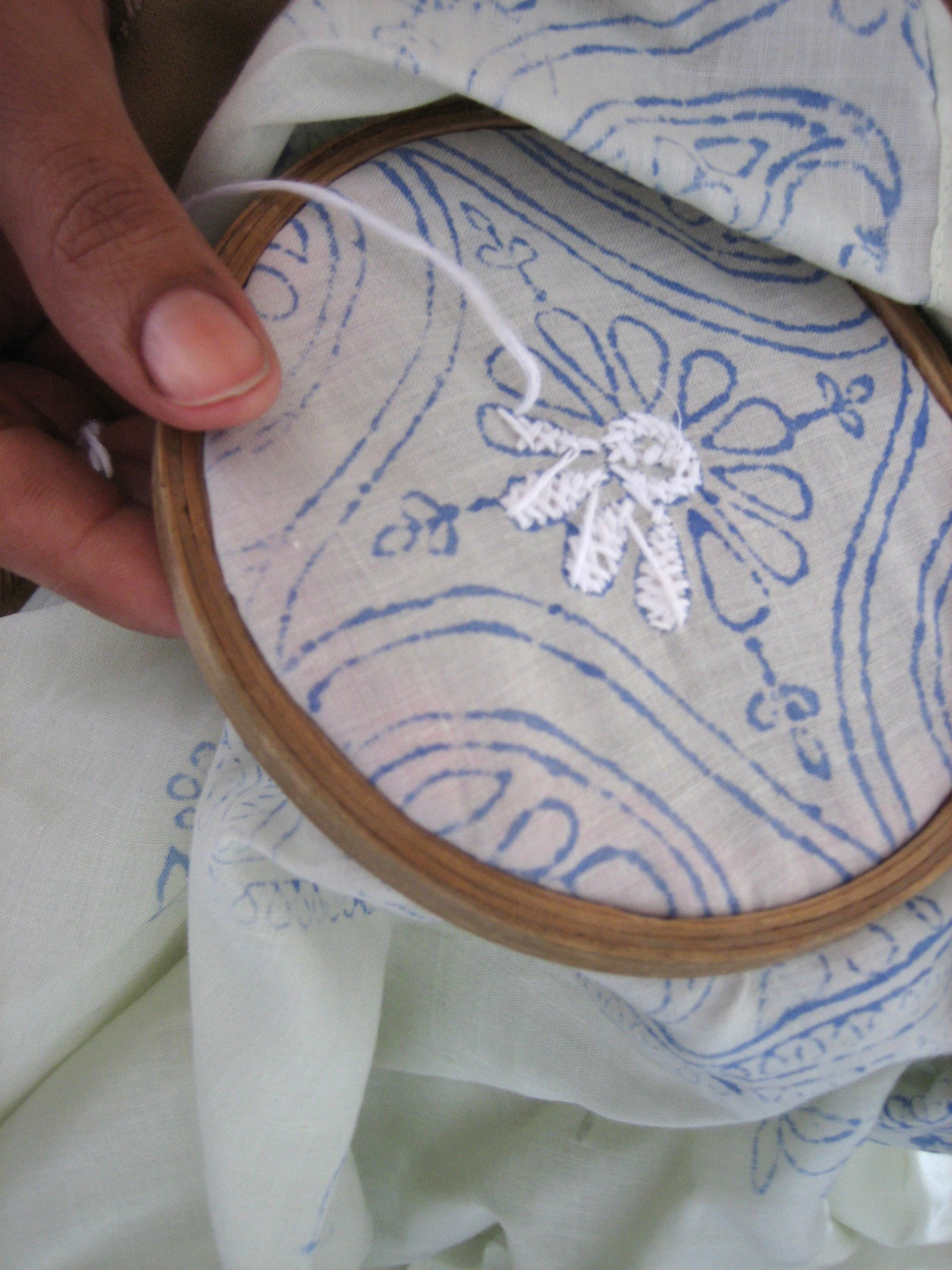
Chikankari is a hand embroidery tradition from Lucknow in India, worked in white thread on pale, light cloth such as muslin, cotton and georgette. Patterns are block-printed onto the fabric, stitched by hand using dozens of named stitches, then washed so the printed outline vanishes and only the needlework remains.
- A hand embroidery style of Lucknow, worked in white thread on pale, light cloth
- Around 32 stitches are used, including tepchi, bakhiya, hool and murri
- The pattern is block-printed first, embroidered, then washed out of the cloth
- Chowk is the main market in Lucknow for chikan products
- GI status was granted in December 2008, naming Lucknow as the exclusive hub
What is Chikankari?
Chikankari is a hand embroidery style that belongs to Lucknow, and it decorates cloth rather than being woven into it. The classic version is whitework: white thread stitched onto a pale ground of muslin or cotton. Because the base fabrics are light and often sheer, the underside of the stitching shows faintly through, which gives the work a shadowed, open look. Makers block-print a pattern first, stitch over it, and wash the print away at the end, so the finished cloth carries only needlework. The main market in the city is Chowk, and production spreads into the districts around Lucknow.
Where does Chikankari come from?
Old Indian textiles with embroidered flowers appear in the writing of Megasthenes in the 3rd century BC, but those patterns had none of the colour or ornament that marks chikan. Laila Tyabji traces the craft to the white-on-white embroidery of Shiraz, which travelled to India with the Persian nobles who lived at the Mughal court. A folk tale says a passing traveller taught the stitch to a villager who gave him water to drink. The story most often told gives the credit to Noor Jahan, the Mughal empress and wife of Jahangir, for bringing chikankari to India. In every version it began as a white-on-white craft.
How is Chikankari made?
The technique itself is called chikankari. It moves through five stages: a design is drawn and engraved onto blocks, the pattern is printed on the ground cloth, the embroidery is done, and the piece is washed and finished. Stitch choice and thread thickness decide how a motif turns out. Backstitch, chain stitch and hemstitch all appear among the roughly 32 stitches in the repertoire. Tepchi is a long darning line that often serves as a base for further stitching; bakhiya is worked on the wrong side so the front shows a shadow; hool is an eyelet, with a hole punched and the threads teased apart; murri, small rice-shaped French knots, fills flower centres and is the oldest and most prized stitch. The cloth has to be light, because a heavy or stiff fabric will not let the needle through.
Chikankari, drawn
Colours, motifs and borders
White thread on light, cool-toned muslin and cotton is the traditional look, and the floral drawing sits at the heart of it. Embroiderers build open mesh, jali work, by parting the warp and weft and stitching around the gaps, and they use shadow work to add depth. Newer pieces use coloured and silk threads to follow fashion. Chikan has also taken on extra ornament: mukaish, kamdani, badla, sequins, beads and mirror work sit alongside the stitching.

Styles of Chikankari
Lucknow sets the standard, and its output is called Lucknawi chikan. Beyond that, the craft shifts with the cloth and the market: white thread on a light ground for one piece, coloured silk thread for another, extra stones or mirrors for a third. The base can be cotton, chanderi, muslin, georgette, crepe, chiffon, silk, organza, net or viscose, and each shows the stitching differently. Sheer grounds are preferred because they let the reverse of the stitches read through.
What Chikankari means
Chikan grew inside Mughal court culture and remained a Lucknow trade. In December 2008 the Geographical Indication Registry granted it GI status and named Lucknow as the exclusive hub for it, a recognition that matters to the artisans who depend on the work. A 1986 Indian film about the struggles of chikan workers was set in the city, and its lead actor Farooque Shaikh wore chikan garments throughout his life, becoming an informal face of the craft.
Questions people ask about Chikankari
Where does chikankari come from?
It is a traditional embroidery style of Lucknow, India. Production is centred on Lucknow and the districts next to it, and the city is still the heart of the industry. Work from there is known as Lucknawi chikan.
How is chikankari made?
A design is engraved into wooden blocks and printed onto a light fabric. An artisan then embroiders the pattern by hand, choosing from about 32 stitches, and the finished piece is washed so the printed guide disappears.
What is shadow work in chikan?
Bakhiya, or shadow work, is stitched on the wrong side of the cloth. What you see from the front is the shadow of the thread rather than the stitch itself. Sheer grounds deepen the effect, because the reverse of the stitching shows through.
Which fabrics take chikan embroidery?
Light cloths: cotton, muslin, chanderi, georgette, crepe, chiffon, silk, organza, net and viscose. A heavy or stiff fabric will not let the needle pass, and sheer material is favoured because it lets the underside of the stitches show.
Is chikankari protected by a Geographical Indication?
Yes. The Geographical Indication Registry gave chikankari GI status in December 2008 and recognised Lucknow as its exclusive hub. The tag matters to the artisans of the city and the surrounding districts, whose livelihoods rest on the trade.
Good reading and sources
- Chikankari on WikipediaEncyclopedia
- More photos on Wikimedia CommonsPhotos and video
- Wikidata recordOpen data
The facts on this page come from the Wikipedia article "Chikankari", written by its contributors and used under the CC BY-SA 4.0 licence, and from its Wikidata record (CC0). EveryPallu rewrote the text in its own words, with AI assistance, and compares every page with the article to make sure no passage is copied. It may be reused under the same CC BY-SA 4.0 licence with a link back.
It may contain mistakes. Traditions, weaves and prices differ from one weaver, town or shop to the next, and it is not buying advice. If something is wrong, tell us. Last refreshed 2026-10-03.
More from India
All the sarees of IndiaIts cousins elsewhere
All cotton sarees 🇮🇳 India and 4 moreSariसाड़ी
A single unstitched length of cloth, tucked at the waist and slung over one shoulderSilk · Brocade · Ikat
🇮🇳 India and 4 moreSariसाड़ी
A single unstitched length of cloth, tucked at the waist and slung over one shoulderSilk · Brocade · Ikat
 🇮🇳 IndiaLambada embroidery
Mirror-and-cowrie hand embroidery by Banjara women of Karnataka and TelanganaEmbroidery · Appliqué
🇮🇳 IndiaLambada embroidery
Mirror-and-cowrie hand embroidery by Banjara women of Karnataka and TelanganaEmbroidery · Appliqué
 🇵🇰 PakistanSindhi embroideryسنڌي ٿرت
Needlework and mirror embroidery crafted across the desert communities of SindhEmbroidery · Mirror work
🇵🇰 PakistanSindhi embroideryسنڌي ٿرت
Needlework and mirror embroidery crafted across the desert communities of SindhEmbroidery · Mirror work
 🇮🇳 IndiaKutch embroidery
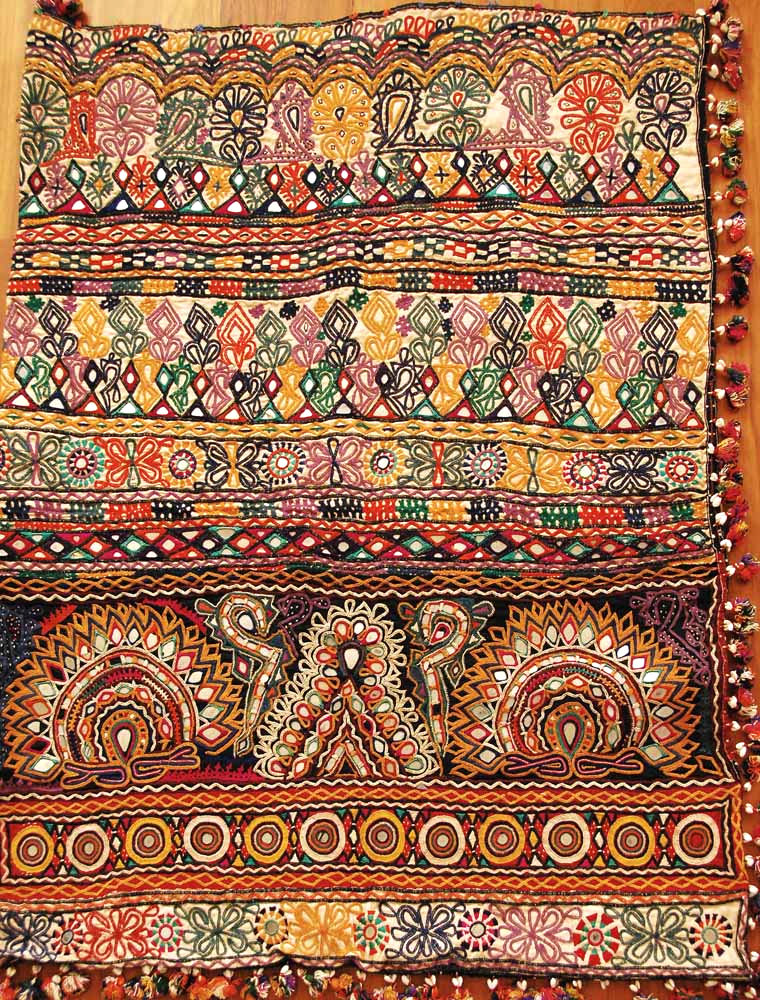
Hand-stitched mirror work from Kutch, Gujarat, made by women of its tribal communitiesCotton · Embroidery · Mirror work
🇮🇳 IndiaKutch embroidery
Hand-stitched mirror work from Kutch, Gujarat, made by women of its tribal communitiesCotton · Embroidery · Mirror work