Checks and stripes
Plain geometry in the warp and weft: the kodi and kattam of the south.
Checks and stripes are woven by crossing coloured warp and weft threads in a regular grid, so no printing or embroidery is needed. They are a staple of South Indian and Bengal handlooms. Examples include Kanchipuram kattam, Madras checks, Gadwal checks and Bengal tant stripes.
What it is
A check is a pattern of crossing bands of colour, formed when coloured warp threads are set in a repeating order and coloured weft threads are woven in a matching order. Stripes are the simpler case, with colour variation in only one direction. Because the design comes from the arrangement of yarns, checks need no jacquard and can be woven on a plain frame loom, which is why they are among the oldest and most common handloom patterns. They appear in cotton, silk and blends. A check saree is often seen as everyday wear, though checks in silk are used on formal sarees, especially in the south. The scale can range from fine pinhead squares to large blocks.
How it is made, step by step
Yarn is dyed in skeins in the chosen colours and wound on bobbins. The warper plans the colour order, called the repeat, and winds the warp threads on a beam in that sequence. On the loom, the weaver uses a shuttle with a weft of one colour, then changes bobbins to follow the weft sequence, a process that takes careful counting. In Kanchipuram silk, the pattern is called kattam and the bands may be combined with a zari border. In Bengal, tant weavers use cotton with a throw-shuttle or fly-shuttle pit loom. A cotton check saree can be woven in a couple of days, while a silk check with zari takes longer.
The motifs and looks it is known for
Kanchipuram kattam sarees have bold checks, often in contrasting colours with a zari border, and sometimes small dots called buttas inside the squares. Gadwal checks sit on a cotton body with a silk border. The Madras check is a lightweight cotton or silk plaid in strong colours, historically exported and later a trade name. Bengal tant sarees may have thin stripes and checks in the body with a contrast border and a pallu with motifs. The Assamese gamosa uses a red border and floral motifs on white, while other Assam cotton weaves use stripes. Checks are tidy and graphic, and the colours often show the dye tradition of the region.
Where it is made
Kanchipuram in Tamil Nadu weaves silk checks, and Salem, Madurai and Chettinad make cotton checks. Chettinad kandangi sarees, from the Karaikudi region, have bold checks and stripes in bright colours and are a known local style. Gadwal and Narayanpet in Telangana weave checks, and Venkatagiri in Andhra Pradesh has fine cotton. In Bengal, Shantipur, Dhaniakhali and Fulia weave tant sarees with stripes and checks, and Bangladesh has its own tradition of cotton checks. Assam and the north-east weave cotton and silk stripes. Odisha and Karnataka have check cottons as well, with Ilkal and Udupi being examples. Madras checks historically came from the Madras region, including Pulicat and Sadras.
History in brief
Simple checks and stripes are among the earliest woven patterns, and Indian cotton plaids were traded widely. Madras checks became known in the eighteenth and nineteenth centuries through trade with West Africa and the Caribbean, where the cloth was worn, and the name stuck in western fashion, though the story of how it travelled is complicated and the cloth was often made to order for those markets. Within India, checks are part of old village weaving, and each region developed its own colours. Kanchipuram and Gadwal sarees are Geographical Indication products, while Chettinad kandangi and other check sarees have local recognition. Handloom checks have been reinterpreted by designers in recent years.
Buying and caring for it
Look at the grid. In a woven check, the lines run through the cloth, and the pattern shows on both sides, with slight differences in thread tension. A printed check shows ink on the surface and a plain back, and the cloth feels flat. Pull a thread gently at an edge: in a woven check the colours are in the yarn. Handloom pieces can have small irregularities where the colour sequence meets, which is normal. Check the quality of the dye with a damp cloth, since cheap dyes can bleed. Wash cotton checks separately in cold water, dry in shade and iron while slightly damp. Dry clean silk checks, and starch cotton lightly for body if you like.
Where to look
- Kanchipuram kattam: Silk check sarees from Tamil Nadu with bold squares and zari borders.
- Gadwal check saree: Cotton body with a silk border from Gadwal in Telangana.
- Madras check: Lightweight plaid cotton historically woven around Madras for export.
- Chettinad kandangi: Bright cotton checks and stripes from Karaikudi and the Chettinad region.
- Bengal tant checks: Crisp cotton tant sarees from Shantipur and Dhaniakhali with stripes and checks.
- Venkatagiri cotton: Fine cotton from Nellore district in Andhra Pradesh, sometimes in checks.
- Assamese gamosa-style stripes: Assam cotton cloth in red and white with woven borders and bands.
Care
- Wash cotton checks separately in cold water and dry in the shade.
- Iron cotton while slightly damp for a crisp finish.
- Dry clean silk checks.
Sources and further reading
Original text by the EveryPallu desk, written with AI assistance and checked against the sources above. If we have something wrong, tell us.
Checks and stripes on EveryPallu
The sarees written up so far, newest and best known first.
 🇮🇳 IndiaPhanekꯐꯅꯦꯛ
A wrapped Meitei woman's skirt from Manipur, woven with community patternsMuga · Embroidery · Checks and stripes
🇮🇳 IndiaPhanekꯐꯅꯦꯛ
A wrapped Meitei woman's skirt from Manipur, woven with community patternsMuga · Embroidery · Checks and stripes
 🇮🇳 IndiaPasapali sari
A handloom ikat saree from Odisha with chess-board checks in contrasting colours.Ikat · Checks and stripes
🇮🇳 India and 1 morePathin
A striped wrap skirt of the Hajong people, worn from bust to calf in Northeast IndiaSilk · Checks and stripes
🇮🇳 IndiaTsüngkotepsü
A black and red Ao Naga warrior shawl with a white band of animal and star motifsChecks and stripes
🇮🇳 IndiaPasapali sari
A handloom ikat saree from Odisha with chess-board checks in contrasting colours.Ikat · Checks and stripes
🇮🇳 India and 1 morePathin
A striped wrap skirt of the Hajong people, worn from bust to calf in Northeast IndiaSilk · Checks and stripes
🇮🇳 IndiaTsüngkotepsü
A black and red Ao Naga warrior shawl with a white band of animal and star motifsChecks and stripes
 🇮🇩 Indonesia and 5 moreSarongꦱꦫꦸꦁ
A wrapped tube of cloth worn at the waist, from the Malay world to Kerala and SomaliaCotton · Batik · Ikat
🇮🇩 Indonesia and 5 moreSarongꦱꦫꦸꦁ
A wrapped tube of cloth worn at the waist, from the Malay world to Kerala and SomaliaCotton · Batik · Ikat
 🇮🇳 India and 2 moreMadras
A light handwoven cotton cloth of bright checks, named after the city of ChennaiCotton · Checks and stripes · Embroidery
🇮🇳 India and 2 moreMadras
A light handwoven cotton cloth of bright checks, named after the city of ChennaiCotton · Checks and stripes · Embroidery
 🇮🇳 IndiaKanchipuram sari
Heavy mulberry silk sari from Tamil Nadu, its contrast border woven in separatelySilk · Brocade · Zari work
🇮🇳 IndiaKanchipuram sari
Heavy mulberry silk sari from Tamil Nadu, its contrast border woven in separatelySilk · Brocade · Zari work
 🇮🇳 IndiaKandangi saree
A coarse cotton saree in checks with thick contrasting borders, from ChettinadCotton · Checks and stripes
🇮🇳 IndiaKandangi saree
A coarse cotton saree in checks with thick contrasting borders, from ChettinadCotton · Checks and stripes
 🇮🇳 India and 1 moreHandloom sari
Saris woven by hand on pit looms in India and BangladeshSilk · Brocade · Zari work
🇮🇳 India and 1 moreHandloom sari
Saris woven by hand on pit looms in India and BangladeshSilk · Brocade · Zari work
 🇲🇲 Myanmar and 1 moreLongyiလုံချည်
A cloth tube worn at the waist in Myanmar, about two metres longCotton · Checks and stripes · Embroidery
🇲🇲 Myanmar and 1 moreLongyiလုံချည်
A cloth tube worn at the waist in Myanmar, about two metres longCotton · Checks and stripes · Embroidery
 🇹🇭 ThailandPanungผ้านุ่ง
A cotton strip wrapped at the waist and falling below the knees, worn in ThailandCotton · Checks and stripes
🇹🇭 ThailandPanungผ้านุ่ง
A cotton strip wrapped at the waist and falling below the knees, worn in ThailandCotton · Checks and stripes
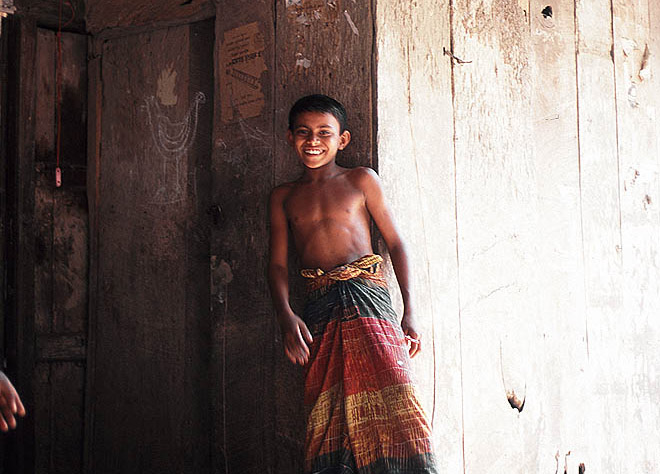 🇮🇳 India and 5 moreLungiলুঙ্গি
A cloth tube or sheet tied at the waist, worn across South and Southeast AsiaCotton · Batik · Checks and stripes
🇮🇳 India and 5 moreLungiলুঙ্গি
A cloth tube or sheet tied at the waist, worn across South and Southeast AsiaCotton · Batik · Checks and stripes
 🇮🇳 IndiaKoorai silk sariகூரை பட்டு புடவை
A nine-yard silk-cotton bridal sari with small checks, woven at Koranad in Tamil NaduBlend · Checks and stripes
🇮🇳 IndiaKasaragod saree
A hard-wearing handloom cotton saree from Kasaragod district in KeralaCotton · Checks and stripes
🇮🇳 IndiaKoorai silk sariகூரை பட்டு புடவை
A nine-yard silk-cotton bridal sari with small checks, woven at Koranad in Tamil NaduBlend · Checks and stripes
🇮🇳 IndiaKasaragod saree
A hard-wearing handloom cotton saree from Kasaragod district in KeralaCotton · Checks and stripes
 🇮🇳 IndiaChendamangalam saree
A fine cotton saree with a thin black tamarind-leaf border, handwoven in Kerala.Cotton · Checks and stripes
🇮🇳 IndiaDorea
A light, yarn-dyed striped cloth of Mughal-era India, woven in cotton and tussar.Cotton · Checks and stripes
🇮🇳 IndiaBegampuri sareeবেগমপুরী শাড়ি
Cotton handloom saree from Begampur in West Bengal, woven with a contrasting borderCotton · Checks and stripes
🇧🇩 BangladeshGrameen checkগ্রামীণ চেক
Bright checked cotton from Bangladesh, woven by village weavers in traditional waysCotton · Checks and stripes
🇮🇳 IndiaChendamangalam saree
A fine cotton saree with a thin black tamarind-leaf border, handwoven in Kerala.Cotton · Checks and stripes
🇮🇳 IndiaDorea
A light, yarn-dyed striped cloth of Mughal-era India, woven in cotton and tussar.Cotton · Checks and stripes
🇮🇳 IndiaBegampuri sareeবেগমপুরী শাড়ি
Cotton handloom saree from Begampur in West Bengal, woven with a contrasting borderCotton · Checks and stripes
🇧🇩 BangladeshGrameen checkগ্রামীণ চেক
Bright checked cotton from Bangladesh, woven by village weavers in traditional waysCotton · Checks and stripes
 🇮🇳 India and 1 moreKhes
A thick hand-woven cotton blanket cloth from Punjab, checked and worn as a winter wrap.Cotton · Checks and stripes · Zari work
🇮🇳 India and 1 moreKhes
A thick hand-woven cotton blanket cloth from Punjab, checked and worn as a winter wrap.Cotton · Checks and stripes · Zari work
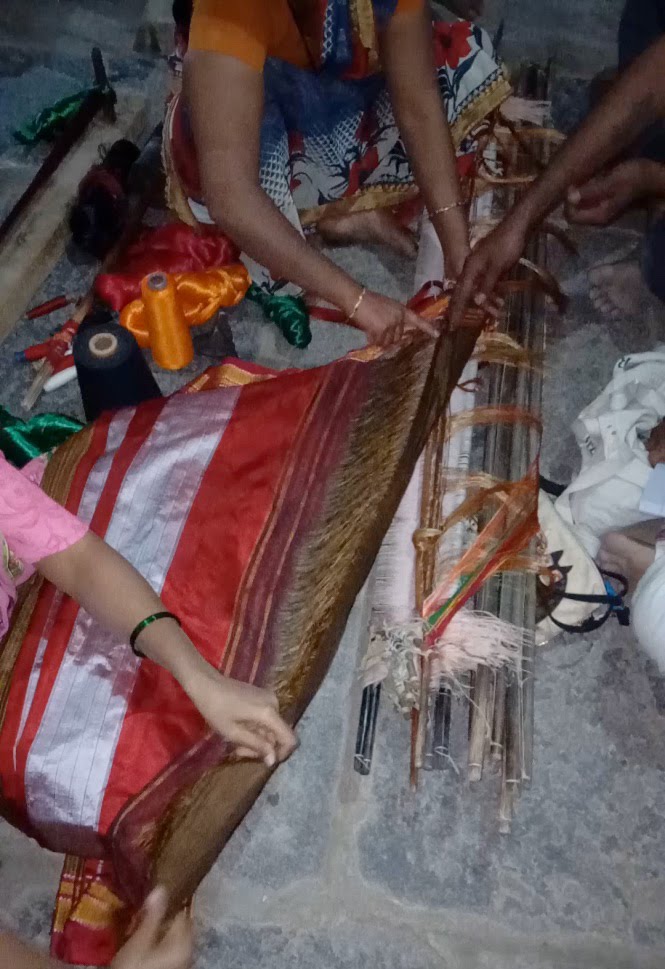 🇮🇳 IndiaIlkal sari
A cotton saree with a loop-joined silk pallu and broad red border, from Ilkal, KarnatakaCotton · Zari work · Embroidery
🇮🇳 IndiaIlkal sari
A cotton saree with a loop-joined silk pallu and broad red border, from Ilkal, KarnatakaCotton · Zari work · Embroidery
 🇲🇿 MozambiqueCapulana
A versatile Mozambican wrapped cloth with historic trade roots and symbolic patternsChecks and stripes
🇲🇿 MozambiqueCapulana
A versatile Mozambican wrapped cloth with historic trade roots and symbolic patternsChecks and stripes
 🇰🇭 Cambodia and 4 moreSbaiស្បៃ
A shawl-like breast cloth derived from the sari, worn over one shoulder in Southeast AsiaSilk · Embroidery · Brocade
🇰🇭 Cambodia and 4 moreSbaiស្បៃ
A shawl-like breast cloth derived from the sari, worn over one shoulder in Southeast AsiaSilk · Embroidery · Brocade
 🇵🇭 PhilippinesPatadyong
An indigenous wrap skirt and versatile tube garment woven in the PhilippinesChecks and stripes
🇵🇭 PhilippinesPatadyong
An indigenous wrap skirt and versatile tube garment woven in the PhilippinesChecks and stripes
Photo credits on this page
The small pictures above come from Wikimedia Commons under free licences. Some are cropped to fit.
- Pasapali sari: Prateek Pattanaik, CC BY-SA 4.0, source
- Phanek: অজয় দাস, CC BY-SA 4.0, source
- Sarong: Unknown author, CC BY-SA 3.0, source
- Madras: Shweta Venkateswaran, CC0, source
- Kanchipuram sari: McKay Savage, CC BY 2.0, source
- Kandangi saree: RidahZ, CC BY-SA 4.0, source
- Handloom sari: P.K.Niyogi, Public domain, source
- Longyi: Unknown author, Public domain, source
- Panung: เอบ บุนนาก, Public domain, source
- Lungi: Laportechicago at English Wikipedia (Paul La Porte)., CC BY 2.5, source
- Koorai silk sari: En.saravanan, CC BY 4.0, source
- Chendamangalam saree: Malluchronicle, CC BY-SA 4.0, source
- Khes: RAJIVVASUDEV, CC BY-SA 4.0, source
- Ilkal sari: T B Dinesh, CC0, source
- Capulana: Steve Evans, CC BY 2.0, source
- Sbai: Stephowz, CC BY-SA 4.0, source
- Patadyong: Anonymous Unknown author, Public domain, source