Silk sarees
Mulberry silk: Kanchipuram, Banarasi, Mysore, Paithani and the other great silks, light and bright.
Silk is a fine natural filament spun by the silkworm, and it is the fibre of India's most prized sarees. Mulberry silk, reeled from cocoons of the Bombyx mori moth, gives the light, bright cloth of Kanchipuram, Banaras and Mysore.
What it is and where it comes from
Silk is a protein filament that a silkworm spins around itself as a cocoon. A single cocoon can unwind into a continuous thread that runs for hundreds of metres, which is why silk is the only natural fibre that comes as a long filament rather than short staple. Mulberry silk, from worms fed on mulberry leaves, is the most common kind and is farmed in Karnataka, Andhra Pradesh, Tamil Nadu and West Bengal. India also produces the wild silks tussar, muga and eri. The country is among the largest silk producers in the world and by far the largest consumer, and the saree is the main reason why.
How the cloth is made
Cocoons are boiled or steamed to soften the gum that holds the thread together, and the filaments are reeled off and twisted together into raw silk yarn. The yarn is then degummed, dyed in skeins and set up on the loom. For the great temple sarees the warp is stretched on a handloom, and a weaver, often helped by a second person, passes the weft by shuttle. Patterns come from a jacquard or from the older drawloom, and gold or silver zari is woven in as an extra weft. A heavy Kanchipuram saree can take a pair of weavers well over a week, and the most elaborate pieces much longer.
How it feels and falls
Good silk is smooth and cool in the first touch and then warms to the body. It has a soft glow rather than a hard shine, and it changes colour slightly as the light moves across it because the filament is triangular in section. Heavy silks such as Kanchipuram stand away from the body and hold bold pleats, while lighter weaves such as Mysore crepe, Bengal silk or a plain chiffon-weight silk fall in soft, flowing folds. Silk breathes well, so it is comfortable in warm weather, and it also insulates a little, which is why it works at winter weddings. It creases less than cotton and the creases often relax when the saree is hung.
Where in India and South Asia it is woven
Kanchipuram and Arni in Tamil Nadu, Varanasi in Uttar Pradesh, Mysuru and Bengaluru in Karnataka, Paithan and Yeola in Maharashtra, Pochampally and Dharmavaram in Telangana and Andhra Pradesh, Bhagalpur in Bihar and Murshidabad in West Bengal are all well-known silk centres. Odisha has Sambalpuri and Berhampuri silks, Assam has Sualkuchi, and Gujarat has Patan, where double ikat patola is made. Beyond India, Bangladesh weaves Rajshahi silk, which takes its name from the Rajshahi region, and Pakistan, Nepal and Sri Lanka all produce smaller amounts of silk cloth for local use.
How to tell the real thing
Pure silk is rarely cheap, so a very low price should make you cautious. Look at the zari, which in a true Kanchipuram is gold-plated silver thread, and ask what the seller says it is made of. Check the weave from behind: a handwoven saree has small irregularities and a clean back, while a printed or powerloom copy often shows floats or uniform sameness. Ask whether the piece carries the Silk Mark or a handloom mark, both of which are issued by Indian agencies. A burn test, where a thread is held to a flame, helps a little: real silk smells like burnt hair and leaves a crushable ash, while polyester melts into a hard bead.
Famous sarees and centres
- Kanchipuram: Heavy temple silk from Tamil Nadu with contrast borders and zari.
- Banarasi: Brocade silk from Varanasi, rich with gold and silver zari.
- Paithani: Maharashtra silk with peacock and lotus motifs on the pallu and border.
- Mysore silk: Pure silk and gold zari from Karnataka, plain and elegant.
- Patola: Double ikat silk from Patan in Gujarat, tied and dyed on both warp and weft.
- Pochampally: Ikat silk from Telangana, with geometric patterns.
- Baluchari: Silk from Bengal with mythic scenes woven into the pallu.
- Sambalpuri: Ikat silk and cotton from western Odisha.
Care
- Dry clean the first few times, especially heavy zari silks.
- Store folded in muslin or a soft cotton cloth, and refold along new lines now and then.
- Keep it away from direct sun, perfume and deodorant, which can mark the cloth.
- Air it in the shade after wearing and hang it in a cool, dry place.
Sources and further reading
Original text by the EveryPallu desk, written with AI assistance and checked against the sources above. If we have something wrong, tell us.
Silk on EveryPallu
The sarees written up so far, newest and best known first.
 🇮🇳 India and 4 moreSariसाड़ी
A single unstitched length of cloth, tucked at the waist and slung over one shoulderSilk · Brocade · Ikat
🇮🇳 IndiaKhandua
An Odisha ikat silk saree woven with temple verses and auspicious motifsSilk · Ikat
🇮🇳 India and 4 moreSariसाड़ी
A single unstitched length of cloth, tucked at the waist and slung over one shoulderSilk · Brocade · Ikat
🇮🇳 IndiaKhandua
An Odisha ikat silk saree woven with temple verses and auspicious motifsSilk · Ikat
 🇮🇳 India and 1 moreBandhani
Tie-dyed cloth dotted with small tied knots, made in Gujarat and RajasthanSilk · Tie-dye
🇮🇳 India and 1 moreBandhani
Tie-dyed cloth dotted with small tied knots, made in Gujarat and RajasthanSilk · Tie-dye
 🇮🇳 IndiaChanderi sari
A silk sari woven in Chanderi, Madhya Pradesh, with gold and silver zariSilk · Brocade · Zari work
🇮🇳 IndiaKimkhwab
A heavy silk brocade woven with gold and silver yarns, famed in Mughal IndiaSilk · Brocade · Zari work
🇮🇳 IndiaJamawar
A brocaded shawl cloth from Kashmir, once sold by the yard and woven in pashminaWool · Brocade
🇮🇳 India and 1 morePathin
A striped wrap skirt of the Hajong people, worn from bust to calf in Northeast IndiaSilk · Checks and stripes
🇮🇳 India and 1 moreMalda silk
A soft, golden-yellow silk yarn from Malda district, West Bengal, woven into sareesSilk
🇧🇩 Bangladesh and 1 moreAbrawan
A legendary, sheer muslin from Dacca named after flowing waterCotton · Zari work
🇮🇳 IndiaChanderi sari
A silk sari woven in Chanderi, Madhya Pradesh, with gold and silver zariSilk · Brocade · Zari work
🇮🇳 IndiaKimkhwab
A heavy silk brocade woven with gold and silver yarns, famed in Mughal IndiaSilk · Brocade · Zari work
🇮🇳 IndiaJamawar
A brocaded shawl cloth from Kashmir, once sold by the yard and woven in pashminaWool · Brocade
🇮🇳 India and 1 morePathin
A striped wrap skirt of the Hajong people, worn from bust to calf in Northeast IndiaSilk · Checks and stripes
🇮🇳 India and 1 moreMalda silk
A soft, golden-yellow silk yarn from Malda district, West Bengal, woven into sareesSilk
🇧🇩 Bangladesh and 1 moreAbrawan
A legendary, sheer muslin from Dacca named after flowing waterCotton · Zari work
 🇮🇩 Indonesia and 5 moreSarongꦱꦫꦸꦁ
A wrapped tube of cloth worn at the waist, from the Malay world to Kerala and SomaliaCotton · Batik · Ikat
🇮🇩 Indonesia and 5 moreSarongꦱꦫꦸꦁ
A wrapped tube of cloth worn at the waist, from the Malay world to Kerala and SomaliaCotton · Batik · Ikat
 🇮🇳 IndiaPatola sari
A double ikat silk saree from Patan, Gujarat, dyed and knotted before it is wovenSilk · Ikat
🇮🇳 IndiaMoirang Phee
A Manipur handloom with stepped tooth borders woven from both edges toward the centreCotton
🇮🇳 IndiaPatola sari
A double ikat silk saree from Patan, Gujarat, dyed and knotted before it is wovenSilk · Ikat
🇮🇳 IndiaMoirang Phee
A Manipur handloom with stepped tooth borders woven from both edges toward the centreCotton
 🇮🇳 IndiaOdisha Ikat
Silk tied, dyed and woven in Odisha villages into saris with hazy, feathered edgesSilk · Ikat · Tie-dye
🇮🇳 IndiaOdisha Ikat
Silk tied, dyed and woven in Odisha villages into saris with hazy, feathered edgesSilk · Ikat · Tie-dye
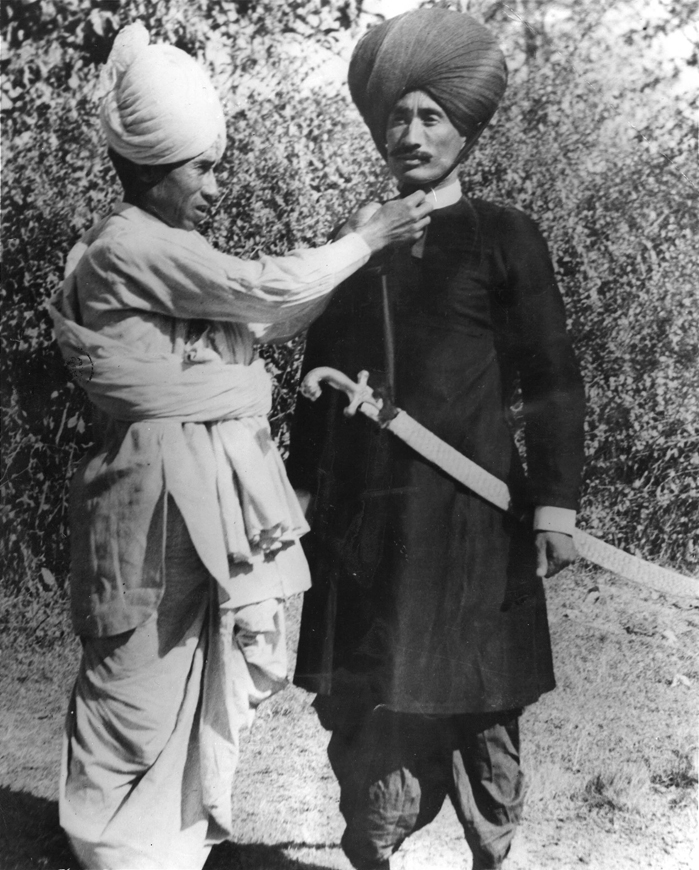 🇮🇳 IndiaPheichom
A men's wrap of the Meitei people of Manipur, worn like the dhoti, in cotton or silkCotton · Block print
🇮🇳 IndiaPheichom
A men's wrap of the Meitei people of Manipur, worn like the dhoti, in cotton or silkCotton · Block print
 🇮🇳 IndiaKanchipuram sari
A silk sari from Kanchipuram with a separate contrast border locked onto the bodySilk · Zari work · Brocade
🇮🇳 IndiaKanchipuram sari
A silk sari from Kanchipuram with a separate contrast border locked onto the bodySilk · Zari work · Brocade
 🇮🇳 IndiaKandangi
A checked cotton saree from Chettinad, dyed in earthy colours with broad bordersCotton · Checks and stripes
🇮🇳 IndiaKandangi
A checked cotton saree from Chettinad, dyed in earthy colours with broad bordersCotton · Checks and stripes
 🇮🇳 IndiaPaithani
A Maharashtrian handwoven silk sari with interlocking tapestry borders and peacock motifsSilk · Zari work · Brocade
🇮🇳 IndiaPaithani
A Maharashtrian handwoven silk sari with interlocking tapestry borders and peacock motifsSilk · Zari work · Brocade
 🇮🇳 IndiaPochampally sari
A Telangana handloom saree whose geometric motifs are dyed into the yarn before weavingSilk · Ikat
🇮🇳 India and 1 moreUppada Jamdani sari
A light handwoven silk sari from Uppada, Andhra Pradesh, patterned in the jamdani waySilk · Jamdani · Zari work
🇮🇳 IndiaPochampally sari
A Telangana handloom saree whose geometric motifs are dyed into the yarn before weavingSilk · Ikat
🇮🇳 India and 1 moreUppada Jamdani sari
A light handwoven silk sari from Uppada, Andhra Pradesh, patterned in the jamdani waySilk · Jamdani · Zari work
 🇮🇳 India and 1 moreHandloom sari
Saris woven by hand on pit looms in India and BangladeshSilk · Zari work · Jamdani
🇮🇳 India and 1 moreHandloom sari
Saris woven by hand on pit looms in India and BangladeshSilk · Zari work · Jamdani
 🇮🇩 Indonesia and 2 moreSongketᬲᭀᬂᬓᬾᬢ᭄
A hand-woven brocade cloth from Sumatra and the Malay world, with gold or silver threadSilk · Brocade · Zari work
🇮🇩 Indonesia and 2 moreSongketᬲᭀᬂᬓᬾᬢ᭄
A hand-woven brocade cloth from Sumatra and the Malay world, with gold or silver threadSilk · Brocade · Zari work
 🇮🇩 Indonesia and 5 moreIkat
Yarns are tied and dyed before weaving, giving the cloth a softly blurred patternSilk · Ikat
🇮🇩 Indonesia and 5 moreIkat
Yarns are tied and dyed before weaving, giving the cloth a softly blurred patternSilk · Ikat
 🇮🇳 IndiaChikankariचिकनकारी (Urdu: چکن کاری)
White thread hand embroidery from Lucknow, stitched on pale, sheer clothCotton · Embroidery · Block print
🇮🇳 IndiaMaheshwari saree
A handloom saree from Maheshwar, woven in cotton, silk and zari with local motifsSilk · Zari work
🇮🇳 IndiaChikankariचिकनकारी (Urdu: چکن کاری)
White thread hand embroidery from Lucknow, stitched on pale, sheer clothCotton · Embroidery · Block print
🇮🇳 IndiaMaheshwari saree
A handloom saree from Maheshwar, woven in cotton, silk and zari with local motifsSilk · Zari work
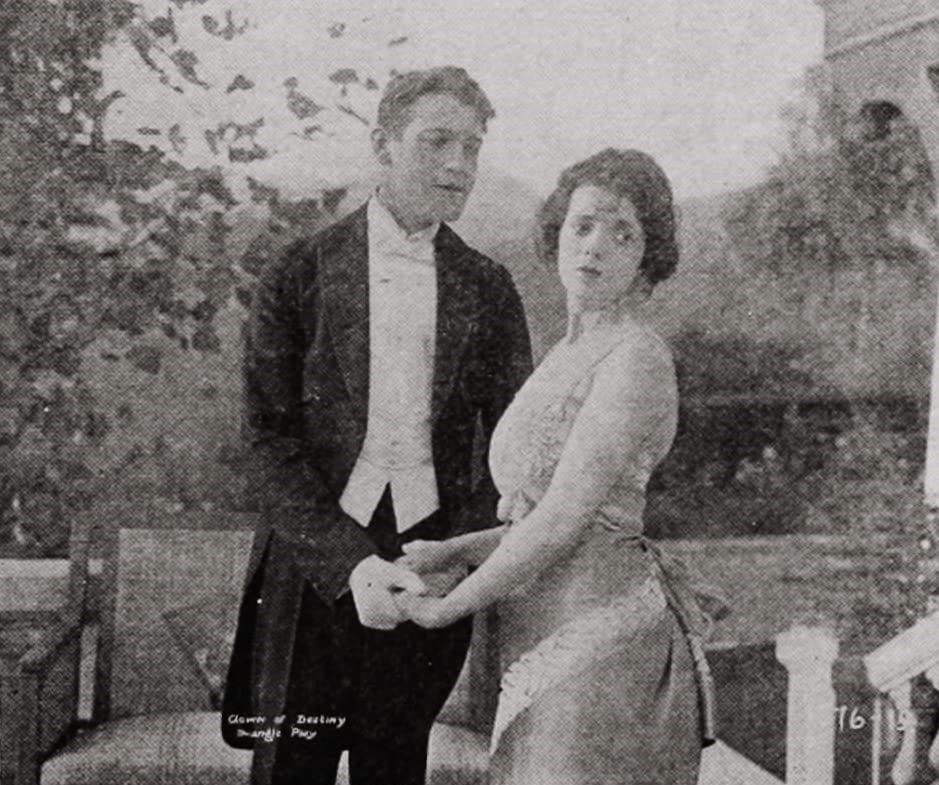 🇮🇳 India and 1 moreSari-inspired dress
A dress that borrows the sari's drape, ornament and colourChiffon · Embroidery
🇮🇳 India and 1 moreSari-inspired dress
A dress that borrows the sari's drape, ornament and colourChiffon · Embroidery
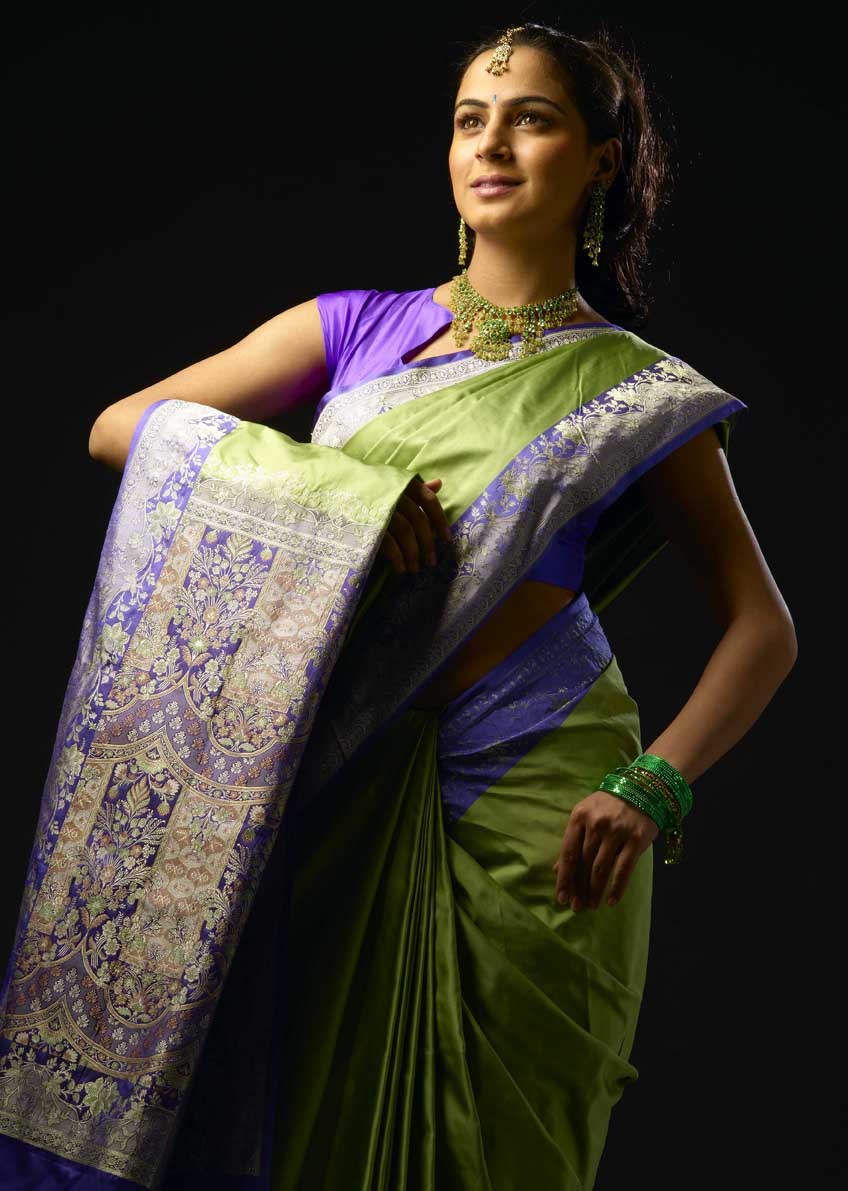 🇮🇳 IndiaShalu sari
A Banaras sari made with silk from two weaving traditions, worn by brides in MaharashtraSilk · Zari work
🇮🇳 IndiaShalu sari
A Banaras sari made with silk from two weaving traditions, worn by brides in MaharashtraSilk · Zari work
 🇮🇳 India and 2 moreKhadi
Hand-spun and hand-woven cloth from the subcontinent, tied to the swadeshi movementCotton
🇮🇳 India and 2 moreKhadi
Hand-spun and hand-woven cloth from the subcontinent, tied to the swadeshi movementCotton
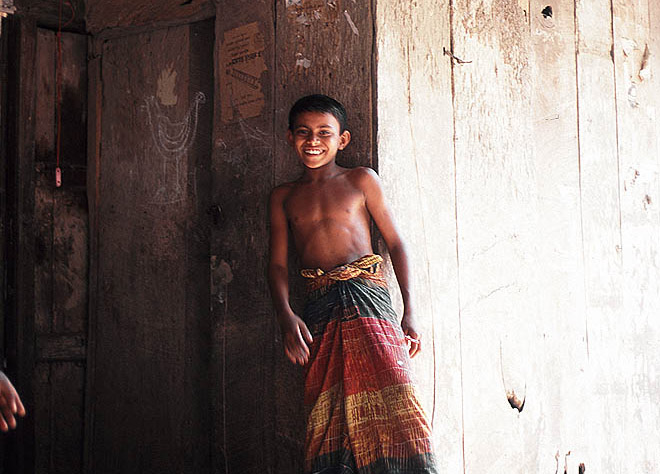 🇮🇳 India and 5 moreLungiলুঙ্গি
A cloth tube or sheet tied at the waist, worn across South and Southeast AsiaCotton · Batik · Checks and stripes
🇮🇳 India and 5 moreLungiলুঙ্গি
A cloth tube or sheet tied at the waist, worn across South and Southeast AsiaCotton · Batik · Checks and stripes
 🇮🇳 IndiaArani silk saree
A handloom silk saree from Arani, Tamil Nadu, known for its zari workSilk · Zari work · Block print
🇮🇳 IndiaKorial sariকোরিয়াল শাড়ি
A red-bordered mulberry silk saree woven on hand looms in West BengalSilk · Jamdani · Zari work
🇮🇳 IndiaArani silk saree
A handloom silk saree from Arani, Tamil Nadu, known for its zari workSilk · Zari work · Block print
🇮🇳 IndiaKorial sariকোরিয়াল শাড়ি
A red-bordered mulberry silk saree woven on hand looms in West BengalSilk · Jamdani · Zari work
 🇮🇳 IndiaKoorai silk sariகூரை பட்டு புடவை
A nine-yard silk-cotton bridal sari with small checks, woven at Koranad in Tamil NaduBlend · Checks and stripes
🇮🇳 IndiaKoorai silk sariகூரை பட்டு புடவை
A nine-yard silk-cotton bridal sari with small checks, woven at Koranad in Tamil NaduBlend · Checks and stripes
 🇮🇳 IndiaAssam silk
Golden muga, white pat and warm eri silks, reared and hand-woven in AssamMuga
🇮🇳 IndiaPuttapaka saree
A silk double-ikat saree tied and dyed by hand in Puttapaka village, Nalgonda.Silk · Ikat · Tie-dye
🇮🇳 IndiaAssam silk
Golden muga, white pat and warm eri silks, reared and hand-woven in AssamMuga
🇮🇳 IndiaPuttapaka saree
A silk double-ikat saree tied and dyed by hand in Puttapaka village, Nalgonda.Silk · Ikat · Tie-dye
 🇮🇳 IndiaBagh print
Hand block printing with natural red and black dyes from a village on the Bagh riverCotton · Block print
🇮🇳 IndiaBagh print
Hand block printing with natural red and black dyes from a village on the Bagh riverCotton · Block print
 🇮🇳 IndiaHimroo
A silk and cotton fabric from Aurangabad that reworks the royal kinkhwab brocadeSilk · Brocade
🇮🇳 IndiaHimroo
A silk and cotton fabric from Aurangabad that reworks the royal kinkhwab brocadeSilk · Brocade
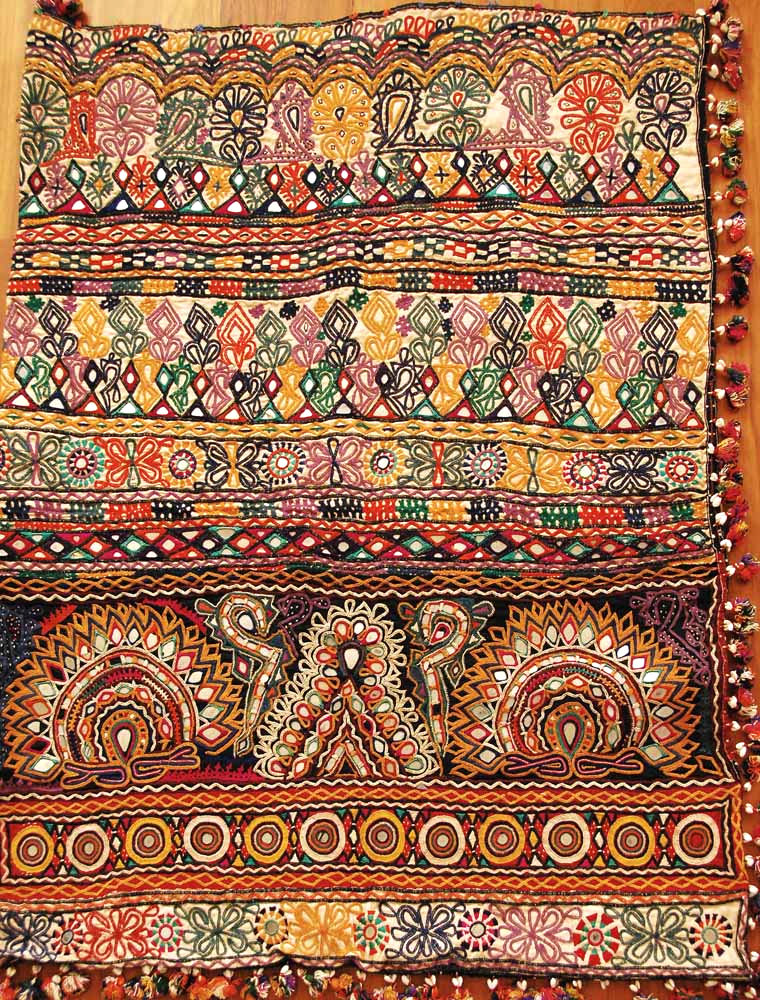 🇮🇳 IndiaKutch embroidery
Hand-stitched mirror work from Kutch, Gujarat, made by women of its tribal communitiesCotton · Embroidery · Mirror work
🇮🇳 India and 1 moreAgrun
A shawl-like festive wrap of the Hajong people, brocaded in silks with birds and flowers.Silk · Brocade · Zari work
🇮🇳 IndiaDorea
A light, yarn-dyed striped cloth of Mughal-era India, woven in cotton and tussar.Cotton · Checks and stripes
🇮🇳 India and 1 moreMatka
A coarse silk spun from pierced cocoons, woven in the Bengal regionSilk
🇮🇳 IndiaBafta
A plain-woven cotton calico from Gujarat, woven at Bharuch and traded far and wideCotton
🇮🇳 IndiaKutch embroidery
Hand-stitched mirror work from Kutch, Gujarat, made by women of its tribal communitiesCotton · Embroidery · Mirror work
🇮🇳 India and 1 moreAgrun
A shawl-like festive wrap of the Hajong people, brocaded in silks with birds and flowers.Silk · Brocade · Zari work
🇮🇳 IndiaDorea
A light, yarn-dyed striped cloth of Mughal-era India, woven in cotton and tussar.Cotton · Checks and stripes
🇮🇳 India and 1 moreMatka
A coarse silk spun from pierced cocoons, woven in the Bengal regionSilk
🇮🇳 IndiaBafta
A plain-woven cotton calico from Gujarat, woven at Bharuch and traded far and wideCotton
 🇲🇲 MyanmarAcheikအချိတ်
Myanmar's multi-shuttle silk weave of waves and stripes, made into paso and htameinSilk · Brocade
🇲🇲 MyanmarAcheikအချိတ်
Myanmar's multi-shuttle silk weave of waves and stripes, made into paso and htameinSilk · Brocade
 🇮🇩 IndonesiaGeringsingᬕ᭄ᬭᬶᬂᬲᬶᬂ (gringsing)
A sacred double ikat cloth woven only in Tenganan, a Bali Aga village in BaliCotton · Ikat
🇮🇩 IndonesiaGeringsingᬕ᭄ᬭᬶᬂᬲᬶᬂ (gringsing)
A sacred double ikat cloth woven only in Tenganan, a Bali Aga village in BaliCotton · Ikat
 🇮🇳 India and 4 moreWoodblock printing on textiles
Patterns pressed onto cloth with hand-carved wooden blocks, the chhapa of South Asia.Linen · Block print
🇮🇳 IndiaShaphee Lanphee
A heavy black and red embroidered textile woven by Meitei craftswomen in ManipurCotton · Embroidery
🇮🇳 India and 4 moreWoodblock printing on textiles
Patterns pressed onto cloth with hand-carved wooden blocks, the chhapa of South Asia.Linen · Block print
🇮🇳 IndiaShaphee Lanphee
A heavy black and red embroidered textile woven by Meitei craftswomen in ManipurCotton · Embroidery
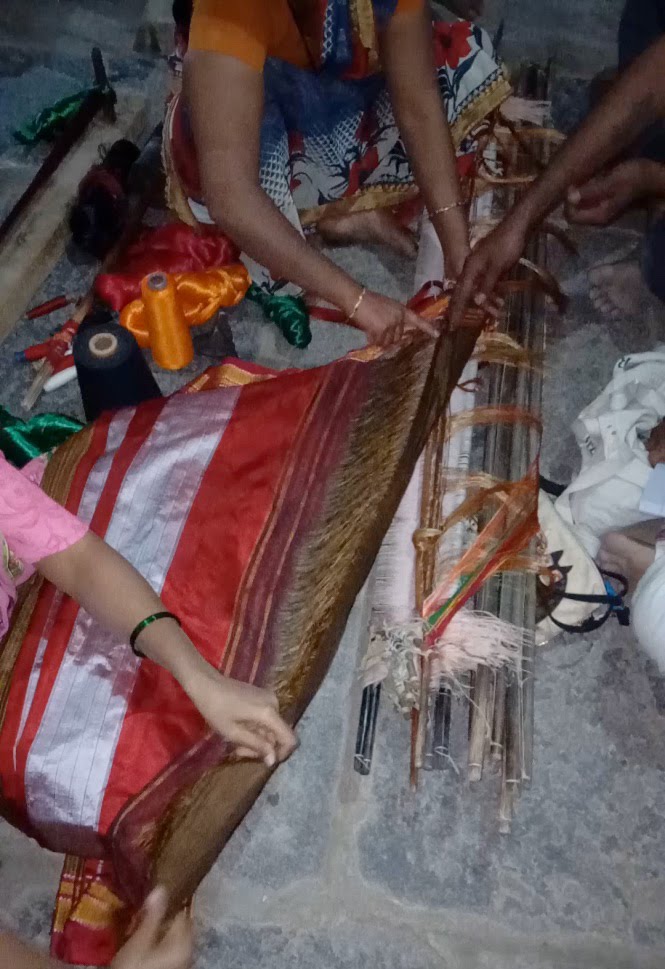 🇮🇳 IndiaIlkal sari
A cotton saree with a loop-joined silk pallu and broad red border, from Ilkal, KarnatakaCotton · Zari work · Embroidery
🇮🇳 IndiaIlkal sari
A cotton saree with a loop-joined silk pallu and broad red border, from Ilkal, KarnatakaCotton · Zari work · Embroidery
 🇮🇳 IndiaBomkai sari
An Odisha handloom saree with extra-weft threadwork, woven in cotton and silkCotton · Zari work
🇮🇳 IndiaBomkai sari
An Odisha handloom saree with extra-weft threadwork, woven in cotton and silkCotton · Zari work
 🇮🇩 IndonesiaTenunꦠꦼꦤꦸꦤ꧀
Handwoven Indonesian cloth created with ancient ikat and supplementary metallic threadsCotton · Ikat · Brocade
🇮🇩 IndonesiaTenunꦠꦼꦤꦸꦤ꧀
Handwoven Indonesian cloth created with ancient ikat and supplementary metallic threadsCotton · Ikat · Brocade
 🇮🇳 IndiaBanarasi sari
Fine silk sari of Varanasi, hand-woven at home with zari work for weddingsSilk · Brocade · Zari work
🇮🇳 IndiaBanarasi sari
Fine silk sari of Varanasi, hand-woven at home with zari work for weddingsSilk · Brocade · Zari work
Photo credits on this page
The small pictures above come from Wikimedia Commons under free licences. Some are cropped to fit.
- Bandhani: RubyGoes, CC BY 2.0, source
- Chanderi sari: India Untravelled, CC BY 2.0, source
- Sarong: Unknown author, CC BY-SA 3.0, source
- Patola sari: Unknown author, Public domain, source
- Odisha Ikat: Atudu, CC BY-SA 4.0, source
- Pheichom: Unknown author, Public domain, source
- Kanchipuram sari: McKay Savage, CC BY 2.0, source
- Kandangi: RidahZ, CC BY-SA 4.0, source
- Paithani: Unknown author, Public domain, source
- Pochampally sari: Hermann Linde, Public domain, source
- Handloom sari: P.K.Niyogi, Public domain, source
- Ikat: Midori, CC BY 3.0, source
- Songket: Rijksmuseum, CC0, source
- Chikankari: Joey Berzowska, CC BY 2.0, source
- Shalu sari: Sreekumar K. S., CC BY 2.0, source
- Sari-inspired dress: Triangle films, Public domain, source
- Sari: Suyash.dwivedi, CC BY-SA 4.0, source
- Khadi: Unknown author, Public domain, source
- Lungi: Laportechicago at English Wikipedia (Paul La Porte)., CC BY 2.5, source
- Arani silk saree: Balu 606902, CC BY-SA 3.0, source
- Assam silk: Hiranmoy Boruah, CC BY-SA 3.0, source
- Koorai silk sari: En.saravanan, CC BY 4.0, source
- Bagh print: Mrqd9, CC BY-SA 4.0, source
- Himroo: RubyGoes, CC BY 2.0, source
- Kutch embroidery: Jainamishra, CC BY 3.0, source
- Acheik: Chenzeyan29, CC0, source
- Geringsing: Unknown author, Public domain, source
- Woodblock printing on textiles: William Morris, Public domain, source
- Ilkal sari: T B Dinesh, CC0, source
- Banarasi sari: Ekabhishek, CC BY-SA 3.0, source
- Tenun: Silitonga, G., Soekardi, R., and Tambunan, S., Public domain, source
- Bomkai sari: Nayansatya, CC BY 3.0, source