Synthetic sarees
Polyester, nylon and viscose: affordable, bright and easy to care for.
Synthetic sarees are made from man-made fibres such as polyester, nylon and viscose. They are affordable, bright and easy to care for, and they carry real environmental trade-offs that are worth knowing about.
What it is and where it comes from
Polyester and nylon are made from petroleum-based chemicals, spun into long filaments and cut or kept as filament for weaving. Viscose, also called rayon, is different: it is made from wood pulp or other plant cellulose that is dissolved and spun again, so it is called a regenerated fibre, not a fully natural one and not a fully synthetic one. Art silk is a trade name for sarees that look like silk but are made from these fibres. These fibres made the saree cheap, and they now account for a large share of the sarees sold in India.
How the cloth is made
The raw chemical or pulp is dissolved or melted and pushed through fine holes to form filaments, which are then spun into yarn. These yarns are woven on powerlooms in mills, mostly in Surat in Gujarat, and the cloth is dyed, printed or embroidered. Because the fibre can be made in many thicknesses and finishes, synthetic mills can imitate silk, chiffon, crepe or georgette. Some cloth is printed digitally with elaborate designs at low cost. Weaving on a powerloom is quick, and a cloth that would take a hand weaver days can be made in hours, which is why the price is so low.
How it feels and falls
Polyester and nylon are smooth, light and strong, and they resist wrinkles and dry quickly. They do not absorb sweat well, so they can feel hot and clingy in humid weather, and they may hold static. Viscose feels softer and drapes more like silk or cotton, and it absorbs moisture better, but it is weak when wet and can shrink or lose shape in washing. Synthetic sarees often have a stronger shine than natural fibres. They keep bright colours well and hold prints sharply. On the plus side, they are light to carry, easy to launder at home, and rarely need dry cleaning.
Where in India and South Asia it is woven
Surat in Gujarat is the largest centre in India for synthetic sarees, and it supplies markets across the country. Ichalkaranji and Bhiwandi in Maharashtra, Salem and Erode in Tamil Nadu, and Kolkata and Bhagalpur in the east also make or finish them. Viscose is also made at mills in Madhya Pradesh and Gujarat. Bangladesh and Pakistan have large synthetic textile industries, with Faisalabad and Dhaka as important centres, and Sri Lanka and Nepal both import large quantities of synthetic cloth for sarees and dress fabric.
How to tell the real thing
Read the label for the fibre content, since sarees sold as art silk, fancy silk or silk finish are usually not silk. A flame test on a loose thread can help: polyester and nylon melt and shrink away from the flame, leaving a hard bead, while viscose burns quickly like paper and leaves a soft grey ash. Touch the cloth: synthetics feel smooth and slightly cool or slick, and they are often very uniform. Do not pay a silk price for a synthetic saree. A good synthetic should be fairly priced, with strong stitching on the hem and a neat finish on the border, and it should not smell strongly of chemicals.
Famous sarees and centres
- Surat polyester sarees: Printed and embroidered sarees made in vast volume in Gujarat.
- Art silk: Trade term for silk-look sarees in viscose or polyester.
- Nylon net: A light mesh used for embroidered party sarees.
- Viscose crepe: A soft, draping crepe with a silk-like feel at a modest price.
- Printed polyester georgette: Light, easy-care georgette with floral and abstract prints.
- Satin polyester: A glossy, smooth saree cloth for evening and party wear.
- Banarasi-style powerloom: Machine-woven imitations of Banarasi brocade in synthetic yarn.
Care
- Wash in cool water with mild detergent, and avoid high heat.
- Use a washing bag to catch shed fibres, which helps limit microplastic pollution.
- Hang to dry in shade, and iron on a low setting, since polyester can melt.
- Treat viscose gently when wet, and do not wring it.
Sources and further reading
Original text by the EveryPallu desk, written with AI assistance and checked against the sources above. If we have something wrong, tell us.
Synthetic on EveryPallu
The sarees written up so far, newest and best known first.
 🇮🇳 India and 4 moreSariसाड़ी
A single unstitched length of cloth, tucked at the waist and slung over one shoulderSilk · Brocade · Ikat
🇮🇳 India and 4 moreSariसाड़ी
A single unstitched length of cloth, tucked at the waist and slung over one shoulderSilk · Brocade · Ikat
 🇮🇩 Indonesia and 5 moreSarongꦱꦫꦸꦁ
A wrapped tube of cloth worn at the waist, from the Malay world to Kerala and SomaliaCotton · Batik · Ikat
🇮🇩 Indonesia and 5 moreSarongꦱꦫꦸꦁ
A wrapped tube of cloth worn at the waist, from the Malay world to Kerala and SomaliaCotton · Batik · Ikat
 🇮🇳 IndiaChattayum mundumചട്ടയും മുണ്ടും
A two-piece white cotton dress of Kerala's Syrian Christian womenCotton · Embroidery · Zari work
🇮🇳 IndiaChattayum mundumചട്ടയും മുണ്ടും
A two-piece white cotton dress of Kerala's Syrian Christian womenCotton · Embroidery · Zari work
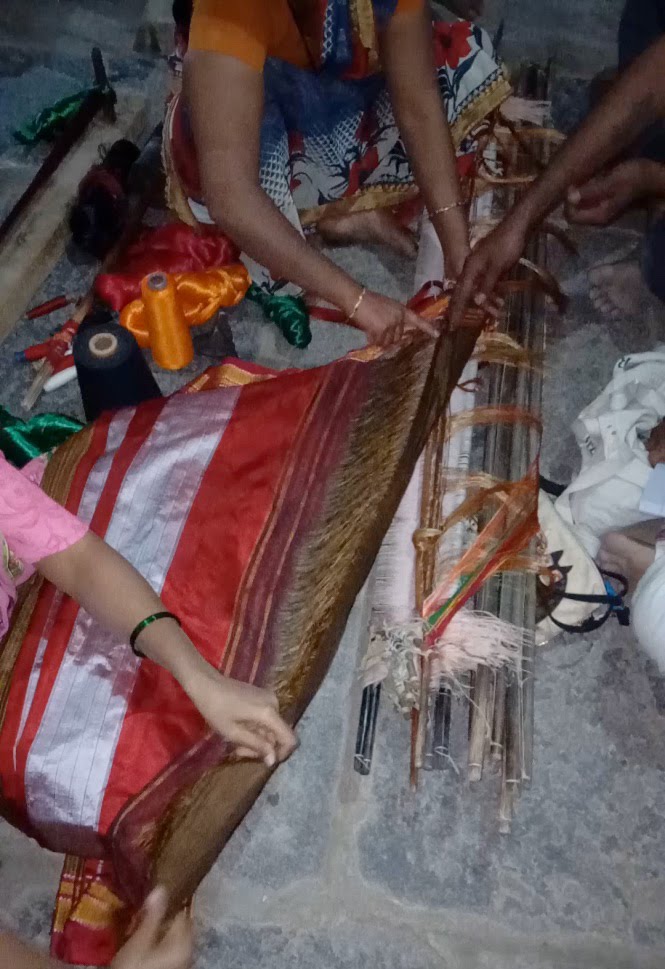 🇮🇳 IndiaIlkal sari
A cotton saree with a loop-joined silk pallu and broad red border, from Ilkal, KarnatakaCotton · Zari work · Embroidery
🇮🇳 IndiaIlkal sari
A cotton saree with a loop-joined silk pallu and broad red border, from Ilkal, KarnatakaCotton · Zari work · Embroidery
 🇮🇳 IndiaDokhonaदख'ना
A wrap-around cloth worn by Boro women of Assam, usually yellow, with woven Agor designsCotton
🇮🇳 IndiaDokhonaदख'ना
A wrap-around cloth worn by Boro women of Assam, usually yellow, with woven Agor designsCotton
 🇮🇩 IndonesiaBalinese textiles
The woven cloths of Bali, from sacred double ikat to gold-dusted ceremony wearCotton · Ikat · Brocade
🇮🇩 IndonesiaBalinese textiles
The woven cloths of Bali, from sacred double ikat to gold-dusted ceremony wearCotton · Ikat · Brocade
 🇮🇳 IndiaKalamkariVraata Pani
Cloth art from Andhra Pradesh, drawn with a pen or blocks and dyed with plant coloursCotton · Kalamkari · Hand painting
🇮🇳 IndiaKalamkariVraata Pani
Cloth art from Andhra Pradesh, drawn with a pen or blocks and dyed with plant coloursCotton · Kalamkari · Hand painting
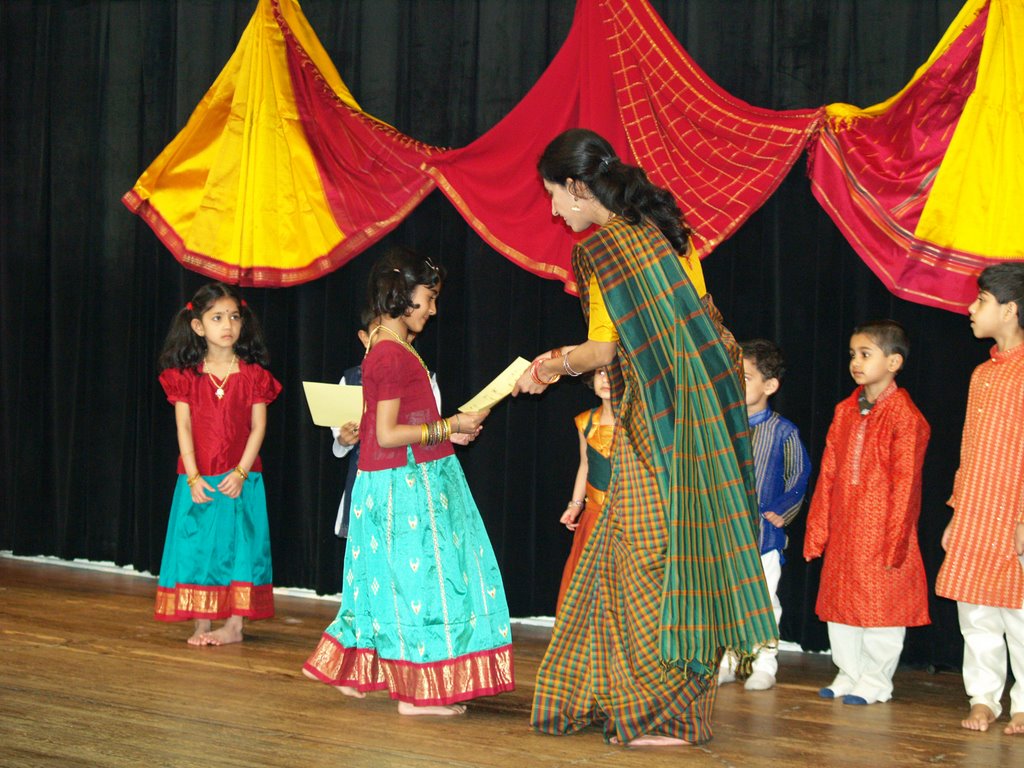 🇮🇳 IndiaLanga voniలంగా వోణి
A two-piece half sari worn by girls in South India, a skirt with a short diagonal drapeSilk · Embroidery · Zari work
🇮🇳 IndiaJamawar
A brocaded shawl cloth from Kashmir, once sold by the yard and woven in pashminaWool · Brocade
🇮🇳 IndiaLanga voniలంగా వోణి
A two-piece half sari worn by girls in South India, a skirt with a short diagonal drapeSilk · Embroidery · Zari work
🇮🇳 IndiaJamawar
A brocaded shawl cloth from Kashmir, once sold by the yard and woven in pashminaWool · Brocade
 🇮🇳 IndiaKachchh shawldhabla
A dense wool shawl handwoven in Kutch, Gujarat, once traded for fleece and grain.Wool · Embroidery · Tie-dye
🇮🇳 IndiaKachchh shawldhabla
A dense wool shawl handwoven in Kutch, Gujarat, once traded for fleece and grain.Wool · Embroidery · Tie-dye
Photo credits on this page
The small pictures above come from Wikimedia Commons under free licences. Some are cropped to fit.
- Sarong: Unknown author, CC BY-SA 3.0, source
- Chattayum mundum: Alexander J. Mapleton, CC BY-SA 4.0, source
- Sari: Suyash.dwivedi, CC BY-SA 4.0, source
- Ilkal sari: T B Dinesh, CC0, source
- Dokhona: Bodoland Territorial Council, CC0, source
- Balinese textiles: Chris Hazzard, CC BY-SA 3.0, source
- Kalamkari: Anilbhardwajnoida, CC BY-SA 3.0, source
- Langa voni: Kannadiga, CC BY-SA 3.0, source
- Kachchh shawl: Ekabhishek, CC BY-SA 3.0, source