Dance and stage
Dancers and actors drape and sew sarees in particular ways for the stage.
Dancers and actors wear sarees that are cut, stitched and draped for the stage. Each classical form has its own costume, built to show the line of the body and the movement of the feet, and the saree is often adapted so that it can be worn safely for hours of vigorous dance.
Bharatanatyam
Bharatanatyam costume is usually a stitched saree made from a pure silk, often Kanchipuram, with a bright contrasting border. The saree is cut and sewn into a pleated front, called the fan, which opens as the dancer bends her knees, and a pallu or separate cloth is draped over the blouse. Common colours are red, green, blue and magenta with gold zari, so that the border shows from the audience. A dancer typically wears a waist belt, a hair ornament and temple jewellery. Some costumes are made from a dance saree set, with matching pieces cut for the purpose.
Kathak, Odissi and Mohiniyattam
Kathak dancers may wear a saree, a lehenga or an anarkali, depending on the style, and the saree is usually draped in a way that allows spins. Odissi costume uses a stitched Sambalpuri or Pattasaree with a bold border, worn with a silver headpiece and ornaments, and the pleats are arranged to fan out at the front. Mohiniyattam is danced in the cream and gold kasavu saree with a fan pleat in front and jasmine in the hair. Kuchipudi, Kathakali and other forms have their own dress, and some use sarees in a particular way.
Stage drapes and adaptation
For the stage, sarees are often cut and pre-pleated, so that the drape does not shift as the dancer moves. The nine yard or kachche style, in which the cloth is passed between the legs, is used for folk and some classical forms, because it gives more freedom than a regular Nivi. Some performers sew the pleats in place, and others pin the saree on the day. Theatre and film costume uses the saree to suggest character, region and period, and costume designers research the weave and the drape for each story.
Buying and caring for stage sarees
A dance saree is a working garment and has to withstand sweat, repeated wear and travelling. Many dancers buy from specialist tailors or shops that sell dance costume sets, which include the stitched saree, the fan and the belt. Silk and cotton silk are common. Wash and dry clean as the maker advises, and hang the costume to dry after each performance, because damp silk can stain and sour. Keep a spare set for travel, and check the stitching and hooks before every show.
Worth knowing
- Bharatanatyam costume: The stitched silk saree with a pleated fan in front.
- Odissi costume: A stitched saree with a bold border and silver ornaments.
- Mohiniyattam costume: The cream and gold kasavu saree of Kerala.
- Kachche drape: The nine yard saree passed between the legs for freedom of movement.
- Kuchipudi costume: A saree with a fan pleat, worn with ornaments of light wood or gold.
Good to know
- Hang the costume to dry after each performance, never fold it damp.
- Check stitching and hooks before every show.
- Dry clean silk costumes, and keep a spare set for travel.
Sources and further reading
Original text by the Pallu desk, written with AI assistance and checked against the sources above. If we have something wrong, tell us.
Dance and stage on Pallu
The sarees written up so far, newest and best known first.
 🇮🇳 IndiaKasta sariनऊवारी साड़ी
A nine-yard Maharashtrian sari tucked at the back, worn like a dhotiCotton
🇮🇳 IndiaKasta sariनऊवारी साड़ी
A nine-yard Maharashtrian sari tucked at the back, worn like a dhotiCotton
 🇮🇳 IndiaPhanekꯐꯅꯦꯛ
A wrapped Meitei woman's skirt from Manipur, woven with community patternsMuga · Embroidery · Checks and stripes
🇮🇳 IndiaKasavu
A Kerala handloom cloth with fine gold or silver border lines on white cottonCotton · Zari work · Brocade
🇮🇳 IndiaPhanekꯐꯅꯦꯛ
A wrapped Meitei woman's skirt from Manipur, woven with community patternsMuga · Embroidery · Checks and stripes
🇮🇳 IndiaKasavu
A Kerala handloom cloth with fine gold or silver border lines on white cottonCotton · Zari work · Brocade
 🇮🇳 IndiaMundum Neriyathumമുണ്ട് നേരിയത്
A two-piece Kerala drape in white cotton with a golden kasavu borderCotton · Zari work
🇮🇳 IndiaMundum Neriyathumമുണ്ട് നേരിയത്
A two-piece Kerala drape in white cotton with a golden kasavu borderCotton · Zari work
 🇮🇩 Indonesia and 5 moreSarongꦱꦫꦸꦁ
A wrapped tube of cloth worn at the waist, from the Malay world to Kerala and SomaliaCotton · Batik · Ikat
🇮🇩 Indonesia and 5 moreSarongꦱꦫꦸꦁ
A wrapped tube of cloth worn at the waist, from the Malay world to Kerala and SomaliaCotton · Batik · Ikat
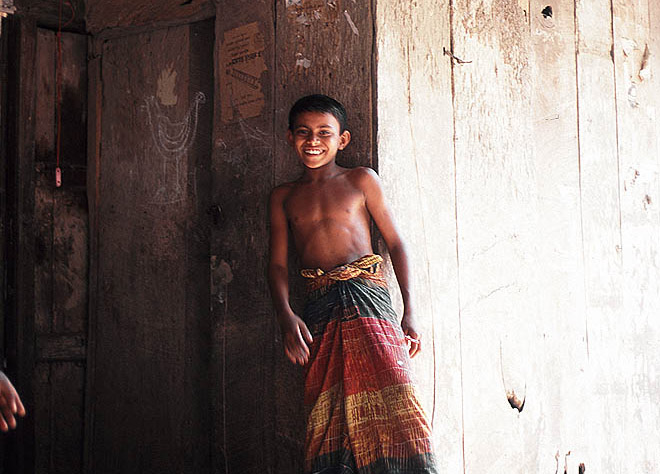 🇮🇳 India and 5 moreLungiলুঙ্গি
A cloth tube or sheet tied at the waist, worn across South and Southeast AsiaCotton · Batik · Checks and stripes
🇮🇳 India and 5 moreLungiলুঙ্গি
A cloth tube or sheet tied at the waist, worn across South and Southeast AsiaCotton · Batik · Checks and stripes
 🇮🇳 IndiaDokhonaदख'ना
A wrap-around cloth worn by Boro women of Assam, usually yellow, with woven Agor designsCotton
🇮🇳 IndiaDokhonaदख'ना
A wrap-around cloth worn by Boro women of Assam, usually yellow, with woven Agor designsCotton
 🇹🇭 ThailandKhitผ้าขิด
A handwoven cloth from Isan, Thailand, with geometric patterns that seem to float.Brocade
🇹🇭 ThailandKhitผ้าขิด
A handwoven cloth from Isan, Thailand, with geometric patterns that seem to float.Brocade
 🇮🇩 IndonesiaBalinese textiles
The woven cloths of Bali, from sacred double ikat to gold-dusted ceremony wearCotton · Ikat · Brocade
🇮🇩 IndonesiaBalinese textiles
The woven cloths of Bali, from sacred double ikat to gold-dusted ceremony wearCotton · Ikat · Brocade
 🇮🇳 IndiaDharmavaram silk sari
A handwoven mulberry silk sari from Dharmavaram, Andhra Pradesh, woven with zariSilk · Zari work · Tie-dye
🇮🇳 IndiaDharmavaram silk sari
A handwoven mulberry silk sari from Dharmavaram, Andhra Pradesh, woven with zariSilk · Zari work · Tie-dye
 🇲🇲 Myanmar and 1 moreLongyiလုံချည်
A cloth tube worn at the waist in Myanmar, about two metres longCotton · Checks and stripes · Embroidery
🇲🇲 Myanmar and 1 moreLongyiလုံချည်
A cloth tube worn at the waist in Myanmar, about two metres longCotton · Checks and stripes · Embroidery
 🇹🇿 Tanzania and 4 moreKanga
A light cotton wrap from East Africa framed with printed borders and Swahili proverbsCotton · Block print · Hand painting
🇹🇿 Tanzania and 4 moreKanga
A light cotton wrap from East Africa framed with printed borders and Swahili proverbsCotton · Block print · Hand painting
 🇮🇶 Iraq and 3 moreKaunakes
An ancient Mesopotamian wrapped skirt and mantle woven with tufted woolWool
🇮🇶 Iraq and 3 moreKaunakes
An ancient Mesopotamian wrapped skirt and mantle woven with tufted woolWool
 🇮🇩 Indonesia and 2 moreKembenꦏꦼꦩ꧀ꦧꦼꦤ꧀
A shoulder-baring torso wrap from Java and Bali, wound from a length of kain clothBatik · Ikat
🇮🇩 Indonesia and 2 moreKembenꦏꦼꦩ꧀ꦧꦼꦤ꧀
A shoulder-baring torso wrap from Java and Bali, wound from a length of kain clothBatik · Ikat
 🇰🇭 Cambodia and 4 moreSbaiស្បៃ
A shawl-like breast cloth derived from the sari, worn over one shoulder in Southeast AsiaSilk · Embroidery · Brocade
🇰🇭 Cambodia and 4 moreSbaiស្បៃ
A shawl-like breast cloth derived from the sari, worn over one shoulder in Southeast AsiaSilk · Embroidery · Brocade
Photo credits on this page
The small pictures above come from Wikimedia Commons under free licences. Some are cropped to fit.
- Kasta sari: Dakutaa at en.wikipedia, CC BY-SA 3.0, source
- Phanek: অজয় দাস, CC BY-SA 4.0, source
- Mundum Neriyathum: L. Anantha Krishna Iyer (Diwan Bahadur), Public domain, source
- Sarong: Unknown author, CC BY-SA 3.0, source
- Kanga: Petr Berka ( Petrberka ), Public domain, source
- Dharmavaram silk sari: Ch Maheswara Raju, CC BY-SA 4.0, source
- Longyi: Unknown author, Public domain, source
- Lungi: Laportechicago at English Wikipedia (Paul La Porte)., CC BY 2.5, source
- Dokhona: Bodoland Territorial Council, CC0, source
- Khit: Pawyilee, Public domain, source
- Balinese textiles: Chris Hazzard, CC BY-SA 3.0, source
- Kaunakes: Marie-Lan Nguyen, CC BY 4.0, source
- Kemben: Unknown author, CC BY-SA 3.0, source
- Sbai: Stephowz, CC BY-SA 4.0, source