Zari work
Gold- or silver-wrapped thread, woven or sewn in for borders and motifs.
Zari is thread wrapped in or made of gold or silver, woven into silk and cotton for borders, pallus and motifs. Genuine zari uses a silver wire with a thin gold layer, while most modern zari is a cheaper copper or polyester version. Surat in Gujarat and Kanchipuram are known for producing and using it.
What it is
Zari is a metallic thread used in weaving and embroidery. The traditional form is a fine flat strip or wire of silver, coated with gold, wrapped around a silk or cotton core. Pure zari of this type is very expensive. Most zari sold today is metallic-coated copper, called tested zari, or a plastic film with a metallic finish, called imitation zari. Zari gives sarees their gleam in borders, pallus and woven motifs, and it is used with brocade, Kanchipuram, Paithani and other silks. The term is also used for embroidery with the same thread, such as zardozi. The gold content, thickness and purity of the zari strongly affect the saree price.
How it is made, step by step
Traditionally a silver bar is drawn through progressively smaller holes in a steel plate to form a very fine wire, a task done by hand. The wire is flattened by hammering or rolling into a thin ribbon, then electroplated or coated with gold. This flat strip, called badla, is spun around a silk thread on a spindle to make kasab, or twisted around a core to make the thread known as zari. Workers separate the stages: wire drawers, flatteners, platers and winders. In Surat, much of the zari is now made by machine, and imitation versions use copper or polyester film. The finished thread is wound on reels for weavers.
The motifs and looks it is known for
Zari appears as borders, pallus and woven motifs. Kanchipuram sarees use it for temple borders, peacocks and checks, while Banarasi brocade uses it for all-over jaal. Gold zari has a warm yellow shine, silver zari is white and cool, and a mixed look is called a blend. Different surface effects exist: a flat strip gives broad smooth areas, while a twisted wire gives sparkle. In Paithani sarees, zari motifs sit on the pallu in a rich weave, and in Gujarati Patan work zari is paired with silk. Over time real zari takes on a soft glow and may tarnish slightly, whereas imitation zari can look harsh and bright.
Where it is made
Surat in Gujarat is the largest centre of zari thread manufacture in India, and the city supplies weaving clusters across the country. Kanchipuram is known both for using zari and, in the past, for its own production of high-silver-content zari, and the Kanchipuram Silk Saree Zari mark has carried information on the silver and gold content. Varanasi, Lucknow, Agra and Bareilly are known for zari and zardozi embroidery, and Hyderabad also has zari work. In Rajasthan, Jaipur and Jodhpur have gota and zari work. Workers include craftsmen from various communities, and wages are often low. Smaller workshops in Tamil Nadu and Karnataka also supply the weaving trade.
History in brief
Gold and silver thread has been used in Indian textiles for a very long time, and early texts refer to cloth woven with gold. The tradition expanded under royal patronage, especially during the Mughal period. In the twentieth century the price of silver rose and more sarees moved to cheaper copper-based zari. Surat grew into a centre for machine-made zari, and in Tamil Nadu a mark was introduced to certify the amount of silver and gold in zari on Kanchipuram sarees, which are protected by a Geographical Indication. The shift to polyester metallic thread brought down the cost but reduced the value of the resulting saree as an investment, and some people still melt old zari to recover the silver.
Buying and caring for it
Ask the seller whether the zari is pure, tested or imitation, and look for a certificate or a silk mark with the details. Pure zari feels slightly heavy and is a warm tone. You can check by burning a small loose thread, which leaves a silver-white bead for real zari, but do this only on a spare thread with the seller. Imitation zari may blacken or melt like plastic. Keep zari sarees folded in muslin, away from damp, perfume and sweat, which tarnish the thread. Dry clean only and do not iron directly over the zari. Refold from time to time, since creases cut the metal strip on old folds.
Where to look
- Kanchipuram zari: Heavy silk sarees with silver and gold zari borders, with a mark on content.
- Banarasi zari brocade: Gold zari woven into jaal and border patterns in Varanasi.
- Surat zari: Gujarat city that makes most Indian zari thread.
- Paithani zari: Zari motifs on the pallu of Maharashtra Paithani silk.
- Zardozi: Embroidery with zari and metal wire, from Lucknow and Agra.
- Gota patti: Rajasthani applied ribbon work using metallic ribbon.
- Tested zari: A copper-based thread with a thin precious-metal coating.
Care
- Dry clean only and avoid direct ironing on zari.
- Store in muslin away from damp, perfume and sweat.
- Refold now and then so the metal does not crack at creases.
Sources and further reading
Original text by the EveryPallu desk, written with AI assistance and checked against the sources above. If we have something wrong, tell us.
Zari work on EveryPallu
The sarees written up so far, newest and best known first.
 🇮🇳 IndiaGarad sariগরদ শাড়ি
A fine silk sari woven on pit looms in Murshidabad and Birbhum, worn at Durga PujaSilk · Zari work · Brocade
🇮🇳 IndiaGarad sariগরদ শাড়ি
A fine silk sari woven on pit looms in Murshidabad and Birbhum, worn at Durga PujaSilk · Zari work · Brocade
 🇮🇳 IndiaMundum neriyathumമുണ്ട് നേരിയത്
A two-piece white cotton cloth of Kerala, worn with a golden border called kasavuCotton · Zari work
🇮🇳 IndiaMundum neriyathumമുണ്ട് നേരിയത്
A two-piece white cotton cloth of Kerala, worn with a golden border called kasavuCotton · Zari work
 🇮🇳 IndiaChanderi sari
A silk sari woven in Chanderi, Madhya Pradesh, with gold and silver zariSilk · Brocade · Zari work
🇮🇳 IndiaKimkhwab
A heavy silk brocade woven with gold and silver yarns, famed in Mughal IndiaSilk · Brocade · Zari work
🇧🇩 Bangladesh and 1 moreAbrawan
A legendary, sheer muslin from Dacca named after flowing waterCotton · Zari work
🇮🇳 IndiaChanderi sari
A silk sari woven in Chanderi, Madhya Pradesh, with gold and silver zariSilk · Brocade · Zari work
🇮🇳 IndiaKimkhwab
A heavy silk brocade woven with gold and silver yarns, famed in Mughal IndiaSilk · Brocade · Zari work
🇧🇩 Bangladesh and 1 moreAbrawan
A legendary, sheer muslin from Dacca named after flowing waterCotton · Zari work
 🇵🇰 PakistanSindhi embroideryسنڌي ٿرت
Needlework and mirror embroidery crafted across the desert communities of SindhEmbroidery · Mirror work
🇵🇰 PakistanSindhi embroideryسنڌي ٿرت
Needlework and mirror embroidery crafted across the desert communities of SindhEmbroidery · Mirror work
 🇮🇳 IndiaKanchipuram sari
Heavy mulberry silk sari from Tamil Nadu, its contrast border woven in separatelySilk · Brocade · Zari work
🇮🇳 IndiaKanchipuram sari
Heavy mulberry silk sari from Tamil Nadu, its contrast border woven in separatelySilk · Brocade · Zari work
 🇮🇳 IndiaPaithani
A Maharashtrian handwoven silk sari with interlocking tapestry borders and peacock motifsSilk · Zari work · Brocade
🇮🇳 IndiaPaithani
A Maharashtrian handwoven silk sari with interlocking tapestry borders and peacock motifsSilk · Zari work · Brocade
 🇮🇳 India and 1 moreHandloom sari
Saris woven by hand on pit looms in India and BangladeshSilk · Brocade · Zari work
🇮🇳 India and 1 moreUppada Jamdani sari
A light handwoven silk sari from Uppada, Andhra Pradesh, patterned in the jamdani waySilk · Jamdani · Zari work
🇮🇳 IndiaMangalagiri sari
A plain-bodied cotton sari from Andhra Pradesh with zari on the borderCotton · Zari work
🇮🇳 India and 1 moreHandloom sari
Saris woven by hand on pit looms in India and BangladeshSilk · Brocade · Zari work
🇮🇳 India and 1 moreUppada Jamdani sari
A light handwoven silk sari from Uppada, Andhra Pradesh, patterned in the jamdani waySilk · Jamdani · Zari work
🇮🇳 IndiaMangalagiri sari
A plain-bodied cotton sari from Andhra Pradesh with zari on the borderCotton · Zari work
 🇮🇩 Indonesia and 2 moreSongketᬲᭀᬂᬓᬾᬢ᭄
A hand-woven brocade cloth from Sumatra and the Malay world, with gold or silver threadSilk · Brocade · Zari work
🇮🇳 IndiaMaheshwari saree
A handloom saree from Maheshwar, woven in cotton, silk and zari with local motifsSilk · Zari work
🇮🇩 Indonesia and 2 moreSongketᬲᭀᬂᬓᬾᬢ᭄
A hand-woven brocade cloth from Sumatra and the Malay world, with gold or silver threadSilk · Brocade · Zari work
🇮🇳 IndiaMaheshwari saree
A handloom saree from Maheshwar, woven in cotton, silk and zari with local motifsSilk · Zari work
 🇮🇳 IndiaChattayum mundumചട്ടയും മുണ്ടും
A two-piece white cotton dress of Kerala's Syrian Christian womenCotton · Embroidery · Zari work
🇮🇳 IndiaChattayum mundumചട്ടയും മുണ്ടും
A two-piece white cotton dress of Kerala's Syrian Christian womenCotton · Embroidery · Zari work
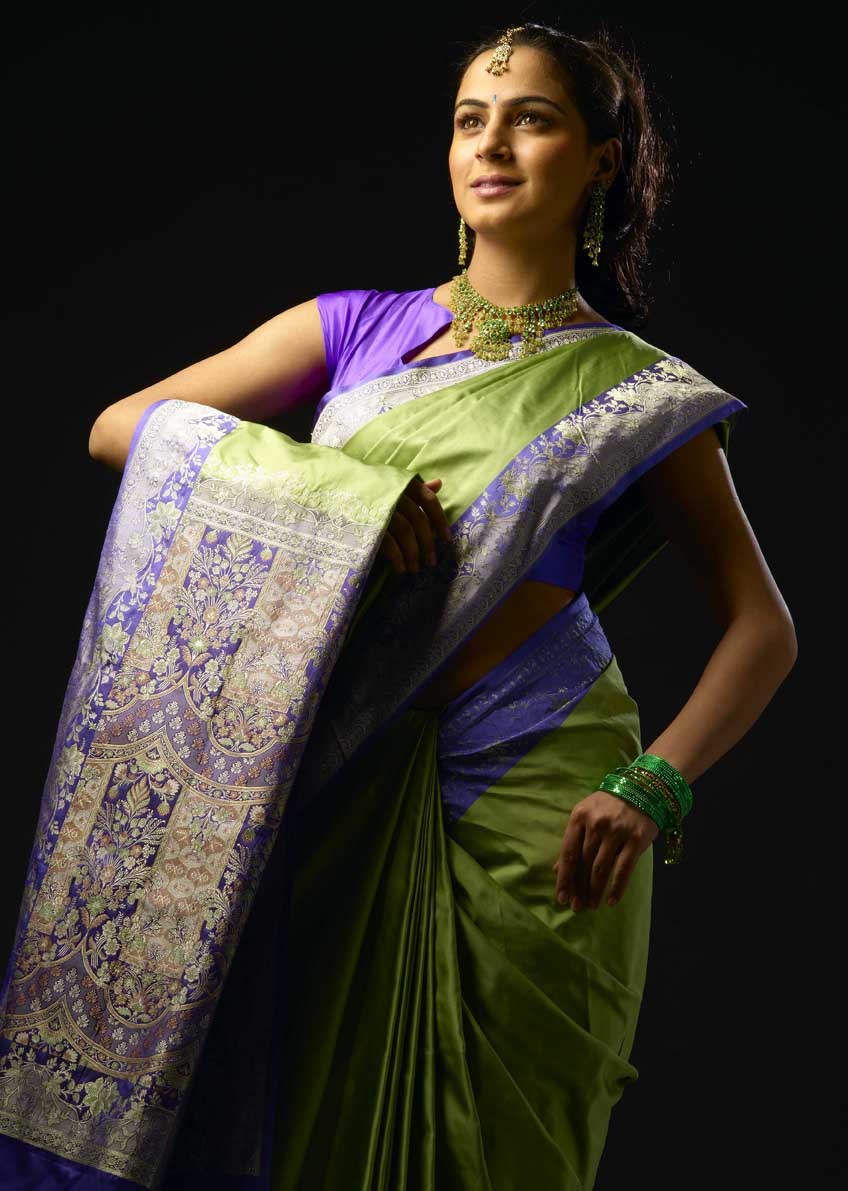 🇮🇳 IndiaShalu sari
A Banaras sari made with silk from two weaving traditions, worn by brides in MaharashtraSilk · Zari work
🇮🇳 IndiaShalu sari
A Banaras sari made with silk from two weaving traditions, worn by brides in MaharashtraSilk · Zari work
 🇮🇳 IndiaArani silk saree
A handloom silk saree from Arani, Tamil Nadu, known for its zari workSilk · Zari work · Block print
🇮🇳 IndiaKorial sariকোরিয়াল শাড়ি
A red-bordered mulberry silk saree woven on hand looms in West BengalSilk · Jamdani · Zari work
🇮🇳 IndiaBalaramapuram handloom
A fine undyed cotton weave with a golden kasavu zari border, hand-woven in KeralaCotton · Zari work
🇮🇳 IndiaArani silk saree
A handloom silk saree from Arani, Tamil Nadu, known for its zari workSilk · Zari work · Block print
🇮🇳 IndiaKorial sariকোরিয়াল শাড়ি
A red-bordered mulberry silk saree woven on hand looms in West BengalSilk · Jamdani · Zari work
🇮🇳 IndiaBalaramapuram handloom
A fine undyed cotton weave with a golden kasavu zari border, hand-woven in KeralaCotton · Zari work
 🇮🇳 IndiaGota patti
Rajasthani applique embroidery that stitches down ribbons of gold and silverGeorgette · Appliqué · Embroidery
🇮🇳 India and 1 moreAgrun
A shawl-like festive wrap of the Hajong people, brocaded in silks with birds and flowers.Silk · Brocade · Zari work
🇮🇳 IndiaGota patti
Rajasthani applique embroidery that stitches down ribbons of gold and silverGeorgette · Appliqué · Embroidery
🇮🇳 India and 1 moreAgrun
A shawl-like festive wrap of the Hajong people, brocaded in silks with birds and flowers.Silk · Brocade · Zari work
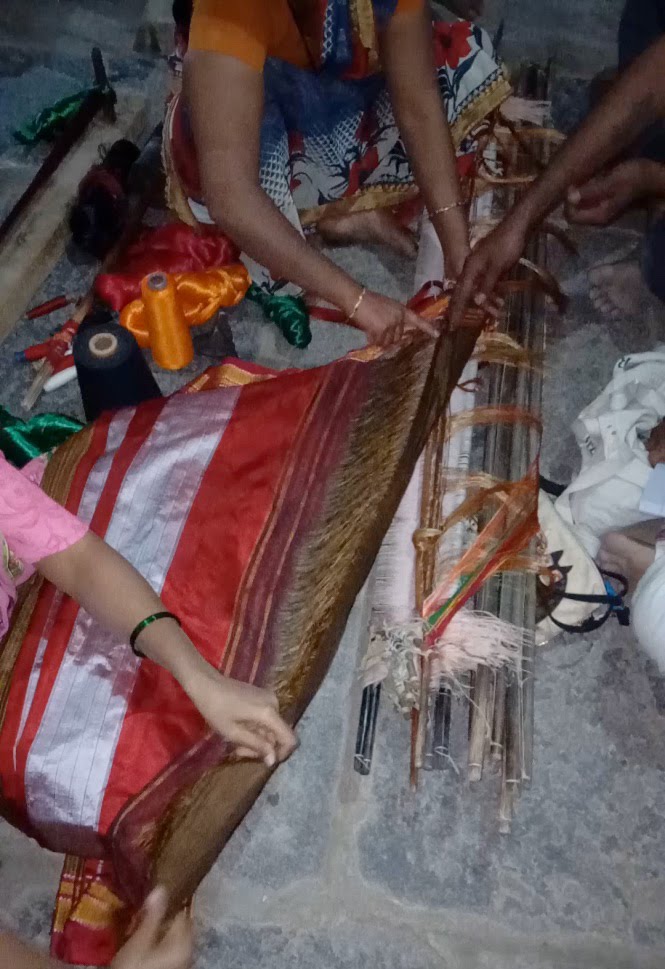 🇮🇳 IndiaIlkal sari
A cotton saree with a loop-joined silk pallu and broad red border, from Ilkal, KarnatakaCotton · Zari work · Embroidery
🇮🇳 IndiaIlkal sari
A cotton saree with a loop-joined silk pallu and broad red border, from Ilkal, KarnatakaCotton · Zari work · Embroidery
 🇮🇳 India and 4 moreZardoziज़रदोज़ी
Heavy gold and silver metal embroidery on silk, satin or velvet, from Iran to IndiaSilk · Embroidery · Zari work
🇮🇳 IndiaBerhampur Patta
Odisha silk saree with a phoda kumbha temple border and zari edging, GI protectedSilk · Zari work · Temple border
🇮🇳 India and 4 moreZardoziज़रदोज़ी
Heavy gold and silver metal embroidery on silk, satin or velvet, from Iran to IndiaSilk · Embroidery · Zari work
🇮🇳 IndiaBerhampur Patta
Odisha silk saree with a phoda kumbha temple border and zari edging, GI protectedSilk · Zari work · Temple border
 🇮🇳 India and 1 moreKhes
A thick hand-woven cotton blanket cloth from Punjab, checked and worn as a winter wrap.Cotton · Checks and stripes · Zari work
🇮🇳 IndiaGadwal sari
A handwoven Telangana sari with a cotton body, a silk border and a zari palluSilk · Zari work
🇮🇳 India and 1 moreKhes
A thick hand-woven cotton blanket cloth from Punjab, checked and worn as a winter wrap.Cotton · Checks and stripes · Zari work
🇮🇳 IndiaGadwal sari
A handwoven Telangana sari with a cotton body, a silk border and a zari palluSilk · Zari work
 🇮🇩 IndonesiaBalinese textiles
The woven cloths of Bali, from sacred double ikat to gold-dusted ceremony wearCotton · Ikat · Brocade
🇮🇩 IndonesiaBalinese textiles
The woven cloths of Bali, from sacred double ikat to gold-dusted ceremony wearCotton · Ikat · Brocade
 🇮🇳 IndiaSurat zari
Metal-wrapped thread made in Surat and woven into silk sarees across IndiaSilk · Zari work · Brocade
🇮🇳 IndiaThirubuvanam silk sari
Silk saree from a Thanjavur district town, its border and pallu dense with zariSilk · Zari work
🇮🇳 IndiaSurat zari
Metal-wrapped thread made in Surat and woven into silk sarees across IndiaSilk · Zari work · Brocade
🇮🇳 IndiaThirubuvanam silk sari
Silk saree from a Thanjavur district town, its border and pallu dense with zariSilk · Zari work
 🇮🇳 India and 3 moreDupattaदुपट्टा, دوپٹہ
A versatile long scarf and veil draped with traditional ensembles across South AsiaSilk · Brocade · Tie-dye
🇮🇳 IndiaKhara Dupattaکھڑا دوپٹہ
A six-yard embroidered net veil draped over a wedding ensemble in HyderabadNet · Embroidery · Zari work
🇮🇳 India and 3 moreDupattaदुपट्टा, دوپٹہ
A versatile long scarf and veil draped with traditional ensembles across South AsiaSilk · Brocade · Tie-dye
🇮🇳 IndiaKhara Dupattaکھڑا دوپٹہ
A six-yard embroidered net veil draped over a wedding ensemble in HyderabadNet · Embroidery · Zari work
 🇧🇩 Bangladesh and 1 moreJamdaniজামদানি
A sheer cotton muslin saree decorated with hand-woven supplementary weft motifsCotton · Jamdani · Brocade
🇧🇩 Bangladesh and 1 moreJamdaniজামদানি
A sheer cotton muslin saree decorated with hand-woven supplementary weft motifsCotton · Jamdani · Brocade
 🇮🇳 IndiaDharmavaram silk sari
A handwoven mulberry silk sari from Dharmavaram, Andhra Pradesh, woven with zariSilk · Zari work · Tie-dye
🇮🇳 IndiaKasavu
Kerala's off-white cotton cloth with a fine gold or silver border woven into itCotton · Zari work
🇮🇳 IndiaDharmavaram silk sari
A handwoven mulberry silk sari from Dharmavaram, Andhra Pradesh, woven with zariSilk · Zari work · Tie-dye
🇮🇳 IndiaKasavu
Kerala's off-white cotton cloth with a fine gold or silver border woven into itCotton · Zari work
 🇮🇳 IndiaBanarasi sari
A heavy silk brocade saree woven with gold and silver zari in VaranasiSilk · Brocade · Zari work
🇮🇳 IndiaBanarasi sari
A heavy silk brocade saree woven with gold and silver zari in VaranasiSilk · Brocade · Zari work
 🇨🇳 China and 5 moreBrocade
A decorative shuttle-woven silk fabric patterned with raised supplementary-weft motifsSilk · Brocade · Zari work
🇨🇳 China and 5 moreBrocade
A decorative shuttle-woven silk fabric patterned with raised supplementary-weft motifsSilk · Brocade · Zari work
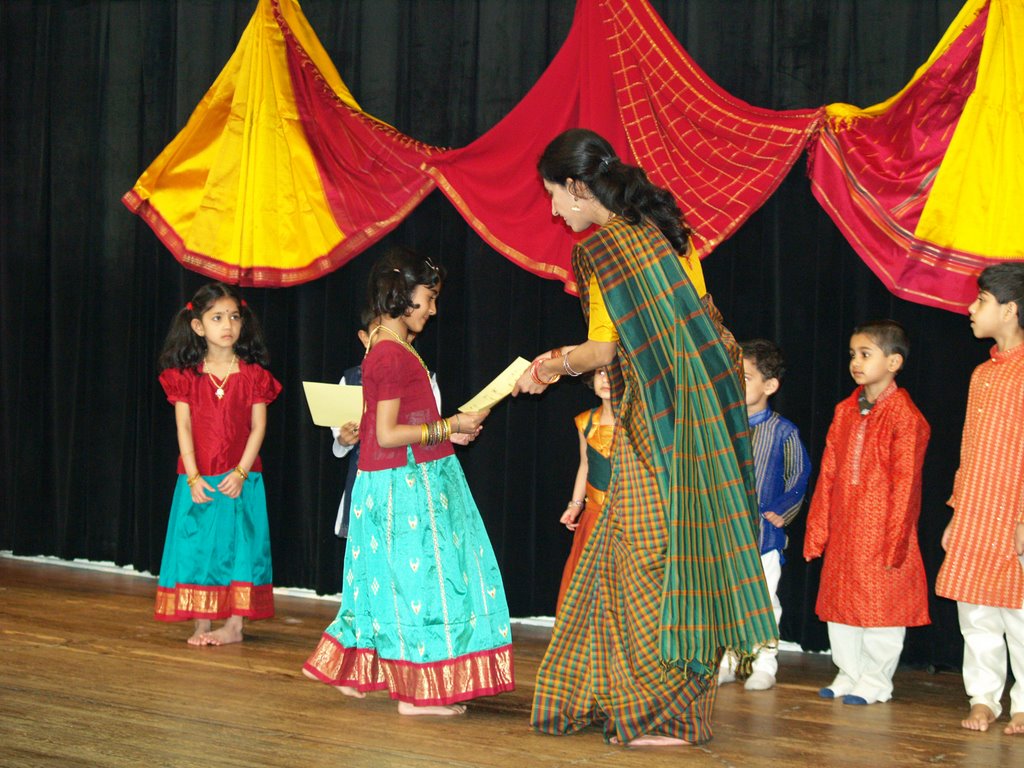 🇮🇳 IndiaLanga voniలంగా వోణి
A two-piece half sari worn by girls in South India, a skirt with a short diagonal drapeSilk · Embroidery · Zari work
🇮🇳 IndiaLanga voniలంగా వోణి
A two-piece half sari worn by girls in South India, a skirt with a short diagonal drapeSilk · Embroidery · Zari work
 🇮🇩 IndonesiaTenunꦠꦼꦤꦸꦤ꧀
Handwoven Indonesian cloth created with ancient ikat and supplementary metallic threadsCotton · Ikat · Brocade
🇮🇳 IndiaMurshidabad silkমুর্শিদাবাদী রেশম
Fine, light silk from Murshidabad in West Bengal, woven mostly into sarisSilk · Zari work · Jamdani
🇮🇳 IndiaBanarasi sari
Fine silk sari of Varanasi, hand-woven at home with zari work for weddingsSilk · Brocade · Zari work
🇮🇳 IndiaKovai Cora cotton
A handwoven cotton-silk saree from Coimbatore with bright bordersCotton · Zari work
🇮🇩 IndonesiaTenunꦠꦼꦤꦸꦤ꧀
Handwoven Indonesian cloth created with ancient ikat and supplementary metallic threadsCotton · Ikat · Brocade
🇮🇳 IndiaMurshidabad silkমুর্শিদাবাদী রেশম
Fine, light silk from Murshidabad in West Bengal, woven mostly into sarisSilk · Zari work · Jamdani
🇮🇳 IndiaBanarasi sari
Fine silk sari of Varanasi, hand-woven at home with zari work for weddingsSilk · Brocade · Zari work
🇮🇳 IndiaKovai Cora cotton
A handwoven cotton-silk saree from Coimbatore with bright bordersCotton · Zari work
 🇮🇳 IndiaBomkai sari
An Odisha handloom saree with extra-weft threadwork, woven in cotton and silkCotton · Zari work
🇮🇳 IndiaBomkai sari
An Odisha handloom saree with extra-weft threadwork, woven in cotton and silkCotton · Zari work
Photo credits on this page
The small pictures above come from Wikimedia Commons under free licences. Some are cropped to fit.
- Garad sari: Bongan, CC BY-SA 3.0, source
- Mundum neriyathum: L. Anantha Krishna Iyer (Diwan Bahadur), Public domain, source
- Chanderi sari: India Untravelled, CC BY 2.0, source
- Sindhi embroidery: Nasreen wafai, CC BY-SA 4.0, source
- Kanchipuram sari: McKay Savage, CC BY 2.0, source
- Paithani: Unknown author, Public domain, source
- Handloom sari: P.K.Niyogi, Public domain, source
- Songket: Rijksmuseum, CC0, source
- Shalu sari: Sreekumar K. S., CC BY 2.0, source
- Chattayum mundum: Alexander J. Mapleton, CC BY-SA 4.0, source
- Arani silk saree: Balu 606902, CC BY-SA 3.0, source
- Gota patti: User:आशीष भटनागर, Public domain, source
- Ilkal sari: T B Dinesh, CC0, source
- Zardozi: Zarood, CC BY-SA 3.0, source
- Khes: RAJIVVASUDEV, CC BY-SA 4.0, source
- Balinese textiles: Chris Hazzard, CC BY-SA 3.0, source
- Surat zari: Hiart, CC0, source
- Dupatta: Kinshuk Sunil, CC BY 2.0, source
- Jamdani: Salim_Khandoker, CC0, source
- Dharmavaram silk sari: Ch Maheswara Raju, CC BY-SA 4.0, source
- Banarasi sari: Ekabhishek, CC BY-SA 3.0, source
- Brocade: After James Lehman (England, circa 1688-1745), Public domain, source
- Langa voni: Kannadiga, CC BY-SA 3.0, source
- Tenun: Silitonga, G., Soekardi, R., and Tambunan, S., Public domain, source
- Bomkai sari: Nayansatya, CC BY 3.0, source