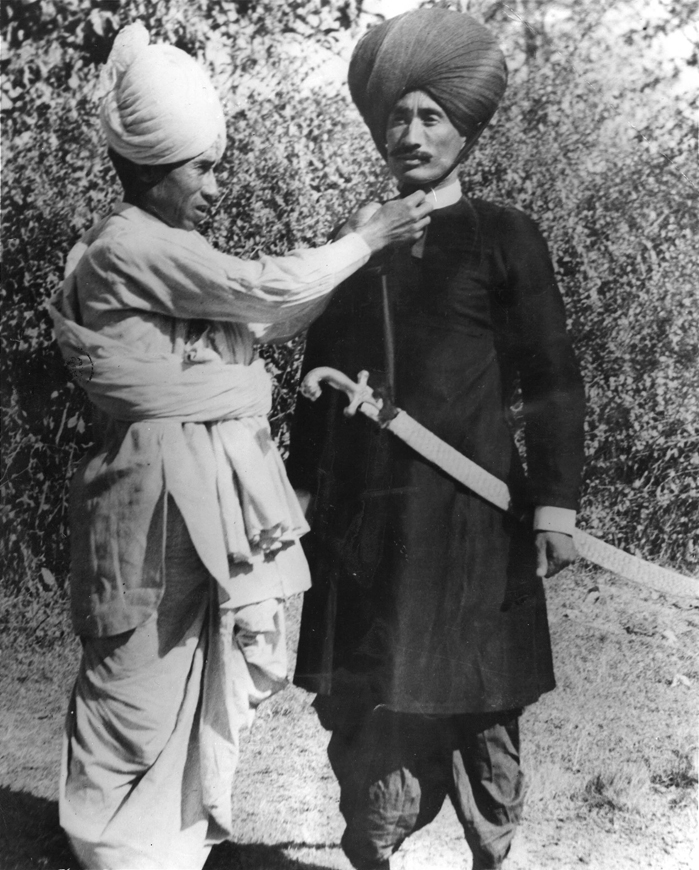
Pheichom
A men's wrap of the Meitei people of Manipur, worn like the dhoti, in cotton or silk
The pheichom is a cotton or silk cloth that Meitei men in Manipur wrap around the waist, much as men in the rest of India wear a dhoti. Its most popular style, the khamen chatpa, is white silk block printed with black, brown or purple, brought out above all at Lai Haraoba.
- The khamen chatpa, the most popular style, is white silk printed with black, brown or purple
- Under the monarchy, only royalty could wear a khamen chatpa; people of lower rank could not
- Kings granted khamen chatpas to favoured subjects on auspicious occasions
- The pheichom is a Meitei men's wrap, worn like the dhoti, in cotton or silk
- Priestesses and Pena musicians also wear the khamen chatpa, though it is men's dress
What is Pheichom?
The pheichom is a length of cloth that Meitei men wrap around the waist and legs, a loincloth worn much as men in the rest of India wear a dhoti. Cotton and silk are its fibres, and its usual shades are gold, saffron and white. The most popular style is the khamen chatpa, a white silk pheichom finished by block printing, a craft in which a carved block pressed in dye stamps the pattern by hand; the colours here are black, brown or purple. Though the pheichom is normally men's attire, the khamen chatpa crosses that line: priestesses and Pena musicians wear it too, above all at Lai Haraoba.
Where does Pheichom come from?
The pheichom is the traditional wrap of the Meitei people, whose homeland is Manipur in India's northeast. Its best-known style carries a courtly past. Under the monarchy, the khamen chatpa was dress for royalty alone; people of lower rank could not wear it. The cloth also travelled through the kingdom as a reward: on auspicious occasions a king would grant a khamen chatpa to a favoured subject, so that wearing one declared the ruler's favour. With the monarchy gone, the khamen chatpa stands as the most popular pheichom style, worn at Lai Haraoba by men, and by priestesses and Pena musicians too.
How is Pheichom made?
A pheichom is made in cotton or silk. The khamen chatpa takes silk, kept white as the ground for its print. The pattern is block printed: a design is cut into a block, the block picks up colour, and the colour is pressed onto the cloth by hand until the length is covered. Black, brown and purple are the print colours named for this style. Other pheichoms are known by fibre and shade alone, gold, saffron or white, with no print described for them.
Pheichom, drawn
Colours, motifs and borders
Two palettes share the cloth. A plain pheichom comes in gold, saffron or white, in cotton or silk. The khamen chatpa reverses the scheme: white silk as the field, the stamped pattern set dark against it in black, brown or purple. No woven border, no separate motif and no decorated end are described for it; the print, or the pure shade of the cloth, is the whole design.
How Pheichom is worn
Men wear the pheichom much as men elsewhere in India wear a dhoti: a length of cloth wrapped around the waist and over the legs, held at the waist so the wearer can walk, sit and work in it. It is normally men's attire, but the khamen chatpa is not bound to men alone. Priestesses wear it, and so do Pena musicians.


When Pheichom is worn
Lai Haraoba is the occasion when the khamen chatpa is seen most; the white printed silk is brought out above all for this Meitei festival. In monarchical times rank governed who could wear it: royalty yes, people of lower rank no. A king could also make the cloth a gift, presenting a khamen chatpa to a favoured subject on an auspicious occasion, so that the wearer carried a visible sign of the ruler's regard.
Styles of Pheichom
The pheichom varies by fibre, shade and print. Cotton and silk both serve, and gold, saffron and white are the standing colours. The khamen chatpa sets itself apart on all three counts: silk rather than cotton, white rather than gold or saffron, printed rather than plain, with the stamp work in black, brown or purple. It is the most popular style, and the only one with a name of its own in the record.
What Pheichom means
At the Meitei court, the khamen chatpa did social work: it set royalty apart, and it carried the king's favour to chosen subjects. To receive one on an auspicious occasion was an honour a man could wear on his body. The cloth keeps that standing. It remains the most popular pheichom style, and at Lai Haraoba it passes between men, priestesses and Pena musicians, tying dress to festival, priesthood and music in one length of printed silk.
Questions people ask about Pheichom
What is a pheichom?
It is a wrapped cloth of the Meitei people, worn by men around the waist and legs like a dhoti. Cotton or silk are its fibres, and its usual shades are gold, saffron and white.
Where does the pheichom come from?
It belongs to the Meitei people, whose homeland is Manipur in India's northeast. Its best-known style, the khamen chatpa, has a courtly past: under the monarchy only royalty could wear it.
How is a khamen chatpa made?
It is white silk decorated by block printing, with a carved block pressing colour onto the cloth by hand in black, brown or purple. A plain pheichom, by contrast, is known by fibre and shade alone, in cotton or silk.
Who wears the khamen chatpa?
A pheijom is normally men's wear, but the khamen chatpa is also worn by priestesses and by Pena musicians. Under the monarchy it was reserved for royalty, and people of lower rank were barred from it.
When is the khamen chatpa worn?
Above all at Lai Haraoba, the Meitei festival. The sources also mention auspicious occasions, which in monarchical days were when kings granted the cloth to favoured subjects as a mark of honour.
Good reading and sources
The facts on this page come from the Wikipedia article "Pheichom", written by its contributors and used under the CC BY-SA 4.0 licence, and from its Wikidata record (CC0). EveryPallu rewrote the text in its own words, with AI assistance, and compares every page with the article to make sure no passage is copied. It may be reused under the same CC BY-SA 4.0 licence with a link back.
It may contain mistakes. Traditions, weaves and prices differ from one weaver, town or shop to the next, and it is not buying advice. If something is wrong, tell us. Last refreshed 2026-10-03.
More from India
All the sarees of IndiaIts cousins elsewhere
All cotton sarees 🇮🇳 India and 4 moreSariसाड़ी
A single unstitched length of cloth, tucked at the waist and slung over one shoulderSilk · Brocade · Ikat
🇮🇳 India and 4 moreSariसाड़ी
A single unstitched length of cloth, tucked at the waist and slung over one shoulderSilk · Brocade · Ikat
 🇮🇳 IndiaChikankariचिकनकारी (Urdu: چکن کاری)
White thread hand embroidery from Lucknow, stitched on pale, sheer clothCotton · Embroidery · Block print
🇮🇳 IndiaChikankariचिकनकारी (Urdu: چکن کاری)
White thread hand embroidery from Lucknow, stitched on pale, sheer clothCotton · Embroidery · Block print
 🇮🇳 India and 1 moreHandloom sari
Saris woven by hand on pit looms in India and BangladeshSilk · Zari work · Jamdani
🇮🇳 India and 1 moreHandloom sari
Saris woven by hand on pit looms in India and BangladeshSilk · Zari work · Jamdani
 🇮🇳 IndiaArani silk saree
A handloom silk saree from Arani, Tamil Nadu, known for its zari workSilk · Zari work · Block print
🇮🇳 IndiaArani silk saree
A handloom silk saree from Arani, Tamil Nadu, known for its zari workSilk · Zari work · Block print