Silk sarees
Mulberry silk: Kanchipuram, Banarasi, Mysore, Paithani and the other great silks, light and bright.
Silk is a fine natural filament spun by the silkworm, and it is the fibre of India's most prized sarees. Mulberry silk, reeled from cocoons of the Bombyx mori moth, gives the light, bright cloth of Kanchipuram, Banaras and Mysore.
What it is and where it comes from
Silk is a protein filament that a silkworm spins around itself as a cocoon. A single cocoon can unwind into a continuous thread that runs for hundreds of metres, which is why silk is the only natural fibre that comes as a long filament rather than short staple. Mulberry silk, from worms fed on mulberry leaves, is the most common kind and is farmed in Karnataka, Andhra Pradesh, Tamil Nadu and West Bengal. India also produces the wild silks tussar, muga and eri. The country is among the largest silk producers in the world and by far the largest consumer, and the saree is the main reason why.
How the cloth is made
Cocoons are boiled or steamed to soften the gum that holds the thread together, and the filaments are reeled off and twisted together into raw silk yarn. The yarn is then degummed, dyed in skeins and set up on the loom. For the great temple sarees the warp is stretched on a handloom, and a weaver, often helped by a second person, passes the weft by shuttle. Patterns come from a jacquard or from the older drawloom, and gold or silver zari is woven in as an extra weft. A heavy Kanchipuram saree can take a pair of weavers well over a week, and the most elaborate pieces much longer.
How it feels and falls
Good silk is smooth and cool in the first touch and then warms to the body. It has a soft glow rather than a hard shine, and it changes colour slightly as the light moves across it because the filament is triangular in section. Heavy silks such as Kanchipuram stand away from the body and hold bold pleats, while lighter weaves such as Mysore crepe, Bengal silk or a plain chiffon-weight silk fall in soft, flowing folds. Silk breathes well, so it is comfortable in warm weather, and it also insulates a little, which is why it works at winter weddings. It creases less than cotton and the creases often relax when the saree is hung.
Where in India and South Asia it is woven
Kanchipuram and Arni in Tamil Nadu, Varanasi in Uttar Pradesh, Mysuru and Bengaluru in Karnataka, Paithan and Yeola in Maharashtra, Pochampally and Dharmavaram in Telangana and Andhra Pradesh, Bhagalpur in Bihar and Murshidabad in West Bengal are all well-known silk centres. Odisha has Sambalpuri and Berhampuri silks, Assam has Sualkuchi, and Gujarat has Patan, where double ikat patola is made. Beyond India, Bangladesh weaves Rajshahi silk, which takes its name from the Rajshahi region, and Pakistan, Nepal and Sri Lanka all produce smaller amounts of silk cloth for local use.
How to tell the real thing
Pure silk is rarely cheap, so a very low price should make you cautious. Look at the zari, which in a true Kanchipuram is gold-plated silver thread, and ask what the seller says it is made of. Check the weave from behind: a handwoven saree has small irregularities and a clean back, while a printed or powerloom copy often shows floats or uniform sameness. Ask whether the piece carries the Silk Mark or a handloom mark, both of which are issued by Indian agencies. A burn test, where a thread is held to a flame, helps a little: real silk smells like burnt hair and leaves a crushable ash, while polyester melts into a hard bead.
Famous sarees and centres
- Kanchipuram: Heavy temple silk from Tamil Nadu with contrast borders and zari.
- Banarasi: Brocade silk from Varanasi, rich with gold and silver zari.
- Paithani: Maharashtra silk with peacock and lotus motifs on the pallu and border.
- Mysore silk: Pure silk and gold zari from Karnataka, plain and elegant.
- Patola: Double ikat silk from Patan in Gujarat, tied and dyed on both warp and weft.
- Pochampally: Ikat silk from Telangana, with geometric patterns.
- Baluchari: Silk from Bengal with mythic scenes woven into the pallu.
- Sambalpuri: Ikat silk and cotton from western Odisha.
Care
- Dry clean the first few times, especially heavy zari silks.
- Store folded in muslin or a soft cotton cloth, and refold along new lines now and then.
- Keep it away from direct sun, perfume and deodorant, which can mark the cloth.
- Air it in the shade after wearing and hang it in a cool, dry place.
Sources and further reading
Original text by the EveryPallu desk, written with AI assistance and checked against the sources above. If we have something wrong, tell us.
Silk on EveryPallu
The sarees written up so far, newest and best known first.
 🇮🇳 IndiaGarad sariগরদ শাড়ি
A fine silk sari woven on pit looms in Murshidabad and Birbhum, worn at Durga PujaSilk · Zari work · Brocade
🇮🇳 IndiaGarad sariগরদ শাড়ি
A fine silk sari woven on pit looms in Murshidabad and Birbhum, worn at Durga PujaSilk · Zari work · Brocade
 🇮🇳 IndiaChanderi sari
A silk sari woven in Chanderi, Madhya Pradesh, with gold and silver zariSilk · Brocade · Zari work
🇮🇳 IndiaKimkhwab
A heavy silk brocade woven with gold and silver yarns, famed in Mughal IndiaSilk · Brocade · Zari work
🇧🇩 Bangladesh and 1 moreAbrawan
A legendary, sheer muslin from Dacca named after flowing waterCotton · Zari work
🇮🇳 IndiaChanderi sari
A silk sari woven in Chanderi, Madhya Pradesh, with gold and silver zariSilk · Brocade · Zari work
🇮🇳 IndiaKimkhwab
A heavy silk brocade woven with gold and silver yarns, famed in Mughal IndiaSilk · Brocade · Zari work
🇧🇩 Bangladesh and 1 moreAbrawan
A legendary, sheer muslin from Dacca named after flowing waterCotton · Zari work
 🇮🇳 IndiaKanchipuram sari
A silk sari from Kanchipuram with a separate contrast border locked onto the bodySilk · Zari work · Brocade
🇮🇳 IndiaKanchipuram sari
A silk sari from Kanchipuram with a separate contrast border locked onto the bodySilk · Zari work · Brocade
 🇮🇳 IndiaPaithani
A Maharashtrian handwoven silk sari with interlocking tapestry borders and peacock motifsSilk · Zari work · Brocade
🇮🇳 India and 1 moreUppada Jamdani sari
A light handwoven silk sari from Uppada, Andhra Pradesh, patterned in the jamdani waySilk · Jamdani · Zari work
🇮🇳 IndiaPaithani
A Maharashtrian handwoven silk sari with interlocking tapestry borders and peacock motifsSilk · Zari work · Brocade
🇮🇳 India and 1 moreUppada Jamdani sari
A light handwoven silk sari from Uppada, Andhra Pradesh, patterned in the jamdani waySilk · Jamdani · Zari work
 🇮🇳 India and 1 moreHandloom sari
Saris woven by hand on pit looms in India and BangladeshSilk · Zari work · Jamdani
🇮🇳 India and 1 moreHandloom sari
Saris woven by hand on pit looms in India and BangladeshSilk · Zari work · Jamdani
 🇮🇩 Indonesia and 2 moreSongketᬲᭀᬂᬓᬾᬢ᭄
A hand-woven brocade cloth from Sumatra and the Malay world, with gold or silver threadSilk · Brocade · Zari work
🇮🇳 IndiaMaheshwari saree
A handloom saree from Maheshwar, woven in cotton, silk and zari with local motifsSilk · Zari work
🇮🇩 Indonesia and 2 moreSongketᬲᭀᬂᬓᬾᬢ᭄
A hand-woven brocade cloth from Sumatra and the Malay world, with gold or silver threadSilk · Brocade · Zari work
🇮🇳 IndiaMaheshwari saree
A handloom saree from Maheshwar, woven in cotton, silk and zari with local motifsSilk · Zari work
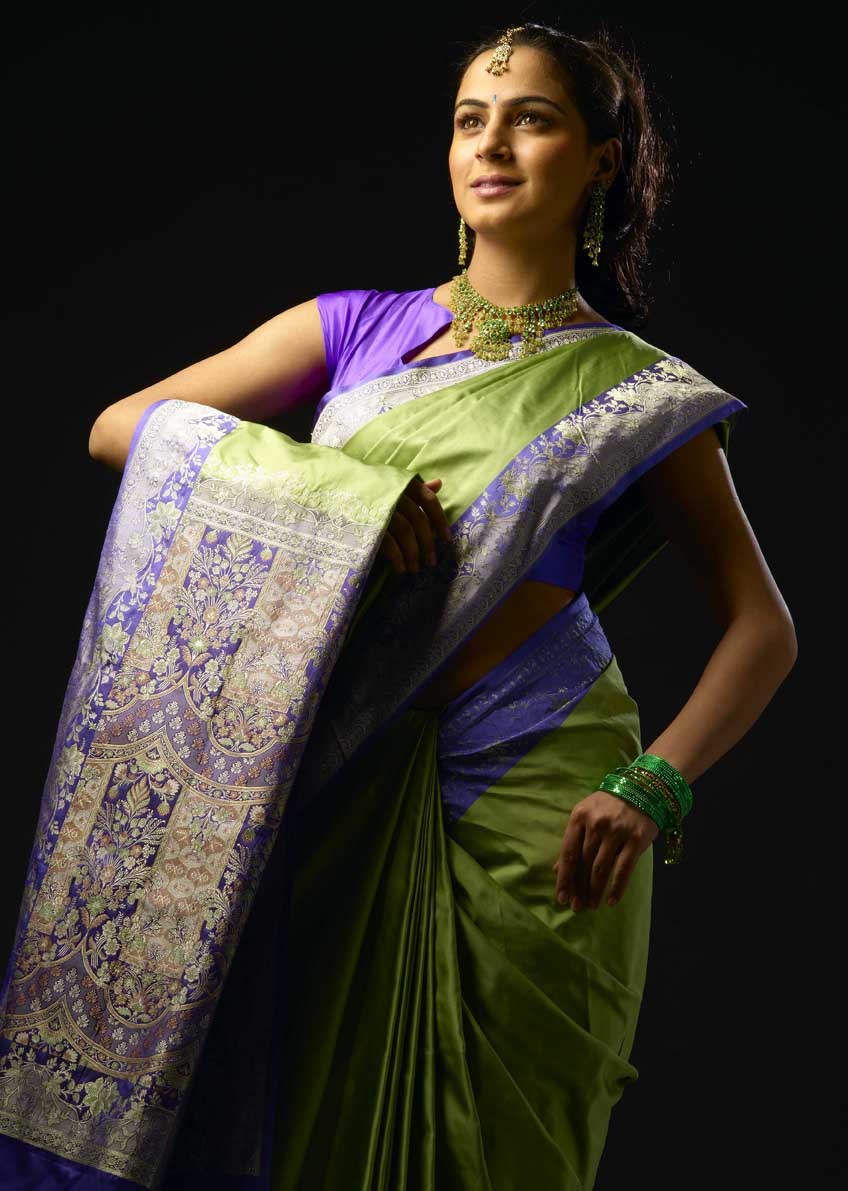 🇮🇳 IndiaShalu sari
A Banaras sari made with silk from two weaving traditions, worn by brides in MaharashtraSilk · Zari work
🇮🇳 IndiaShalu sari
A Banaras sari made with silk from two weaving traditions, worn by brides in MaharashtraSilk · Zari work
 🇮🇳 IndiaArani silk saree
A handloom silk saree from Arani, Tamil Nadu, known for its zari workSilk · Zari work · Block print
🇮🇳 IndiaKorial sariকোরিয়াল শাড়ি
A red-bordered mulberry silk saree woven on hand looms in West BengalSilk · Jamdani · Zari work
🇮🇳 India and 1 moreAgrun
A shawl-like festive wrap of the Hajong people, brocaded in silks with birds and flowers.Silk · Brocade · Zari work
🇮🇳 IndiaArani silk saree
A handloom silk saree from Arani, Tamil Nadu, known for its zari workSilk · Zari work · Block print
🇮🇳 IndiaKorial sariকোরিয়াল শাড়ি
A red-bordered mulberry silk saree woven on hand looms in West BengalSilk · Jamdani · Zari work
🇮🇳 India and 1 moreAgrun
A shawl-like festive wrap of the Hajong people, brocaded in silks with birds and flowers.Silk · Brocade · Zari work
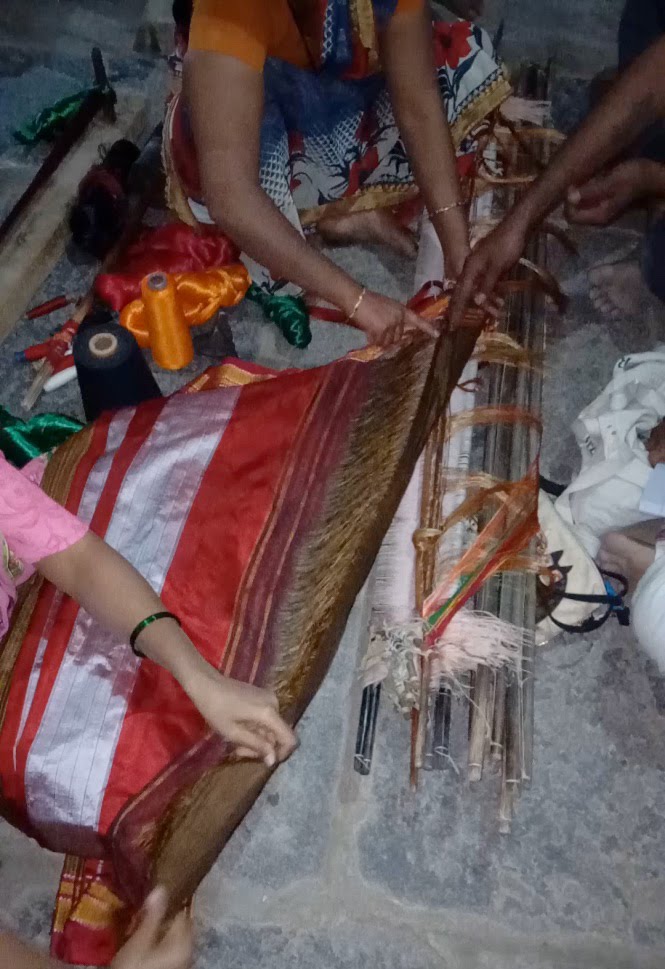 🇮🇳 IndiaIlkal sari
A cotton saree with a loop-joined silk pallu and broad red border, from Ilkal, KarnatakaCotton · Zari work · Embroidery
🇮🇳 IndiaIlkal sari
A cotton saree with a loop-joined silk pallu and broad red border, from Ilkal, KarnatakaCotton · Zari work · Embroidery
 🇮🇳 India and 4 moreZardoziज़रदोज़ी
Heavy gold and silver metal embroidery on silk, satin or velvet, from Iran to IndiaSilk · Embroidery · Zari work
🇮🇳 IndiaBerhampur Patta
Odisha silk saree with a phoda kumbha temple border and zari edging, GI protectedSilk · Zari work · Temple border
🇮🇳 IndiaGadwal sari
A handwoven Telangana sari with a cotton body, a silk border and a zari palluSilk · Zari work
🇮🇳 India and 4 moreZardoziज़रदोज़ी
Heavy gold and silver metal embroidery on silk, satin or velvet, from Iran to IndiaSilk · Embroidery · Zari work
🇮🇳 IndiaBerhampur Patta
Odisha silk saree with a phoda kumbha temple border and zari edging, GI protectedSilk · Zari work · Temple border
🇮🇳 IndiaGadwal sari
A handwoven Telangana sari with a cotton body, a silk border and a zari palluSilk · Zari work
 🇮🇩 IndonesiaBalinese textiles
The woven cloths of Bali, from sacred double ikat to gold-dusted ceremony wearCotton · Ikat · Brocade
🇮🇩 IndonesiaBalinese textiles
The woven cloths of Bali, from sacred double ikat to gold-dusted ceremony wearCotton · Ikat · Brocade
 🇮🇳 IndiaSurat zari
Metal-wrapped thread made in Surat and woven into silk sarees across IndiaSilk · Zari work · Brocade
🇮🇳 IndiaThirubuvanam silk sari
Silk saree from a Thanjavur district town, its border and pallu dense with zariSilk · Zari work
🇮🇳 IndiaSurat zari
Metal-wrapped thread made in Surat and woven into silk sarees across IndiaSilk · Zari work · Brocade
🇮🇳 IndiaThirubuvanam silk sari
Silk saree from a Thanjavur district town, its border and pallu dense with zariSilk · Zari work
 🇮🇳 India and 3 moreDupattaदुपट्टा, دوپٹہ
A versatile long scarf and veil draped with traditional ensembles across South AsiaSilk · Brocade · Tie-dye
🇮🇳 IndiaKasavu
Kerala's off-white cotton cloth with a fine gold or silver border woven into itCotton · Zari work
🇮🇳 India and 3 moreDupattaदुपट्टा, دوپٹہ
A versatile long scarf and veil draped with traditional ensembles across South AsiaSilk · Brocade · Tie-dye
🇮🇳 IndiaKasavu
Kerala's off-white cotton cloth with a fine gold or silver border woven into itCotton · Zari work
 🇮🇳 IndiaBanarasi sari
A heavy silk brocade saree woven with gold and silver zari in VaranasiSilk · Brocade · Zari work
🇮🇳 IndiaBanarasi sari
A heavy silk brocade saree woven with gold and silver zari in VaranasiSilk · Brocade · Zari work
 🇨🇳 China and 5 moreBrocade
A decorative shuttle-woven silk fabric patterned with raised supplementary-weft motifsSilk · Brocade · Zari work
🇨🇳 China and 5 moreBrocade
A decorative shuttle-woven silk fabric patterned with raised supplementary-weft motifsSilk · Brocade · Zari work
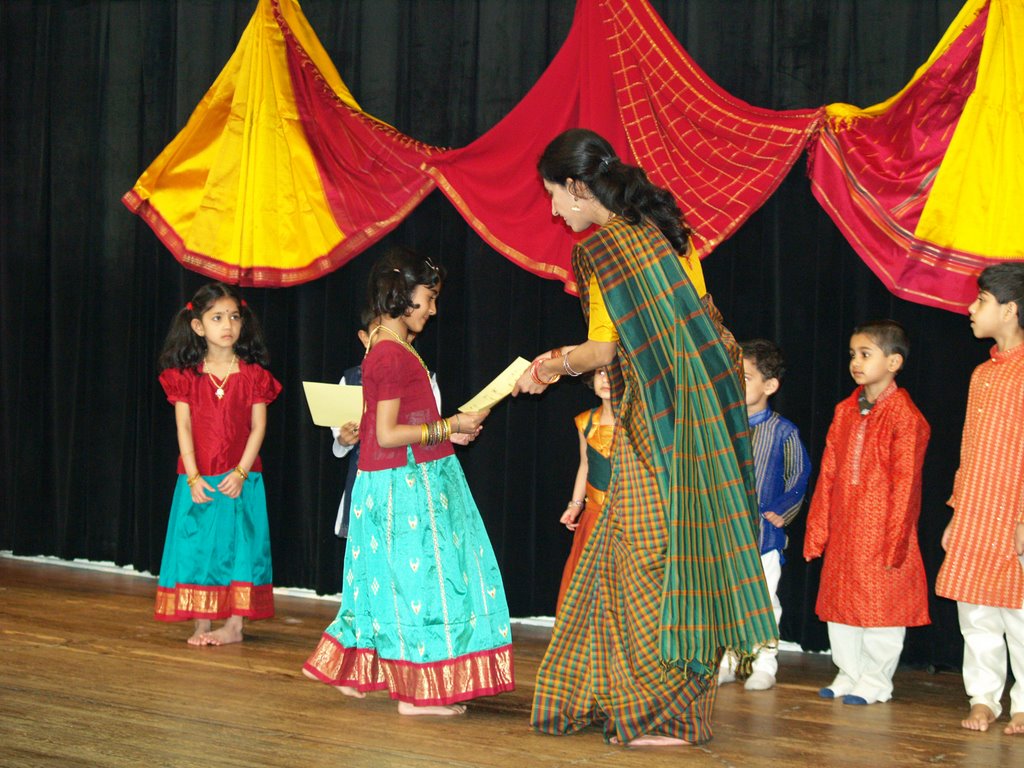 🇮🇳 IndiaLanga voniలంగా వోణి
A two-piece half sari worn by girls in South India, a skirt with a short diagonal drapeSilk · Embroidery · Zari work
🇮🇳 IndiaLanga voniలంగా వోణి
A two-piece half sari worn by girls in South India, a skirt with a short diagonal drapeSilk · Embroidery · Zari work
 🇮🇩 IndonesiaTenunꦠꦼꦤꦸꦤ꧀
Handwoven Indonesian cloth created with ancient ikat and supplementary metallic threadsCotton · Ikat · Brocade
🇮🇳 IndiaBanarasi sari
Fine silk sari of Varanasi, hand-woven at home with zari work for weddingsSilk · Brocade · Zari work
🇮🇳 IndiaMurshidabad silkমুর্শিদাবাদী রেশম
Fine, light silk from Murshidabad in West Bengal, woven mostly into sarisSilk · Zari work · Jamdani
🇮🇩 IndonesiaTenunꦠꦼꦤꦸꦤ꧀
Handwoven Indonesian cloth created with ancient ikat and supplementary metallic threadsCotton · Ikat · Brocade
🇮🇳 IndiaBanarasi sari
Fine silk sari of Varanasi, hand-woven at home with zari work for weddingsSilk · Brocade · Zari work
🇮🇳 IndiaMurshidabad silkমুর্শিদাবাদী রেশম
Fine, light silk from Murshidabad in West Bengal, woven mostly into sarisSilk · Zari work · Jamdani
 🇮🇳 IndiaDharmavaram silk sari
A handwoven Andhra silk sari in mulberry silk and zari, made only on pit loomsSilk · Zari work · Tie-dye
🇮🇳 IndiaDharmavaram silk sari
A handwoven Andhra silk sari in mulberry silk and zari, made only on pit loomsSilk · Zari work · Tie-dye
 🇮🇳 India and 1 moreKhes
A thick hand-woven cotton blanket cloth from Punjab, checked and worn as a winter wrap.Cotton · Checks and stripes · Zari work
🇮🇳 India and 1 moreKhes
A thick hand-woven cotton blanket cloth from Punjab, checked and worn as a winter wrap.Cotton · Checks and stripes · Zari work
 🇮🇳 IndiaBomkai sari
An Odisha handloom saree with extra-weft threadwork, woven in cotton and silkCotton · Zari work
🇮🇳 IndiaBomkai sari
An Odisha handloom saree with extra-weft threadwork, woven in cotton and silkCotton · Zari work
Photo credits on this page
The small pictures above come from Wikimedia Commons under free licences. Some are cropped to fit.
- Garad sari: Bongan, CC BY-SA 3.0, source
- Chanderi sari: India Untravelled, CC BY 2.0, source
- Kanchipuram sari: McKay Savage, CC BY 2.0, source
- Paithani: Unknown author, Public domain, source
- Handloom sari: P.K.Niyogi, Public domain, source
- Songket: Rijksmuseum, CC0, source
- Shalu sari: Sreekumar K. S., CC BY 2.0, source
- Arani silk saree: Balu 606902, CC BY-SA 3.0, source
- Ilkal sari: T B Dinesh, CC0, source
- Zardozi: Zarood, CC BY-SA 3.0, source
- Balinese textiles: Chris Hazzard, CC BY-SA 3.0, source
- Surat zari: Hiart, CC0, source
- Dupatta: Kinshuk Sunil, CC BY 2.0, source
- Banarasi sari: Ekabhishek, CC BY-SA 3.0, source
- Brocade: After James Lehman (England, circa 1688-1745), Public domain, source
- Langa voni: Kannadiga, CC BY-SA 3.0, source
- Tenun: Silitonga, G., Soekardi, R., and Tambunan, S., Public domain, source
- Dharmavaram silk sari: Ch Maheswara Raju, CC BY-SA 4.0, source
- Khes: RAJIVVASUDEV, CC BY-SA 4.0, source
- Bomkai sari: Nayansatya, CC BY 3.0, source