
Panung
In its own language: ผ้านุ่ง
A cotton strip wrapped at the waist and falling below the knees, worn in Thailand
A wrap of cotton cloth worn at the waist in Thailand, cut as a long strip about three feet by ten and falling below the knees. It may be worn by anyone, and comes in printed and woven qualities known as Patta, Papoon and Palai.
- A US vice-consul described it in 1921 as cotton cloth three feet by ten
- Reaches below the knees when wrapped at the waist
- Worn by anyone, with no rule about gender
- Three qualities of cloth: Patta, Papoon and Palai
- Chong kraben turns the wrap into two legs
What is Panung?
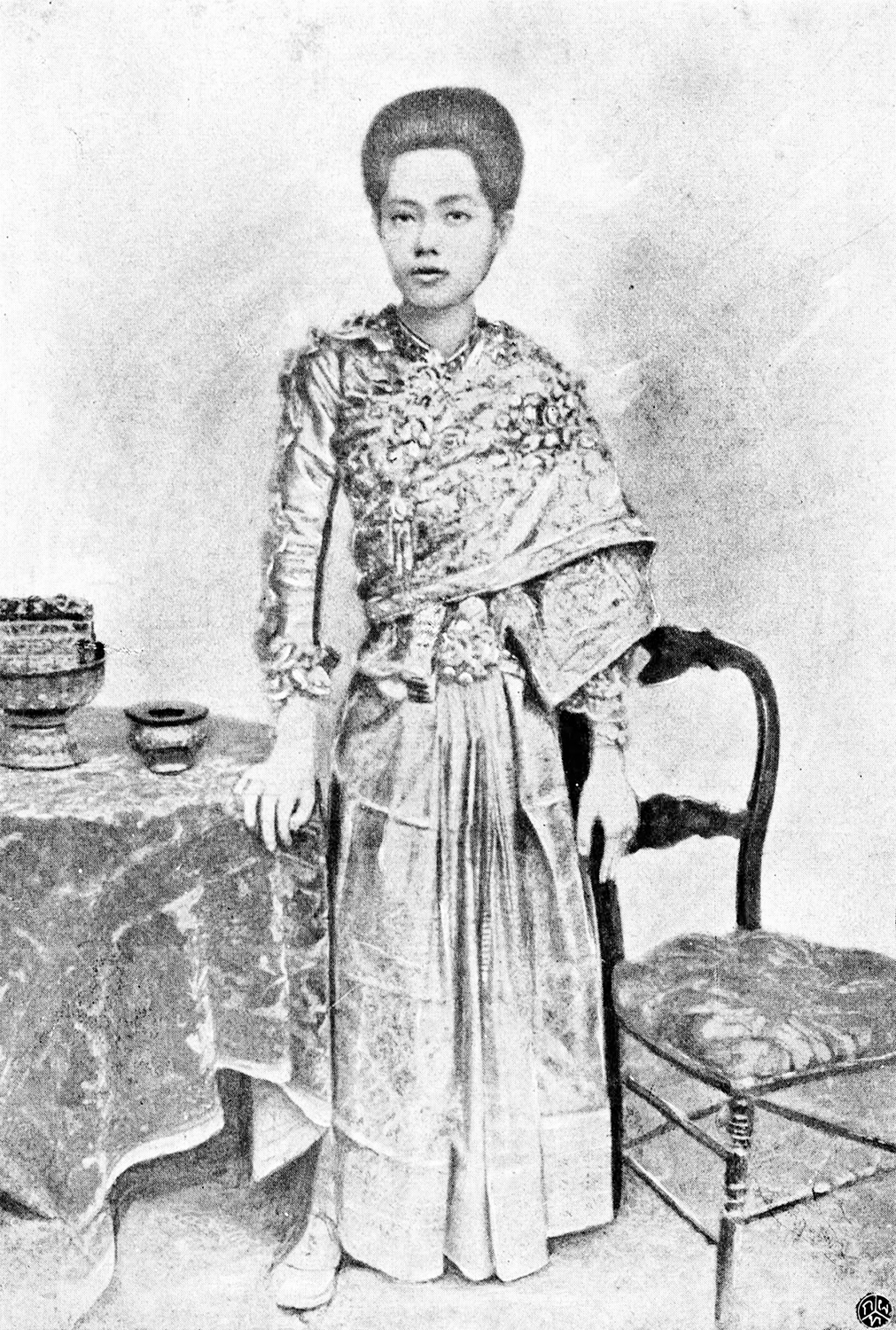
The panung, also written pha nung, is a lower garment from Thailand, the country once called Siam. One long strip of cotton cloth is wound around the waist and left to hang below the knees. A US vice-consul in 1921 put the size of such a piece at three by ten feet. Anyone may wear it, whatever their gender. The look changes with the cloth: some panung are printed, some are woven with stripes or checks, and the finish runs from fine to stiff and plain. Above it, the torso is covered by a sabai or a pha hom.
Where does Panung come from?
The panung belongs to Siam, the kingdom now known as Thailand, where the sources place it as a lower garment. No date for its beginning is given. The clearest marker in the material is a description from 1921, when a US vice-consul measured one as a length of cotton three feet wide and ten feet long. Since then the habit of dressing this way has loosened. Western clothes have taken its place, and the sources note that people are moving away from the traditional Panung style. Nothing in the material describes a revival.
How is Panung made?
The cloth is cotton. Past that, the sources give qualities rather than a process. Patta, the first quality, is a printed cloth, durable in use, carrying bold checks or cross designs, with a stripe or several across either end. Papoon, the second, keeps its colour well and is woven with narrow stripes and a two-and-two check. Palai, the third, is described in terms of correct sizing of the material and a stiffened structure. No loom, no dye method and no working time appear in the sources.
Panung, drawn
Colours, motifs and borders
Plain and patterned versions both exist. The boldest look is the checks and cross designs printed on Patta cloth. Papoon depends on finer work, slim stripes and a two-and-two check worked into the weave. The ends of a piece may carry one stripe or more. Palai is known for its proportions and a stiff finish rather than for any pattern. No motif, colour, border or decorated end is named, since this is a wrapped cloth and not a saree.
How Panung is worn
A panung is wound round the waist from a long strip and hangs below the knees. Chong kraben names the version that turns the wrap into two legs, closed with a fastening instead of left loose. Over the torso goes a sabai or a pha hom. The sources say nothing about a blouse, a petticoat or a pin, and they set out no folding steps. The same wrap is worn by men and by women.


When Panung is worn
The sources treat the panung as ordinary dress, not ceremonial wear. It is called versatile and open to anyone, with no rule dividing men from women, so both wear it. No festival, rite or wedding is attached to it in the material. What the sources do record is a shift: as Western clothing spreads, fewer people follow the old Panung manner of dressing from day to day.
Styles of Panung
Quality divides the cloth into three. Patta leads, a printed and hard-wearing cloth with strong checks or crossed designs, sometimes finished with stripes at the ends. Papoon comes second, valued for colour that lasts and for narrow stripes woven in beside a two-and-two check. Palai, the third, is judged by the sizing of its material and by a stiffened structure. The sources name no regional versions and say nothing of handloom against powerloom.
What Panung means
The panung stands for a way of dressing tied to Siam, and the sources record Western clothing displacing it. Wear is not restricted by gender, which makes it a shared everyday garment rather than the mark of one group. The material carries no Geographical Indication, and it names no weaving community, no faith and no workshop, so what is left here is a habit of dress and its slow fading.
Questions people ask about Panung
Where does the panung come from?
It comes from Siam, the country now called Thailand. The sources describe it as a lower garment worn there, and the only date they give is 1921, when a US vice-consul wrote about the cloth.
How is a panung made?
The cloth is cotton. Some qualities are printed, with bold checks or crossed patterns and stripes at the ends. Others are woven, like Papoon, which has narrow stripes and a two-and-two check worked into it. The sources do not describe the loom or the dyeing.
What is chong kraben?
It is a way of wearing the panung that turns the wrap into two legs, closed with a fastening instead of hanging loose below the knees. The sources name it as a fashion of the same cloth.
Who can wear a panung?
Anyone. The sources call it versatile and say it suits all genders, so there is no rule limiting it to men or to women. It covers the lower body, with a sabai or a pha hom above.
What are Patta, Papoon and Palai?
They are the three qualities of panung cloth. Patta is printed and hard-wearing, with bold checks or cross designs. Papoon holds its colour and is woven with slim stripes and a two-and-two check. Palai is judged by correct sizing and a stiff structure.
Good reading and sources
- Panung on WikipediaEncyclopedia
- More photos on Wikimedia CommonsPhotos and video
- Wikidata recordOpen data
The facts on this page come from the Wikipedia article "Panung", written by its contributors and used under the CC BY-SA 4.0 licence, and from its Wikidata record (CC0). EveryPallu rewrote the text in its own words, with AI assistance, and compares every page with the article to make sure no passage is copied. It may be reused under the same CC BY-SA 4.0 licence with a link back.
It may contain mistakes. Traditions, weaves and prices differ from one weaver, town or shop to the next, and it is not buying advice. If something is wrong, tell us. Last refreshed 2026-10-03.
More from Thailand
All the sarees of Thailand 🇱🇦 Laos and 1 moreSinhສິ້ນ
A handwoven tube skirt of Laos and northern Thailand, its hem telling where it was madeSilk
🇱🇦 Laos and 1 moreSinhສິ້ນ
A handwoven tube skirt of Laos and northern Thailand, its hem telling where it was madeSilk
 🇮🇩 Indonesia and 4 moreKebayaꦏꦼꦧꦪ
A front-opening blouse worn across Southeast Asia with a sarong or kainCotton · Embroidery · Batik
🇮🇩 Indonesia and 4 moreKebayaꦏꦼꦧꦪ
A front-opening blouse worn across Southeast Asia with a sarong or kainCotton · Embroidery · Batik
 🇹🇭 ThailandThai silkผ้าไหมไทย
Hand-woven Thai silk with a two-tone sheen, from glossy mulberry and matte eri cocoonsSilk · Brocade
🇹🇭 ThailandThai silkผ้าไหมไทย
Hand-woven Thai silk with a two-tone sheen, from glossy mulberry and matte eri cocoonsSilk · Brocade
 🇹🇭 ThailandKhitผ้าขิด
A handwoven cloth from Isan, Thailand, with geometric patterns that seem to float.Brocade
🇹🇭 ThailandKhitผ้าขิด
A handwoven cloth from Isan, Thailand, with geometric patterns that seem to float.Brocade
Its cousins elsewhere
All cotton sarees 🇮🇳 IndiaPasapali sari
A handloom ikat saree from Odisha with chess-board checks in contrasting colours.Ikat · Checks and stripes
🇮🇳 IndiaPasapali sari
A handloom ikat saree from Odisha with chess-board checks in contrasting colours.Ikat · Checks and stripes
 🇮🇳 India and 2 moreMadras
A light handwoven cotton cloth of bright checks, named after the city of ChennaiCotton · Checks and stripes · Embroidery
🇮🇳 India and 2 moreMadras
A light handwoven cotton cloth of bright checks, named after the city of ChennaiCotton · Checks and stripes · Embroidery