
Shantiniketan batik
Hand-painted batik from Shantiniketan in Bengal, its colours mixed from leaf and bark
A hand-painted batik that grew out of the art school at Shantiniketan in West Bengal. Women artisans paint each pattern with a fine brush and dye the cloth in colours drawn from leaves and bark, working motifs onto fabric, bags and boxes.
- Batik reached Shantiniketan in 1927 after Rabindranath Tagore and Surendranath Kar toured Java and Bali
- Patterns are drawn by hand with a small brush called the tulis, not machine-printed
- Dyes once came only from leaves and tree bark; synthetic colour is used today too
- Granted a Geographical Indication tag in 2026
- Women artisans make up the main production workforce
What is Shantiniketan batik?
Shantiniketan batik is cloth decorated by hand: the maker draws each design onto the fabric, then dyes it, so no two pieces need look alike. It grew up at Shantiniketan in West Bengal and is known for its own visual manner, distinct from other batik work. Patterns stay fine and detailed because they are drawn with a small brush, the tulis. A piece usually carries two or three colours, mixed from plant matter such as leaves and tree bark, though synthetic dyes now appear too. Most of the people producing it are women. The craft covers fabric for clothing, leather bags and jewellery boxes, and its goods are sold across India and overseas.
Where does Shantiniketan batik come from?
Where batik first began is contested: Indonesia, India, Japan and China are all put forward. The usual account credits Java, in Indonesia, and says Rabindranath Tagore carried the craft to India in 1927. Scholars such as John Guy and Maxwell note a reverse flow long before that: batik patterns across Southeast Asia took their cue from Indian cloth shipped in by trade. The Shantiniketan chapter starts with Tagore's journey through Java and Bali in 1927. His travelling companion Surendranath Kar studied batik methods and tools closely, and that year he and Rathindranath had equipment shipped home. Learners at the Kala Bhavan art school helped set the craft going, with the painter Nandalal Bose backing the effort, and it was kept simple so that village workers could take it up.
How is Shantiniketan batik made?
Nothing here is stamped by machine. The design goes on by hand, worked with a tulis, a small brush that allows tight, detailed patterning. Each artisan decides her own composition; the background and tastes she carries shape the piece, while the buyer matters too, so a maker may draw camels for a Rajasthani client, that state being famous for them. Colour comes from plant sources: leaves and bark of different trees. Older pieces relied wholly on such natural dyes, though makers now also use synthetic colour when the artist or customer prefers. Most designs hold to two or three colours.
Shantiniketan batik, drawn
Colours, motifs and borders
The range of subjects is wide: flowers and foliage, lotus and marigold, conch, peacock, fish, geometric tassels, scenes from folklore, images of worship, and figures of Hindu and Buddhist deities. Alpana, a form of drawn ornament, supplies patterns too. The scholar Amiya Ghosh observes that a maker's cultural background and the customer's taste jointly steer what appears on the cloth, and makers often draw on the natural world around them out of affection for it. Fashion and market demand can pull designs in fresh directions, even toward motifs that take considerable labour to execute.
How Shantiniketan batik is worn
No single drape belongs to this cloth. Artisans cover many kinds of clothing with their designs, and the same hand-drawn patterns also reach leather bags and boxes for jewellery. In practice the motifs travel on whatever garment a piece becomes, worn the way that garment is worn, with no special method of wrapping attached.


Styles of Shantiniketan batik
Shantiniketan work separates itself from other batik by its technique, its guiding ideas and its look. Machine-printed batik cloth exists in the wider market; this tradition holds to prints drawn by hand, which is why the lines stay so detailed. Within the tradition, variation comes from the maker: each artisan chooses her own motifs, and orders pull the work toward particular buyers, one batch sprouting camels for Rajasthan, another keeping to local flowers. Dye practice splits too, some pieces all-natural, others mixed, depending on what the maker and client want.
What Shantiniketan batik means
Since 2026 the craft has held a Geographical Indication tag, registered under India's 1999 law protecting named regional products, covering batik print on textiles, clothing and related goods. Production rests largely on women artisans, so the tag also touches their livelihoods. Though the technique arrived from Java, the Shantiniketan version has grown into a tradition with standing of its own, credited to the design, finish and care its makers put into each piece. Its products travel beyond India, carrying the town's name with them.
Questions people ask about Shantiniketan batik
Where does Shantiniketan batik come from?
It developed at Shantiniketan, in West Bengal. The usual account says Rabindranath Tagore brought batik to India from Java in 1927; after touring Java and Bali with Surendranath Kar, he had tools shipped home, and the craft took hold at Kala Bhavan, helped by the painter Nandalal Bose and the school's learners.
How is Shantiniketan batik made?
Entirely by hand. Artisans draw each pattern with a small tulis brush instead of machine-printing, then dye the cloth. Colour traditionally comes from plant matter such as leaves and bark of trees, though synthetic dyes are used nowadays as well, and most designs keep to two or three colours.
What designs appear on it?
Makers choose their own subjects, shaped by their culture and their customers. The range runs from flowers, foliage, lotus, marigold, conch, peacock and fish to alpana ornament, folk scenes and Hindu and Buddhist deities. Camels may be drawn for pieces meant for the Rajasthani market.
Does it have official recognition?
Yes. In 2026 the craft received a Geographical Indication tag under India's 1999 law for registering regional products, covering batik print on textiles, fabrics, clothing and leather goods.
Who makes it and what is it used on?
Women artisans do most of the production. Their work appears on many kinds of clothing, and also on leather bags and boxes for jewellery. Finished pieces are sold within India and in other countries.
Good reading and sources
- A show on Tagore that Bengal wears, not just hearsThe Hindu, Article
- Details | Geographical IndicationsIntellectual Property India, Article
- Shantiniketan Batik on WikipediaEncyclopedia
- More photos on Wikimedia CommonsPhotos and video
- Wikidata recordOpen data
The facts on this page come from the Wikipedia article "Shantiniketan Batik", written by its contributors and used under the CC BY-SA 4.0 licence, and from its Wikidata record (CC0). EveryPallu rewrote the text in its own words, with AI assistance, and compares every page with the article to make sure no passage is copied. It may be reused under the same CC BY-SA 4.0 licence with a link back.
It may contain mistakes. Traditions, weaves and prices differ from one weaver, town or shop to the next, and it is not buying advice. If something is wrong, tell us. Last refreshed 2026-10-03.
More from India
All the sarees of India 🇮🇳 IndiaGarad sariগরদ শাড়ি
A fine silk sari woven on pit looms in Murshidabad and Birbhum, worn at Durga PujaSilk · Zari work · Brocade
🇮🇳 IndiaGarad sariগরদ শাড়ি
A fine silk sari woven on pit looms in Murshidabad and Birbhum, worn at Durga PujaSilk · Zari work · Brocade
Its cousins elsewhere
 🇮🇩 Indonesia and 5 moreSarongꦱꦫꦸꦁ
A wrapped tube of cloth worn at the waist, from the Malay world to Kerala and SomaliaCotton · Batik · Ikat
🇮🇩 Indonesia and 5 moreSarongꦱꦫꦸꦁ
A wrapped tube of cloth worn at the waist, from the Malay world to Kerala and SomaliaCotton · Batik · Ikat
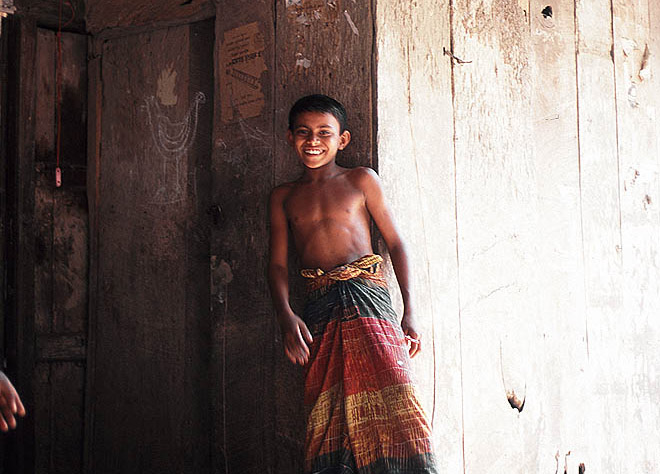 🇮🇳 India and 5 moreLungiলুঙ্গি
A cloth tube or sheet tied at the waist, worn across South and Southeast AsiaCotton · Batik · Checks and stripes
🇮🇳 India and 5 moreLungiলুঙ্গি
A cloth tube or sheet tied at the waist, worn across South and Southeast AsiaCotton · Batik · Checks and stripes
 🇮🇳 India and 2 moreChintzछींट
A painted or woodblock-printed floral cotton cloth originating in GolcondaCotton · Block print · Hand painting
🇮🇳 India and 2 moreChintzछींट
A painted or woodblock-printed floral cotton cloth originating in GolcondaCotton · Block print · Hand painting
 🇲🇲 Myanmar and 1 moreLongyiလုံချည်
A cloth tube worn at the waist in Myanmar, about two metres longCotton · Checks and stripes · Embroidery
🇲🇲 Myanmar and 1 moreLongyiလုံချည်
A cloth tube worn at the waist in Myanmar, about two metres longCotton · Checks and stripes · Embroidery