
Kaunakes
An ancient Mesopotamian wrapped skirt and mantle woven with tufted wool
Kaunakes was an ancient Mesopotamian wraparound garment made of fleece or tufted woven wool, originating in Sumer. Both men and women wore it as a knee-length or ankle-length skirt or draped it over the left shoulder as a protective mantle.
- Originated in Sumer around 2700 BC as a unisex fleece or tufted wool garment.
- Hemline length reflected status, with royals wearing ankle-length skirts and servants knee-length wraps.
- Around 2500 BC, woven wool with tufts or loops replaced raw animal pelts.
- Featured as an exotic stage costume in Aristophanes' Greek comedy Wasps.
What is Kaunakes?
Kaunakes is an ancient wrapped garment that first appeared in Sumer. Both men and women wore this clothing across ancient Mesopotamia. Early forms consisted of raw fleece pelts or hides taken from sheep, goats, or camels. Over time, artisans replaced untanned pelts with woven woollen cloth crafted to resemble thick animal fleece. The surface featured rows of wool tufts arranged in tiers that looked like overlapping bird feathers or flower petals. Kaunakes served as a heavy, protective wrap against harsh weather in Sumerian and Akkadian settlements. Depending on the wearer's social standing and the season, it took the form of a waist skirt, a shoulder wrap, or a heavy cloak.
Where does Kaunakes come from?
Before the kaunakes emerged, people in Sumer during the Pre-Dynastic period wore close-fitting net kilts. The fleece skirt became prominent during the Early Dynastic Period between 2700 and 2350 BC. Around 2500 BC, weavers learned to replicate the texture of fleece using woven woollen cloth rather than animal skins. While Mesopotamia is widely recognized for this attire, historical accounts also link the development of long-strand looped textiles to Coptic Egypt. Classical Greek writers later applied the name kaunakes to these heavy mantles. In fifth-century Athens, audiences often believed the garment came from Persia, Babylon, or regions across Anatolia and the Levant that belonged to the Persian Empire.
How is Kaunakes made?
Early versions used animal pelts turned inside out so the smooth leather faced inward while the combed wool tufts faced outward. As weaving technology advanced in Mesopotamia, makers switched from pelts to woven textiles made of wool or goat hair. To copy the appearance of natural curling fleece, weavers created looped fringes directly within the woven structure. Alternatively, craftsmen hand-stitched individual wool tufts onto the base fabric. In ancient Egyptian tapestry techniques, long woolen strands were integrated into the weave to create a similar fringed pile. This tufting method yielded a thick, insulating cloth capable of keeping out the severe desert cold.
Kaunakes, drawn
Colours, motifs and borders
The defining visual element of kaunakes was its tiered tufted surface. Workers arranged small clumps of wool in successive horizontal bands that hung downward. This structured layout created a distinct scalloped texture resembling overlapping feathers or leaf petals. Early sheepskin versions displayed comb-like patterns carved or combed into the fleece wool. When weavers translated this look to cloth, the dense rows of wool loops produced a voluminous, bell-like silhouette around the lower body. The garment focused on tactile surface texture rather than varied colors, offering a heavy, rustic finish that made it immediately recognizable in ancient portraiture.
How Kaunakes is worn
Kaunakes was draped in several ways across ancient society. Most commonly, it was wrapped around the waist as a flared skirt and tied securely in place. The length indicated social rank. Working people and soldiers wore short hemlines at the knee, whereas nobility wore long skirts reaching down to the ankles. Wearers often left the upper body exposed or draped a second fleece wrap over both shoulders. In female portraiture, the cloth was wrapped around the torso, covering the left shoulder and arm while leaving the right shoulder and chest bare.


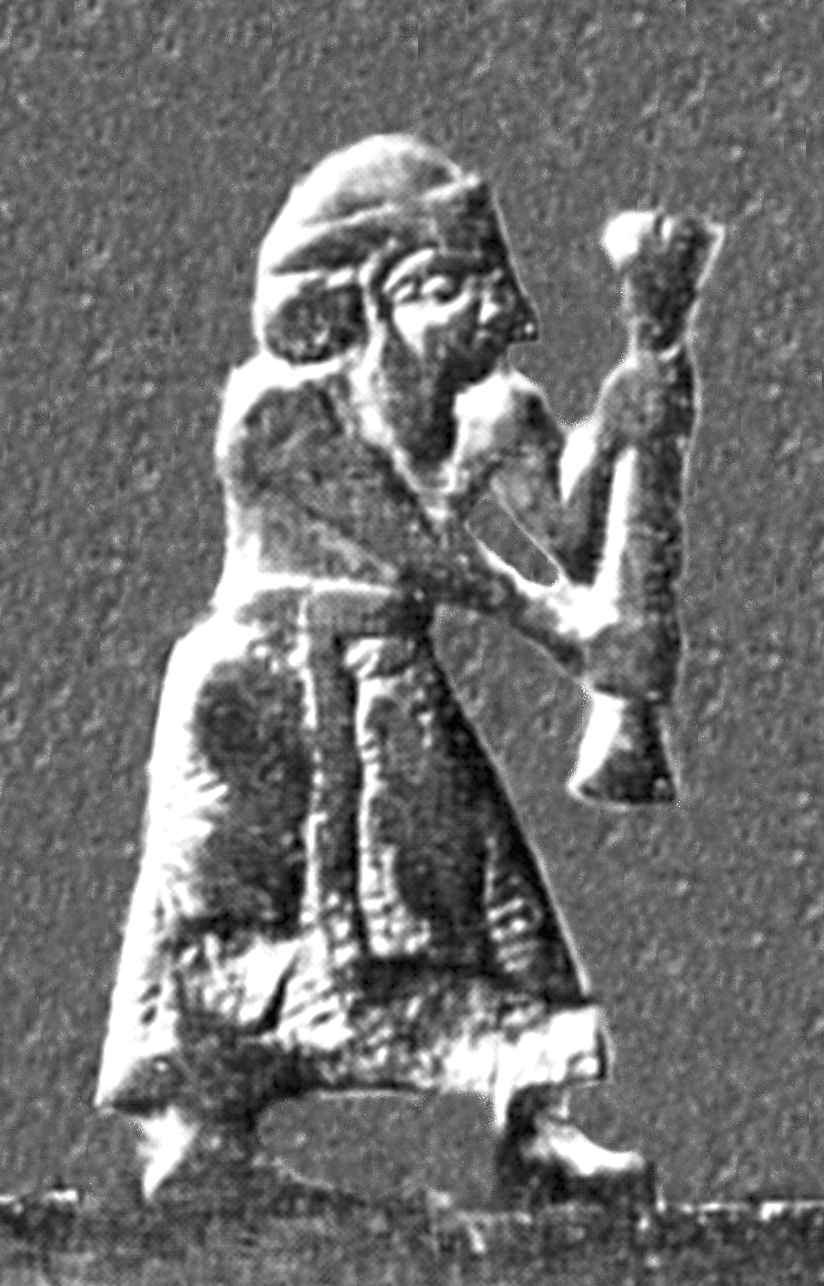

When Kaunakes is worn
This garment was worn for daily tasks as well as sacred and royal duties. By roughly 2450 BC, Mesopotamian statues show kings and rulers wearing ankle-length kaunakes during temple worship and prayer. Statues found in Syrian temples, such as the Temple of Ishtar at Mari, depict seated elite women cloaked in heavy kaunakes wraps. In contrast, common laborers and palace guards wore basic, knee-length versions for everyday protection. During the Classical Greek era, actors wore kaunakes on the theatrical stage in Athens, choosing the garment for its exotic visual impact.
Styles of Kaunakes
Kaunakes evolved through several structural forms over centuries of use. The earliest variant was an unshaped pelt wrap that preserved the animal tail. Later styles adapted to seasonal weather, functioning as a shoulder shawl in winter and a light waist skirt during summer heat. Over time, tailors developed sleeved garments alongside sleeveless capes. Material choices also shifted, moving from rustic sheep, camel, or goat hides to sophisticated woven wool fabrics. Eventually, the garment returned to a simple sleeveless cloak design, mirroring the fleece-like appearance of its earliest ancestors through carefully engineered textile loops.
What Kaunakes means
Kaunakes held a prominent place in the religious art and visual identity of the ancient Near East. Stone statues and mosaics from Sumer and Babylonia preserved detailed records of the garment worn by worshippers, royalty, and deities. Beyond Mesopotamia, the distinctive look of kaunakes captured foreign imaginations. In fifth-century Greece, the playwright Aristophanes featured the heavy tufted mantle in his comedy Wasps, presenting it as an exotic luxury from eastern trade routes. The garment symbolized status in Sumerian society and later stood as a notable marker of Mesopotamian textile craftsmanship across the Mediterranean world.
Questions people ask about Kaunakes
Where does kaunakes come from?
Kaunakes originated in ancient Sumer during the third millennium BC. It was worn throughout Mesopotamia, including Babylonia and Akkad, and artifacts depicting it have been found across modern Iraq and Syria.
How was kaunakes made?
Early kaunakes were made from sheepskin, goat hide, or camel hide. Later versions were woven from wool or goat hair, with looped fringes or stitched tufts added to recreate the appearance of thick, curled animal fleece.
How was kaunakes worn?
It was worn as a wraparound skirt tied at the waist or as a mantle over the shoulders. Women often wrapped it around the body across the left shoulder, leaving the right shoulder exposed.
Who wore kaunakes in ancient society?
Both men and women wore kaunakes. Servants and soldiers wore knee-length versions, while rulers and priests wore ankle-length garments for ceremonies and royal prayer. Greek actors later wore it on stage in Athens.
Good reading and sources
- Kaunakes on WikipediaEncyclopedia
- More photos on Wikimedia CommonsPhotos and video
- Wikidata recordOpen data
The facts on this page come from the Wikipedia article "Kaunakes", written by its contributors and used under the CC BY-SA 4.0 licence, and from its Wikidata record (CC0). EveryPallu rewrote the text in its own words, with AI assistance, and compares every page with the article to make sure no passage is copied. It may be reused under the same CC BY-SA 4.0 licence with a link back.
It may contain mistakes. Traditions, weaves and prices differ from one weaver, town or shop to the next, and it is not buying advice. If something is wrong, tell us. Last refreshed 2026-10-04.

Its cousins elsewhere
All wool and pashmina 🇮🇳 IndiaKachchh shawldhabla
A dense wool shawl handwoven in Kutch, Gujarat, once traded for fleece and grain.Wool · Embroidery · Tie-dye
🇮🇳 IndiaKachchh shawldhabla
A dense wool shawl handwoven in Kutch, Gujarat, once traded for fleece and grain.Wool · Embroidery · Tie-dye
 🇮🇩 Indonesia and 5 moreIkat
Yarns are tied and dyed before weaving, giving the cloth a softly blurred patternSilk · Ikat
🇮🇩 Indonesia and 5 moreIkat
Yarns are tied and dyed before weaving, giving the cloth a softly blurred patternSilk · Ikat
 🇮🇳 India and 2 moreKhadi
Hand-spun and hand-woven cloth from the subcontinent, tied to the swadeshi movementCotton
🇮🇳 IndiaTangaliya shawl
A Gujarat shawl woven on pit looms, its dots raised by knots of contrast threadCotton
🇮🇳 India and 2 moreKhadi
Hand-spun and hand-woven cloth from the subcontinent, tied to the swadeshi movementCotton
🇮🇳 IndiaTangaliya shawl
A Gujarat shawl woven on pit looms, its dots raised by knots of contrast threadCotton