🇹🇭 The sarees of Thailand
10 sarees from Thailand, best known first, across 12 centres and states.
Thai dress rests on wrapped, unstitched cloth: the chong kraben loincloth, the pha nung and pha sin skirts, and the sabai laid over one shoulder. There is no saree in this material, but the sabai's silk and cotton forms grew partly out of Indian textiles, the sari and dupatta among them.
- Chong kraben is a wrapped loincloth that reached Thailand from Cambodia.
- The sabai is a silk shawl about one foot wide, laid over one shoulder.
- Pha sin, a tubular skirt, is divided into waistband, body and hem.
- A 1941 cultural mandate discouraged wrapped cloth in public.
- The khrui ceremonial robe now serves as university academic dress.
Sarees in Thailand
Thai clothing has two long roots: cloth wrapped rather than cut and sewn, and a steady borrow from outside. For centuries both commoners and royals wore unstitched fabric, and rank showed in whether the cloth was cotton or silk, plain or patterned, more than in any tailored cut. Indian trade carried ideas and textiles into the region through early kingdoms such as Dvaravati, and the sabai, a shawl-like length worn across the chest, took shape in that exchange. From the 1860s, Victorian manners entered the court, and stitched jackets, lace blouses and Western dress followed. The result is a wardrobe where wrap and tailored piece sit side by side.
Weaves and fabrics
The old cloth is cotton or silk. Before the 20th century that choice, along with printed or woven motifs, marked class more clearly than tailoring did. The pha sin is handwoven in patterns that change from region to region, and it is built in three parts: a waistband, a main body and a hem. The sabai is usually silk, roughly a foot wide. Some ceremonial robes use a sheer or mesh fabric banded with satin or felt, and court dress under King Chulalongkorn brought in European lace.
How it is worn
Lower garments are lengths of cloth wound and tucked at the waist. The chong kraben, which reached Thailand from Cambodia, is a loincloth wrap: men drew it to mid-thigh, women to below the knee. The pha nung is a plain rectangle wrapped like a skirt, while the pha sin is a tube, sewn shut, worn mostly by women in the North and Northeast. The pha thung is a tube closed at the ends for everyday ease. The sabai runs diagonally over one shoulder, its end falling down the back.
Dyeing, printing and embroidery
The sources are thin here. Printing and weaving supplied the motifs that once signalled rank, and the khrui, a light open ceremonial robe, may be embroidered. Lace work belongs to a later, courtly phase: the ham sleeve blouse was made of European lace with boning to hold its shape, high-collared and ruffled across the shoulders and chest. Beyond this, the material speaks of patterned cloth in general rather than naming dyes or techniques.
Weaving centres
The pha sin belongs to the North and Northeast, where it is handwoven and patterned by place. Court and formal dress centred on Ayutthaya in earlier centuries and later on Bangkok, which is also where Western styles first took hold among city dwellers. The material names no specific weaving towns.
Weddings, festivals and daily wear
Wrapped cloth stayed for ceremony even as it left daily life. The chong kraben is kept for classical dance, formal occasions and ceremonies, and the sabai appears at traditional rites, dance and historical reenactments. The Raj pattern jacket, high-collared with five buttons, is worn to royal functions, weddings, ordinations and festivals such as Loy Krathong. The pha thung, easier to handle, is used at home, in markets and for bathing. From 1941, cultural mandates pushed Western dress and discouraged wraps in public.
The saree today
Some forms have continued quietly and others have been revived. The chong kraben and sabai now stand as markers of Thai identity, worn in performance and ceremony. The Raj pattern still appears at formal events, in silk or fine cotton versions that come in cream, ivory and pale shades, sometimes paired with trousers. The khrui survives as academic dress, notably at Chulalongkorn University. Daily wrap has largely gone, replaced over the 20th century by stitched clothing.
The facts in this overview come from the Wikipedia article "Traditional Thai clothing", written by its contributors and used under the CC BY-SA 4.0 licence. EveryPallu rewrote the text in its own words, with AI assistance, and compares every page with the article to make sure no passage is copied. It may be reused under the same CC BY-SA 4.0 licence with a link back.
Weaving centres and states of Thailand
 🇮🇳 India and 4 moreEri silk
A wild silk from northeast India, spun from cocoons the moth has leftEri
🇮🇳 India and 4 moreEri silk
A wild silk from northeast India, spun from cocoons the moth has leftEri
 🇮🇩 Indonesia and 5 moreIkat
Yarns are tied and dyed before weaving, giving the cloth a softly blurred patternSilk · Ikat
🇮🇩 Indonesia and 5 moreIkat
Yarns are tied and dyed before weaving, giving the cloth a softly blurred patternSilk · Ikat
 🇮🇩 Indonesia and 4 moreKebayaꦏꦼꦧꦪ
A front-opening blouse worn across Southeast Asia with a sarong or kainCotton · Embroidery · Batik
🇮🇩 Indonesia and 4 moreKebayaꦏꦼꦧꦪ
A front-opening blouse worn across Southeast Asia with a sarong or kainCotton · Embroidery · Batik
 🇹🇭 ThailandPanungผ้านุ่ง
A cotton strip wrapped at the waist and falling below the knees, worn in ThailandCotton · Checks and stripes
🇹🇭 ThailandPanungผ้านุ่ง
A cotton strip wrapped at the waist and falling below the knees, worn in ThailandCotton · Checks and stripes
 🇱🇦 Laos and 1 moreSinhສິ້ນ
A handwoven tube skirt of Laos and northern Thailand, its hem telling where it was madeSilk
🇱🇦 Laos and 1 moreSinhສິ້ນ
A handwoven tube skirt of Laos and northern Thailand, its hem telling where it was madeSilk
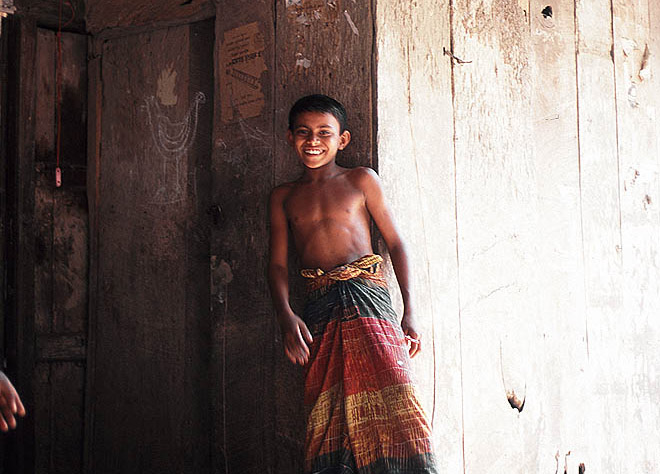 🇮🇳 India and 5 moreLungiলুঙ্গি
A cloth tube or sheet tied at the waist, worn across South and Southeast AsiaCotton · Batik · Checks and stripes
🇮🇳 India and 5 moreLungiলুঙ্গি
A cloth tube or sheet tied at the waist, worn across South and Southeast AsiaCotton · Batik · Checks and stripes
 🇹🇭 ThailandThai silkผ้าไหมไทย
Hand-woven Thai silk with a two-tone sheen, from glossy mulberry and matte eri cocoonsSilk · Brocade
🇹🇭 ThailandThai silkผ้าไหมไทย
Hand-woven Thai silk with a two-tone sheen, from glossy mulberry and matte eri cocoonsSilk · Brocade
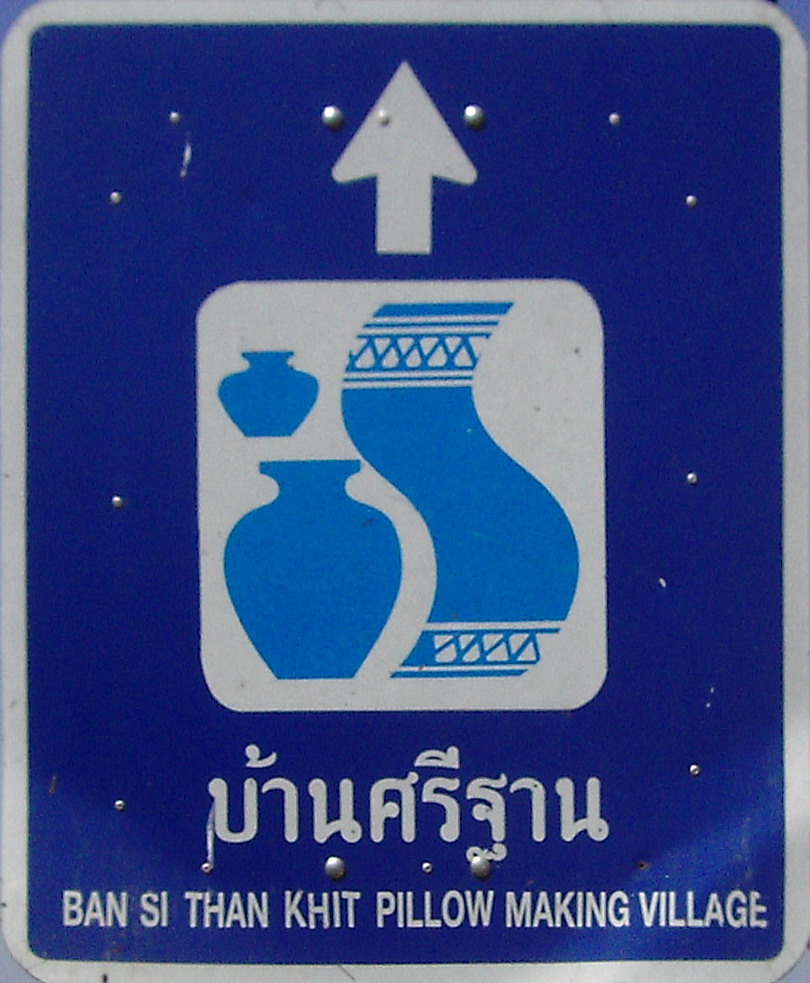 🇹🇭 ThailandKhitผ้าขิด
A handwoven cloth from Isan, Thailand, with geometric patterns that seem to float.Brocade
🇹🇭 ThailandKhitผ้าขิด
A handwoven cloth from Isan, Thailand, with geometric patterns that seem to float.Brocade
 🇲🇲 Myanmar and 1 moreLongyiလုံချည်
A cloth tube worn at the waist in Myanmar, about two metres longCotton · Checks and stripes · Embroidery
🇲🇲 Myanmar and 1 moreLongyiလုံချည်
A cloth tube worn at the waist in Myanmar, about two metres longCotton · Checks and stripes · Embroidery
 🇰🇭 Cambodia and 4 moreSbaiស្បៃ
A shawl-like breast cloth derived from the sari, worn over one shoulder in Southeast AsiaSilk · Embroidery · Brocade
🇰🇭 Cambodia and 4 moreSbaiស្បៃ
A shawl-like breast cloth derived from the sari, worn over one shoulder in Southeast AsiaSilk · Embroidery · Brocade
Photo credits on this page
The small pictures above come from Wikimedia Commons under free licences. Some are cropped to fit.
- Eri silk: Simtastic01, CC BY-SA 4.0, source
- Ikat: Midori, CC BY 3.0, source
- Panung: เอบ บุนนาก, Public domain, source
- Lungi: Laportechicago at English Wikipedia (Paul La Porte)., CC BY 2.5, source
- Sbai: Stephowz, CC BY-SA 4.0, source
- Khit: Pawyilee, Public domain, source
- Thai silk: JJ Harrison ( https://www.jjharrison.com.au/ ), CC BY-SA 3.0, source
- Longyi: Unknown author, Public domain, source
- Kebaya: Simon_sees, CC BY 2.0, source
- Sinh: YashiWong, CC BY-SA 3.0, source