
Kitenge
A printed African wrap cloth worn around the waist or chest and used as everyday dress
A printed fabric worn across East, Central, and West Africa as a wrapped garment, sling, or head covering. It features bold wax-print patterns produced by roller printing and is worn by women and men for everyday activities and special gatherings.
- Industrial wax-print techniques based on Indonesian batik are used to print the patterns.
- The cloth has a decorative border along only one long side, making it distinct from a kanga.
- In Malawi, women customarily wear chitenje for funeral gatherings.
- Civil servants in Malawi wear kitenge on Fridays to promote domestic goods.
What is Kitenge?
A kitenge, known also as a chitenge or chitenje, is a printed wrap cloth common across Eastern, Western, and Central Africa. Similar in form to a sarong, this thick textile features patterned imagery across both faces. Women frequently wind it around the torso, waistline, or head. The textile is also adapted into tailored garments like blouses, dresses, and trousers, or transformed into modern streetwear items such as hooded tops and bags. Both women and men make use of the cloth for casual dressing, carrying infants, and domestic styling.
Where does Kitenge come from?
The fabric developed from industrial printing methods inspired by Indonesian batik traditions. Over time, these wax-resist production techniques became established across Eastern, Western, and Central Africa. Today, the wrap is widely worn in many countries, including Kenya, Tanzania, Uganda, Malawi, Nigeria, Ghana, Cameroon, and the Democratic Republic of the Congo. It has expanded from everyday functional wear into a vehicle for social expression, political messaging, and contemporary urban youth fashion throughout African cities.
How is Kitenge made?
Kitenge cloth is manufactured through an industrial adaptation of traditional wax-resist batik methods. In modern production, the fabrics are commercially made using roller printing equipment. This printing method leaves sharp patterns that show clearly on both sides of the material, with minimal dye bleeding through. The finished textile is distinctly heavier and thicker than related wraps such as the kanga, and it is finished with an ornamental border along just one lengthwise edge.
Kitenge, drawn
Colours, motifs and borders
The material is known for its wide selection of patterns and graphic elements. Prints encompass traditional tribal designs, religious emblems, and political campaign statements. Unlike kangas, which usually include printed text sayings, standard kitenges generally do not, though some examples from coastal Kenya and Tanzania include Swahili text. The design is framed by an edging along one long side of the cloth.
How Kitenge is worn
The cloth is worn untailored by wrapping it securely over the chest or around the waist. Women often tie it as a headscarf or arrange it as a supportive sling to carry babies on the back or chest while nursing. Men also wrap the fabric around the waist during hot weather or wear it to work on designated days.


When Kitenge is worn
Kitenge serves as informal everyday dress and modest beach cover. In Malawi, women customarily wear chitenje to attend funerals, and government staff wear it on Fridays. The cloth is commonly presented as a gift to young women, used as table decor during meals, or hung in residences as decorative wall panels.
Styles of Kitenge
Regional naming differs across Africa, with chitenge used in Zambia and Namibia and chitenje used in Malawi. Plural forms include vitenge in Swahili and zitenge in Tonga. While lighter kangas have borders on multiple sides and printed proverbs, kitenge is thicker with a single long border. Modern urban youth also incorporate the textile into hoodies, trousers, and accessories.
What Kitenge means
Beyond basic clothing, the cloth serves as a canvas for social communication, faith, and political views. In Malawi, presidential encouragement for workers to wear the cloth on Fridays helped promote home products. Today, kitenge remains deeply embedded in modern African pop culture, appearing in youth street fashion, tailored apparel, and framed textile art.
Questions people ask about Kitenge
Where does the kitenge come from?
The kitenge is used widely across East, West, and Central Africa, in nations such as Kenya, Tanzania, Malawi, and Nigeria. Its printing method originates from Indonesian batik wax-resist techniques that were later adapted for commercial machinery.
How is kitenge cloth made?
The fabric is commercially produced using an industrial roller-printing method modeled on traditional Indonesian wax batik. This process prints detailed, bright patterns on the cloth so that the design is equally clear on both sides.
How is a kitenge traditionally worn?
Women wrap the cloth around the chest, waist, or head, or tie it as a sling to carry a baby. Men also wrap it around the waist during hot weather or wear it on designated work days.
What is the difference between a kitenge and a kanga?
A kitenge is woven from thicker cloth than a kanga and has a border on only one long edge. In addition, kitenges typically lack the written Swahili proverbs found on kangas.
Good reading and sources
- Kitenge on WikipediaEncyclopedia
- More photos on Wikimedia CommonsPhotos and video
- Wikidata recordOpen data
The facts on this page come from the Wikipedia article "Kitenge", written by its contributors and used under the CC BY-SA 4.0 licence, and from its Wikidata record (CC0). EveryPallu rewrote the text in its own words, with AI assistance, and compares every page with the article to make sure no passage is copied. It may be reused under the same CC BY-SA 4.0 licence with a link back.
It may contain mistakes. Traditions, weaves and prices differ from one weaver, town or shop to the next, and it is not buying advice. If something is wrong, tell us. Last refreshed 2026-10-04.

Its cousins elsewhere
 🇮🇳 IndiaShantiniketan batik
Hand-painted batik from Shantiniketan in Bengal, its colours mixed from leaf and barkBatik · Hand painting
🇮🇳 IndiaShantiniketan batik
Hand-painted batik from Shantiniketan in Bengal, its colours mixed from leaf and barkBatik · Hand painting
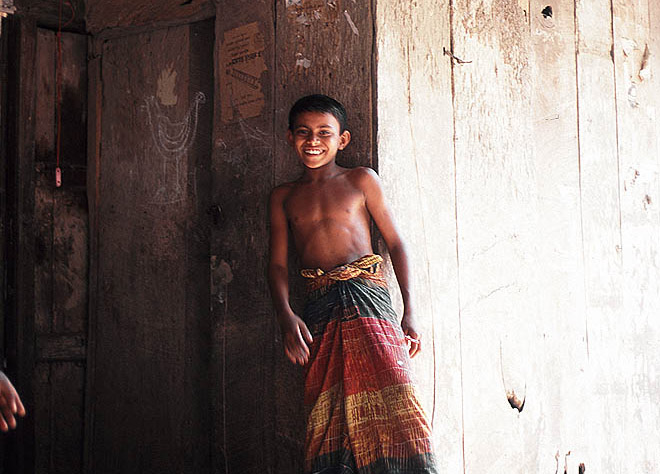 🇮🇳 India and 5 moreLungiলুঙ্গি
A cloth tube or sheet tied at the waist, worn across South and Southeast AsiaCotton · Batik · Checks and stripes
🇮🇳 India and 5 moreLungiলুঙ্গি
A cloth tube or sheet tied at the waist, worn across South and Southeast AsiaCotton · Batik · Checks and stripes
 🇲🇲 Myanmar and 1 moreLongyiလုံချည်
A cloth tube worn at the waist in Myanmar, about two metres longCotton · Checks and stripes · Embroidery
🇲🇲 Myanmar and 1 moreLongyiလုံချည်
A cloth tube worn at the waist in Myanmar, about two metres longCotton · Checks and stripes · Embroidery