Comilla khadi
Hand-spun, hand-woven cloth from Comilla, Bangladesh, once woven on pit looms
Comilla khadi is cloth spun and woven by hand in the Comilla region of Bangladesh, known across the subcontinent since ancient days and worn by people of every class. Gandhi's 1921 boycott of foreign goods gave the trade fresh purpose, and weavers in Chandina, Muradnagar and Debidwar still keep looms running.
- Gandhi's 1921 boycott call made handspun cloth a badge of the campaign
- The name may come from khad, a pit dug to hold the loom
- A Chandina cooperative begun by Akhtar Hameed Khan is run by the Guha family
- Thousands of weaving workshops work in Chandina, Muradnagar and Debidwar
- Comilla khadi earned recognition abroad for its quality in 1994
What is Comilla khadi?
Comilla khadi is cloth spun and woven entirely by hand, made in and around Comilla, a city in Bangladesh. People of every class wear it, at home and abroad. The name khadi, also heard as khaddar, points to the earliest way of working: a loom set in a dug-out pit. The trade itself is old, since cloth from this part of Bengal has been sought after across the subcontinent since ancient days. Family workshops in the neighbouring upazilas, or sub-districts, of Chandina, Muradnagar and Debidwar keep the looms busy today.
Where does Comilla khadi come from?
Demand for the cloth has crossed the subcontinent from ancient times onward. Its modern shape came in 1921, when Mahatma Gandhi's anti-British campaign turned handspun fabric into a pledge: favour what your own country makes, shun what it imports. After the 1952 language movement in Bengal, Akhtar Hameed Khan, who ran Comilla Victoria Government College and later set up the Bangladesh Academy for Rural Development (first PARD, then BARD), formed the Khadi and Cottage Industries Association with Governor Feroz Khan Noon's support. A cooperative he had begun in Chandina passed to Shailen Guha and his son Bijon, and the son has kept it going since his father's death.
How is Comilla khadi made?
Nothing is done by machine. Fibre is spun into yarn, and the yarn is woven on a loom the weaver drives with a foot pedal. In the classic Comilla arrangement that loom sat in a pit dug into the earth, and one account says the pit itself, khad, named the cloth, giving Khaddar and then the shorter Khadi. Thousands of small family workshops across Chandina, Muradnagar and Debidwar still work this way.
Comilla khadi, drawn
When Comilla khadi is worn
This is everyday cloth, not reserved for ceremonies, worn by people of all classes in Bangladesh and beyond. It once carried a message as well: in 1921, when Gandhi called for a boycott of British goods, choosing handspun fabric was a way to back local products and refuse imported ones. In Chandina the weaving trade remains tied to memories of Mahatma Gandhi.
Styles of Comilla khadi
The name has two explanations. Some say the cloth was woven with the loom set in a dug-out pit, khad, and so was called Khaddar, from which Khadi followed. Others trace the word to Gujarati speech. Places of production have shifted as well: in the years around 1952 the cloth came from the Abhyasram in Comilla, the Prabartak Sangha in Chittagong and the Gandhi Ashram in Noakhali, while today the work is spread across the upazilas of Chandina, Muradnagar and Debidwar.
What Comilla khadi means
Chandina's looms still hold the memory of Mahatma Gandhi, and the cooperative that carries the craft forward has stayed in the Guha family across two generations. Quality brought notice abroad in 1994. Times are harder now: machine-made cloth competes for the same buyers, and raw materials keep costing more. The trade looks to government for help, chiefly low-interest loans for weavers and steadier prices for what they buy to weave with.
Questions people ask about Comilla khadi
Where does Comilla khadi come from?
It comes from the Comilla region of Bangladesh. The main weaving centres today are the upazilas of Chandina, Muradnagar and Debidwar, home to thousands of small workshops, and cloth from here has been known across the subcontinent since ancient days.
How is khadi made?
By hand at every step: fibre is spun into yarn and the yarn is woven on a loom worked by foot pedal. In the traditional method the loom sat in a pit dug into the ground, which is one explanation of the name.
Why is khadi linked to Gandhi?
In 1921 Mahatma Gandhi's movement against British rule asked people to use local goods and shun foreign ones. Comilla's khadi trade grew on that idea, and weaving in Chandina is still tied to memories of Gandhi.
What does the name Khaddar mean?
Two explanations exist. One says the cloth was named after khad, the pit that held the loom, giving Khaddar and then Khadi. The other traces the word to the Gujarati language. There is no single agreed account.
Is it still woven today?
Yes. Weavers in Chandina, Muradnagar and Debidwar keep thousands of workshops running, though machine-made cloth and rising raw material prices make survival hard. The craft won international recognition for quality in 1994.
Good reading and sources
The facts on this page come from the Wikipedia article "Khadi industry of Comilla", written by its contributors and used under the CC BY-SA 4.0 licence, and from its Wikidata record (CC0). EveryPallu rewrote the text in its own words, with AI assistance, and compares every page with the article to make sure no passage is copied. It may be reused under the same CC BY-SA 4.0 licence with a link back.
It may contain mistakes. Traditions, weaves and prices differ from one weaver, town or shop to the next, and it is not buying advice. If something is wrong, tell us. Last refreshed 2026-10-04.
More from Bangladesh
All the sarees of Bangladesh 🇮🇳 India and 4 moreSariसाड़ी
An unstitched length of cloth draped at the waist and over one shoulderSilk · Brocade · Ikat
🇮🇳 India and 4 moreSariसाड़ी
An unstitched length of cloth draped at the waist and over one shoulderSilk · Brocade · Ikat
 🇮🇳 India and 1 moreDhoti
An unstitched cloth tied at the waist and worn to the ankle, the men's answer to the sariCotton
🇮🇳 India and 1 moreDhoti
An unstitched cloth tied at the waist and worn to the ankle, the men's answer to the sariCotton
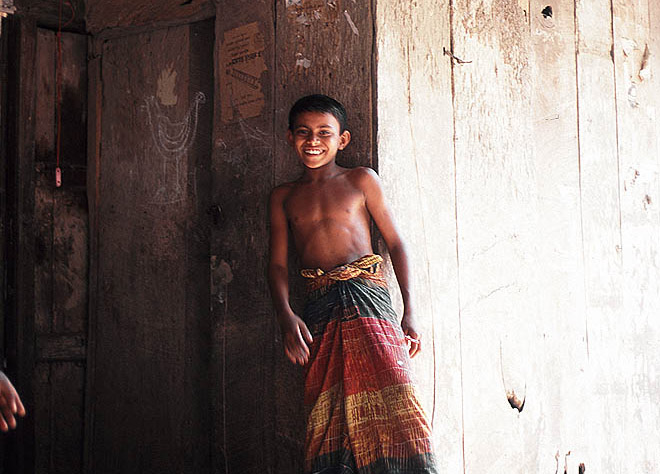 🇮🇳 India and 5 moreLungiলুঙ্গি
A cloth tube or sheet tied at the waist, worn across South and Southeast AsiaCotton · Batik · Checks and stripes
🇮🇳 India and 5 moreLungiলুঙ্গি
A cloth tube or sheet tied at the waist, worn across South and Southeast AsiaCotton · Batik · Checks and stripes
 🇮🇳 India and 2 moreKhadi
Hand-spun and hand-woven cloth from the subcontinent, tied to the swadeshi movementCotton
🇮🇳 India and 2 moreKhadi
Hand-spun and hand-woven cloth from the subcontinent, tied to the swadeshi movementCotton
Its cousins elsewhere
All cotton sarees 🇮🇳 IndiaMundum neriyathumമുണ്ട് നേരിയത്
A two-piece white cotton cloth of Kerala, worn with a golden border called kasavuCotton · Zari work
🇮🇳 IndiaMundum neriyathumമുണ്ട് നേരിയത്
A two-piece white cotton cloth of Kerala, worn with a golden border called kasavuCotton · Zari work
 🇮🇳 IndiaChanderi sari
A silk sari woven in Chanderi, Madhya Pradesh, with gold and silver zariSilk · Brocade · Zari work
🇮🇳 IndiaChanderi sari
A silk sari woven in Chanderi, Madhya Pradesh, with gold and silver zariSilk · Brocade · Zari work
 🇮🇳 India and 1 moreMundumuṇṭŭ
A cotton cloth wrapped at the waist, edged with the thicker woven line called the karaCotton · Embroidery
🇮🇳 India and 1 moreMundumuṇṭŭ
A cotton cloth wrapped at the waist, edged with the thicker woven line called the karaCotton · Embroidery
 🇮🇳 India and 1 moreBandhani
Tie-dyed cloth dotted with small tied knots, made in Gujarat and RajasthanSilk · Tie-dye
🇮🇳 India and 1 moreBandhani
Tie-dyed cloth dotted with small tied knots, made in Gujarat and RajasthanSilk · Tie-dye