Formal and office wear
Plain, crisp and quiet: for the workplace, the courtroom and the classroom.
Formal and office sarees are plain, crisp and quiet: a cotton, a light silk or a good georgette, in muted colours, worn neatly pleated and pinned. They are common in courts, schools, colleges, hospitals and government offices, and many women wear them every working day.
When it is worn
In many workplaces the saree is a normal working dress, and it is worn by teachers, lawyers, doctors, civil servants, bankers, journalists and politicians. Some women wear one every day and others keep it for important occasions, such as a court hearing, an interview or a convocation. A formal saree is chosen to look composed rather than festive, and to be comfortable through a long day of sitting, walking and meeting people. There is no single rule, and many women now mix sarees with other clothes during the week.
What is chosen: weaves and colours
Cotton, cotton silk, linen, tussar and crisp silk blends are all popular for formal wear, along with fine handloom cottons such as Chanderi, Maheshwari, Kota doria and Bengal tant. Colours are usually muted: navy, grey, olive, maroon, beige and soft pastels. Borders are slim and the pallu is simple, with small motifs, checks or stripes. Georgette and crepe are used in the cities for their easy drape. For the courtroom or classroom, an unfussy saree in a solid colour is often preferred in many families.
Draping for the working day
The standard Nivi drape, with pleats tucked at the waist and the pallu over the left shoulder, is the usual choice for work. Many women pin the pallu in place and pleat it neatly so that it stays tidy through the day. A fitted blouse, a petticoat of the right length and comfortable footwear are part of the outfit. In some jobs, women tuck the pallu into the waist for convenience, and in others, such as in the hospital or the field, a shorter or simpler drape may be used. The aim is ease of movement without losing the line of the cloth.
Buying and caring for office sarees
Choose cloth that does not crease much and can be washed easily, since you may wear it often. A handloom cotton or a cotton silk lasts for years if it is washed gently and starched lightly. Keep two or three sarees in rotation so that each one rests between wearings. Iron the pleats and pallu before you fold the saree, and store it away from damp. Many women keep a few matching blouses so that one saree can be worn several ways, which makes a small wardrobe go a long way.
Worth knowing
- Chanderi: A light cotton and silk weave of Madhya Pradesh, often worn to work.
- Kota doria: A square-checked, airy cloth from Rajasthan.
- Tussar silk: A textured wild silk with a matte finish.
- Tant: A crisp Bengal cotton favoured by teachers and office workers.
- Nivi drape: The standard modern way of wearing the saree.
Good to know
- Choose crease-resistant weaves and iron the pleats before folding.
- Rotate two or three sarees so each one rests between wearings.
- Starch lightly and wash gently to keep the fall crisp.
Sources and further reading
Original text by the EveryPallu desk, written with AI assistance and checked against the sources above. If we have something wrong, tell us.
Formal and office wear on EveryPallu
The sarees written up so far, newest and best known first.
 🇮🇩 Indonesia and 5 moreSarongꦱꦫꦸꦁ
A wrapped tube of cloth worn at the waist, from the Malay world to Kerala and SomaliaCotton · Batik · Ikat
🇮🇩 Indonesia and 5 moreSarongꦱꦫꦸꦁ
A wrapped tube of cloth worn at the waist, from the Malay world to Kerala and SomaliaCotton · Batik · Ikat
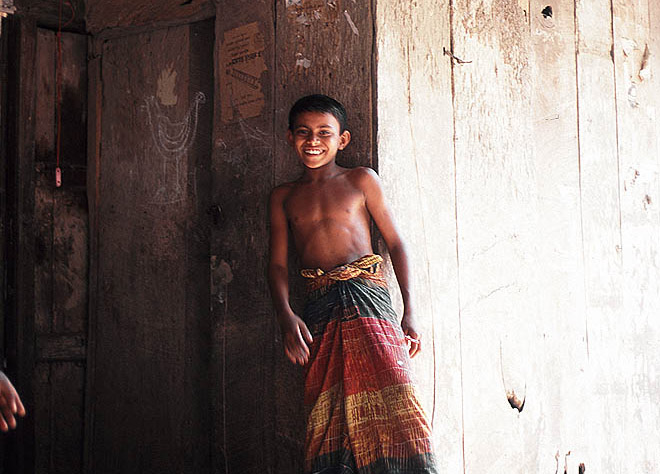 🇮🇳 India and 5 moreLungiলুঙ্গি
A cloth tube or sheet tied at the waist, worn across South and Southeast AsiaCotton · Batik · Checks and stripes
🇮🇳 India and 5 moreLungiলুঙ্গি
A cloth tube or sheet tied at the waist, worn across South and Southeast AsiaCotton · Batik · Checks and stripes
 🇮🇩 Indonesia and 4 moreKebayaꦏꦼꦧꦪ
A front-opening blouse worn across Southeast Asia with a sarong or kainCotton · Embroidery · Batik
🇮🇩 Indonesia and 4 moreKebayaꦏꦼꦧꦪ
A front-opening blouse worn across Southeast Asia with a sarong or kainCotton · Embroidery · Batik
 🇮🇩 IndonesiaBatik Parang꧋ꦧꦠꦶꦏ꧀ꦥꦫꦁ
A diagonal wave batik pattern from Java, steeped in royal philosophyCotton · Batik
🇮🇩 IndonesiaBatik Parang꧋ꦧꦠꦶꦏ꧀ꦥꦫꦁ
A diagonal wave batik pattern from Java, steeped in royal philosophyCotton · Batik
Photo credits on this page
The small pictures above come from Wikimedia Commons under free licences. Some are cropped to fit.
- Sarong: Unknown author, CC BY-SA 3.0, source
- Lungi: Laportechicago at English Wikipedia (Paul La Porte)., CC BY 2.5, source
- Kebaya: Simon_sees, CC BY 2.0, source
- Batik Parang: Q100422095, Public domain, source