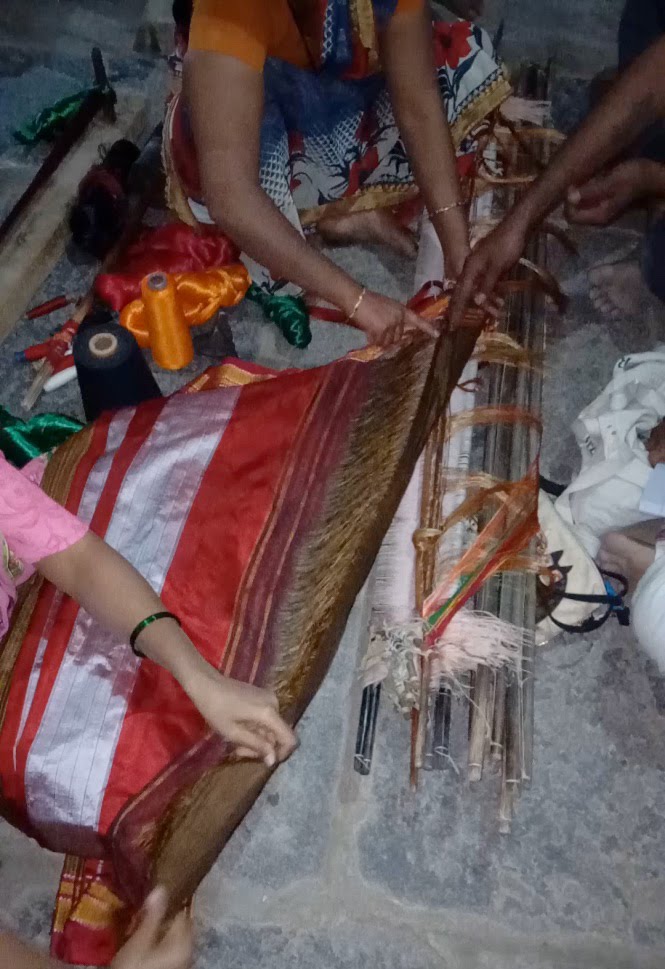
Festival wear
Worn for Diwali, Pongal, Onam, Durga Puja and the other days of the calendar.
Festivals are the busiest season of the saree year. Women across India dress in new or best sarees for Diwali, Pongal, Onam, Durga Puja and many other days, and the choice of cloth and colour often follows the festival and the region.
When it is worn
Many families buy a new saree for the main festival of the year, and the gift of a saree from a husband, brother or parent is a custom in many homes. Festival wear is usually brighter and richer than daily wear but lighter than a wedding saree. Silks, tussars and good cottons are all worn, and the day often has its own colour or cloth. Some festivals, such as Navaratri, assign a colour to each day, while others, like Onam, call for a particular weave. These customs differ from family to family and town to town, so what is true in one household may not be in the next.
The South: Pongal, Onam and Ugadi
In Kerala, Onam is dressed in the cream and gold kasavu saree, often worn by women of every community, with a mundu set for the sadya. Tamil women wear silk or cotton sarees for Pongal, with yellow, red and green common among them, and the new saree is often part of the harvest celebration. In Karnataka and Andhra, Ugadi and Sankranti call for new silk, such as a Mysore silk or a Dharmavaram. Navaratri in the south, with the golu display, is a time when women visit one another in their best silks.
The North and West: Diwali, Teej and Navratri
Diwali is a time for new clothes across much of the north, and many women choose silk, brocade or a bright georgette. Women in Rajasthan and Uttar Pradesh wear green and red for Teej, and bandhani and leheriya are popular. In Gujarat and Maharashtra, Navratri brings out the bandhani, the Patola and the chaniya choli for garba, with sarees worn by older women. In Maharashtra, Gudi Padwa is a day for the Paithani or a nine yard saree in many families, along with the traditional gold jewellery.
The East: Durga Puja and Bihu
Durga Puja is the great festival of dress in Bengal. New clothes are bought for the days of the puja, and women wear tant, Dhakai, Baluchari and silk sarees, with red and white a favourite on Dashami when the sindoor khela takes place. In Assam, Bohag Bihu is celebrated with the mekhela chador in Muga or Pat silk, while the Bihu dancers wear the traditional red and white. Odisha's Raja and Durga Puja celebrations bring out Sambalpuri and Bomkai cottons and silks.
Worth knowing
- Kasavu saree: The cream and gold Onam saree of Kerala.
- Bandhani: A tie-dyed cloth of Gujarat and Rajasthan popular at Navratri and Teej.
- Patola: The double ikat silk of Patan in Gujarat.
- Dhakai: A fine jamdani muslin saree of the Bengal delta, worn at Durga Puja.
- Baluchari: A Bengal silk with story panels woven on the pallu.
- Mekhela chador: The two-piece Assamese dress worn for Bihu.
- Navratri colours: The custom of a colour for each of the nine days.
Good to know
- Air festival silks after wearing, as sweat and incense smoke can stain the zari.
- Keep tie-dyed and ikat cloth away from direct sun when drying.
- Wash cotton festival sarees separately the first few times, as the dyes may run.
Sources and further reading
Original text by the EveryPallu desk, written with AI assistance and checked against the sources above. If we have something wrong, tell us.
Festival wear on EveryPallu
The sarees written up so far, newest and best known first.